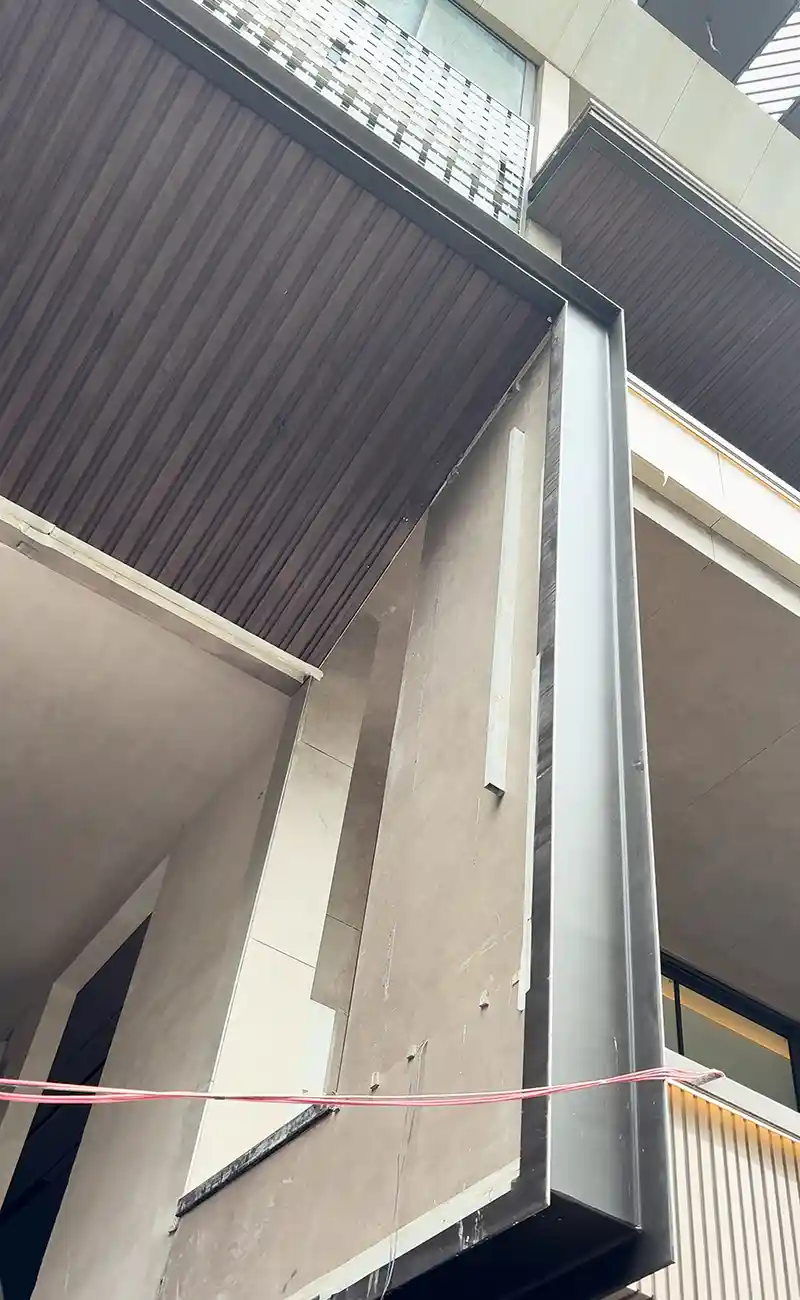
Like a good handshake, a façade does not seek attention for the wrong reasons. It feels confident without being loud, thoughtful without being complicated. It creates a sense of trust, setting expectations about what lies within. At the same time, a façade can be seen as the jewellery of a building—an element that completes and enhances the architecture, adding detail, depth, and identity.
However, just as jewellery must be comfortable, durable, and appropriate for everyday use, a façade must do more than look appealing. It must perform.
Design Rooted in Purpose
Performance-driven façade design begins with purpose. Rather than treating the façade as a decorative layer added at the end, it is considered an essential part of the building from the very beginning.Design decisions are shaped by practical questions: How does the building receive sunlight throughout the day? How does wind move around it? What level of privacy is required? How can daylight be brought in without excessive heat or glare?
In residential and small-scale architectural projects, these questions are especially important. The façade often balances openness with protection—allowing light and air while maintaining comfort and privacy. Projections, recesses, screens, and layered surfaces are used not as visual tricks, but as tools to respond to climate and use.
Material Choices That Respect Climate
Materials play a major role in how a façade performs over time. A performance-driven approach looks beyond appearance to consider how materials behave in a specific climate—how they respond to heat, moisture, dust, and pollution.In warm environments, material selection must help manage heat while remaining durable and easy to maintain. Stone, metal, and composite systems are often combined to achieve strength, longevity, and visual clarity. Proper detailing ensures that materials age well and continue to perform as intended.
In one of our façade projects, the material palette was chosen not just for its visual appeal, but for its ability to withstand exposure while supporting clean detailing and long-term reliability. The result was a façade that felt refined without being fragile.
The Importance of Hidden Details
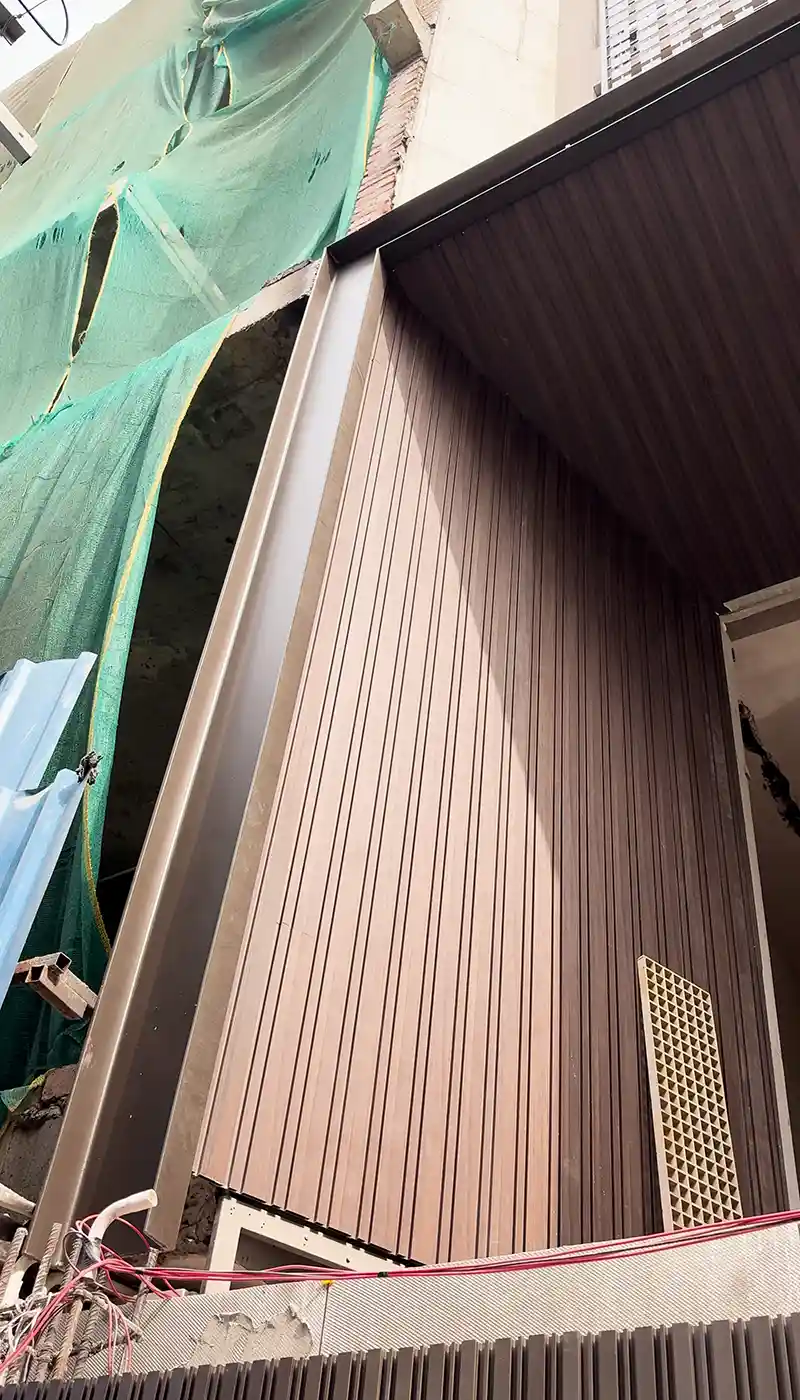
These components must account for structural loads, thermal expansion, and movement over time. Careful coordination between design and engineering ensures that the façade remains aligned, secure, and safe throughout its life.
In custom façades and cantilevered elements, this attention to detail becomes even more critical. Thoughtful hardware design allows architectural ideas to be realised without compromising safety or durability.
Impact on Comfort and Efficiency
A well-designed façade has a direct influence on how a building feels inside. By managing heat gain, reducing noise, and allowing controlled airflow, it improves everyday comfort for occupants.Performance-driven façades can contribute to:
- Better energy efficiency by reducing reliance on artificial cooling
- Improved acoustic comfort in urban environments
- Healthier indoor air quality through natural ventilation
- Enhanced daylight without harsh glare
A Quiet, Lasting Impression
At its best, a façade does not try to impress instantly. Instead, it earns appreciation over time. It weathers gracefully, performs reliably, and continues to represent the building with dignity.Seen this way, a façade truly becomes a building’s first handshake—calm, confident, and sincere—and its jewellery—carefully crafted, meaningful, and lasting. Performance-driven façade design ensures that this first impression is not just visual, but thoughtful and enduring.