The evening brought together architects, academicians, collaborators, and patrons of architecture, creating a reflective yet celebratory atmosphere around the release of a book that documents both a design philosophy and a body of built work.
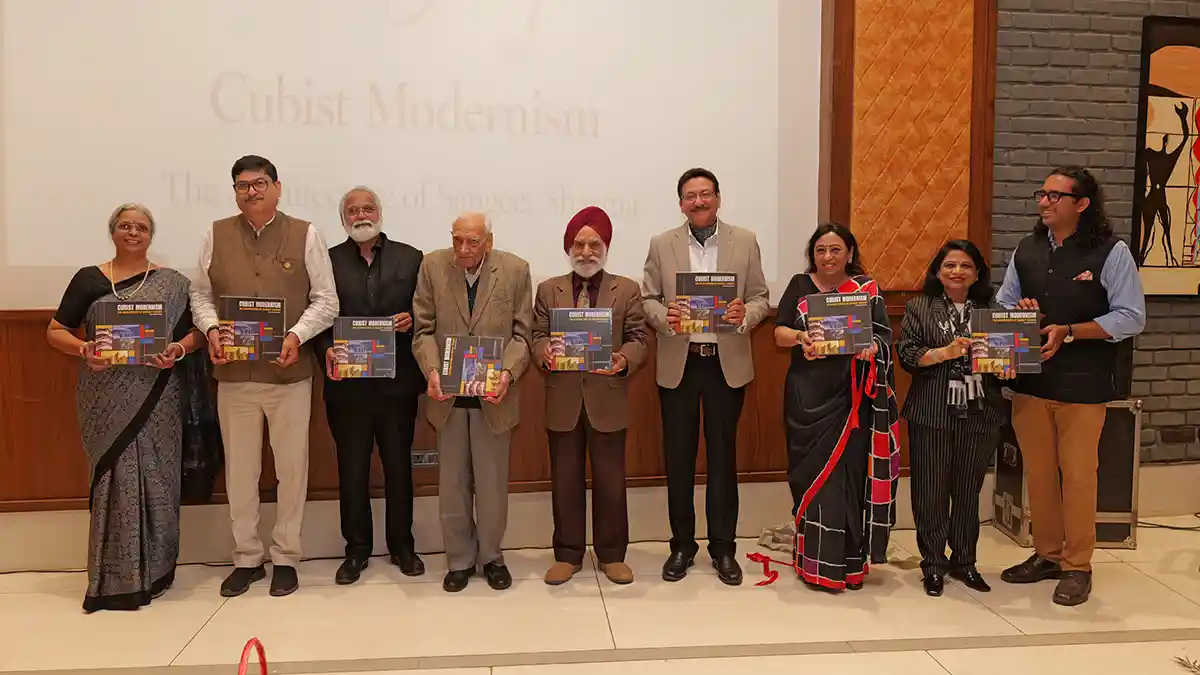
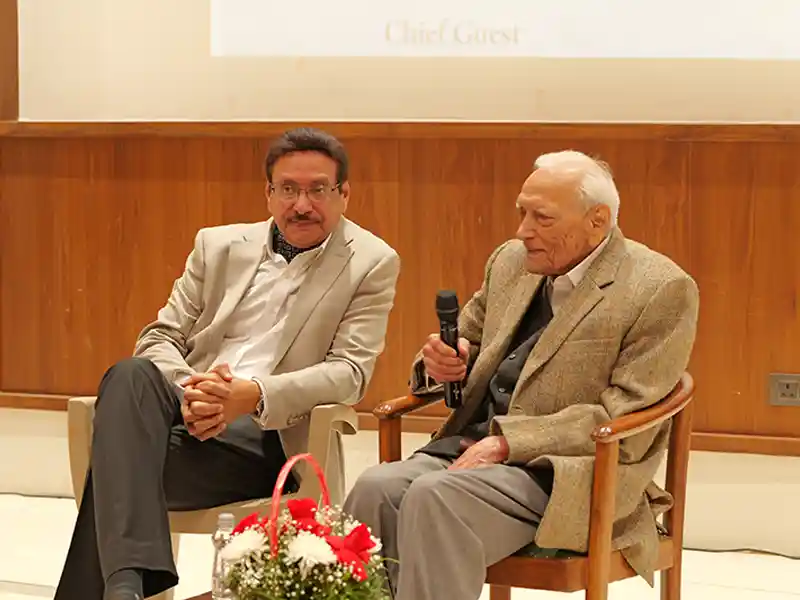
Ar. Shiv Datt Sharma, Sangeet Sharma’s father and one of Chandigarh’s senior-most architects, sharing memories from the city’s formative years, spoke about a time when the making of Chandigarh was intertwined with the vision of Le Corbusier, recalling the architectural spirit that shaped the early decades of the city.
Architect and author Dr. S. S. Bhatti presented a scholarly reflection on the evolving discourse of architecture in India. He spoke about the importance of intellectual engagement within the profession and fondly recalled his seven-decade-long friendship with Shiv Datt Sharma—an enduring association that mirrors the continuity of Chandigarh’s architectural community.
Vikramaditya Prakash - architect, historian, and Professor of Architecture at the University of Washington, offered a historical and theoretical perspective, and contextualised Sangeet Sharma’s work within the broader narrative of modernism and regional interpretation.
Architectural journalist Apurva Bose Dutta (who has contributed a chapter to the book), spoke warmly about her association with both the publication and the Sharma family. She described the occasion as both a professional honour and a personal homecoming to Chandigarh.
Chief Guest, Ar. Abhay Purohit, emphasising the need for more books on Indian architects, noted that documenting contemporary architectural practices helps students and professionals better understand the cultural and contextual influences shaping Indian architecture today.
Guest of Honour Ar. Habeeb Khan, former President of the Council of Architecture, also underscored the value of architectural documentation and critical discourse in strengthening the intellectual foundation of the profession.
Ar. Purnima Sharma shared some personal insights into the passions and principles of her husband Ar. Sangeet, and provided glimpses into the discipline, curiosity, and creative temperament that shape his practice, while also highlighting the generational continuity of architectural dialogue within Chandigarh.
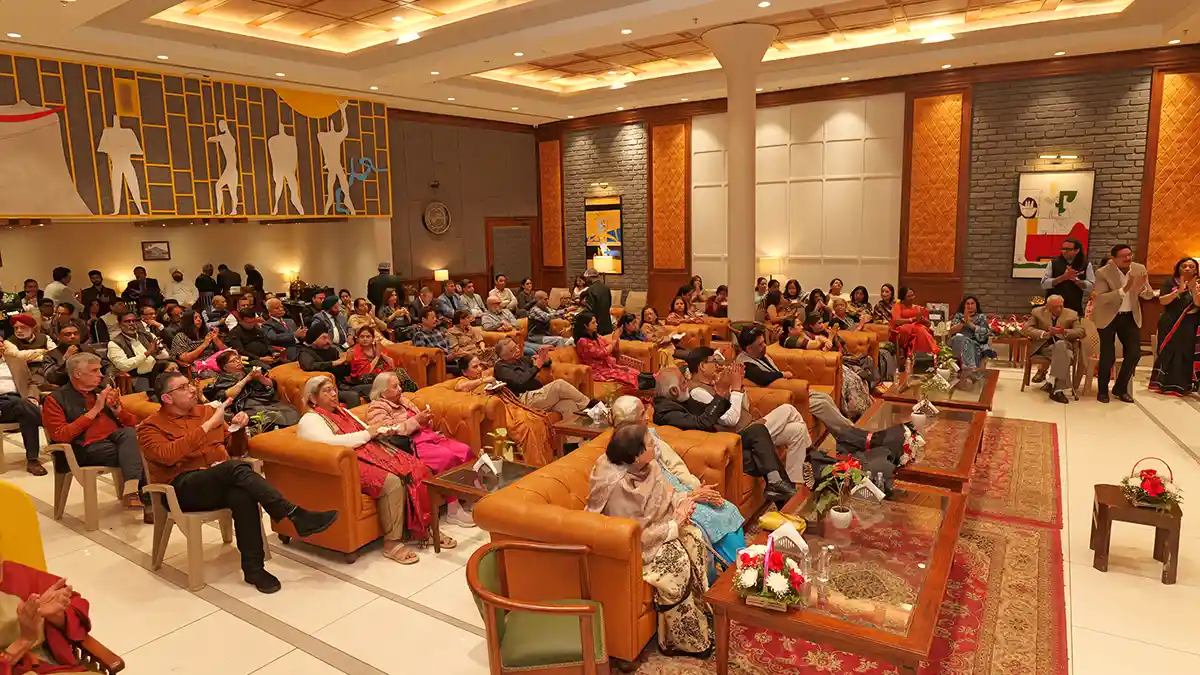
The gathering reflected the wide professional and personal networks built by the Sharma family over decades of practice and teaching. In acknowledging colleagues, collaborators, students, and clients, the evening celebrated not only a publication but also a shared architectural journey.
The event concluded with an interactive session and book signing, marking the release of Cubist Modernism as an important addition to the growing body of literature documenting contemporary Indian architecture—one that captures a design philosophy rooted in geometry, structure, and a deep respect for modernist thought.
Said Sharma, “The book reflects an evolving design philosophy that I describe as Cubist Modernism — an exploration of faceted geometry, structural clarity, and expressive massing within the broader lineage of modernist architecture shaped by Chandigarh.”
The Book in Brief
The visually rich and reflective architectural monograph documents selected works from Sangeet’s practice over several decades. The book documents a sustained architectural practice emerging from the Chandigarh modernist tradition while exploring new geometric and spatial expressions.The book highlights how meaningful architecture can emerge from regional contexts without imitation, demonstrating that modernism remains a living tradition rather than a closed chapter in architectural history.
According to Sharma, the publication carries three central messages: modernism continues to evolve, architectural identity develops gradually through practice and reflection rather than fashion, and regional architectural voices can meaningfully contribute to global discourse. The book ultimately positions itself as a dialogue across generations – from the founding modernist vision of Chandigarh to a contemporary cubist reinterpretation.
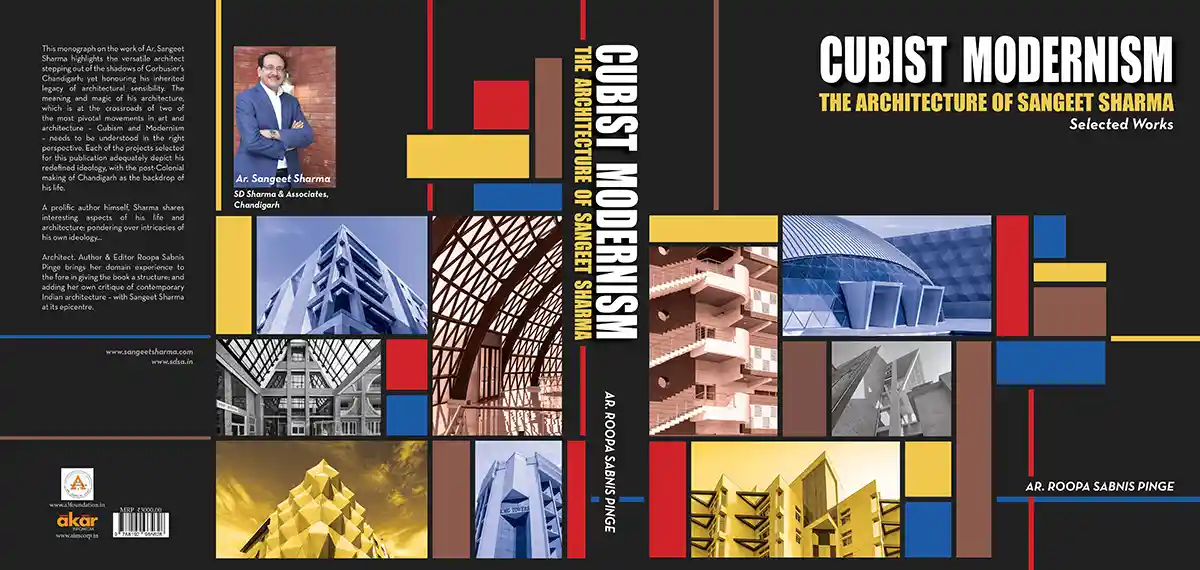
The book explores how the principles of modernism-clarity of form, structural honesty, and climate-responsive design-can evolve into new expressions suited to contemporary architecture. Through his concept of Cubist Modernism, Sharma draws parallels with the Cubist movement in art, where a single viewpoint was fragmented into multiple perspectives. In architectural terms, this translates into faceted surfaces, intersecting volumes, deep shadows, and strong structural expression. Geometry in his work is not merely decorative but forms the foundation of structure, light, proportion, and spatial experience.
Belonging to the second generation of architects shaped by the ideas that created Chandigarh, Sharma draws inspiration from the architectural vision established by Le Corbusier and the pioneering team that built the city. His father, Shivdatt Sharma, worked with Corbusier's team, instilling in him a deep respect for clarity, proportion, structural honesty, and architectural discipline.
Through his concept of Cubist Modernism, Sharma draws parallels with the cubist movement in art, where a single viewpoint was fragmented into multiple perspectives. In architectural terms, this translates into faceted surfaces, intersecting volumes, deep shadows, and strong structural expression. Geometry in his work is not merely decorative but forms the foundation of structure, light, proportion, and spatial experience.
The book also reflects on the broader journey of an architectural practice evolving a consistent design language over decades. It highlights how meaningful architecture can emerge from regional contexts without imitation, demonstrating that modernism remains a living tradition rather than a closed chapter in architectural history.
According to Sharma, the publication carries three central messages: that modernism continues to evolve, that architectural identity develops gradually through practice and reflection rather than fashion, and that regional architectural voices can meaningfully contribute to global discourse. The book ultimately positions itself as a dialogue across generations-from the founding modernist vision of Chandigarh to a contemporary cubist reinterpretation.