By Ar. Sangeet Sharma
The philosophy that I have gradually evolved over more than three decades of practice is what I term Cubist Modernism—a synthesis of the ethical discipline of modernism with the spatial and formal explorations of Cubist thought. It is not a style adopted overnight, nor a superficial aesthetic vocabulary. It is the cumulative result of inheritance, observation, experimentation, and intellectual evolution. As I often state, it took me thirty years to make this.
My architectural upbringing was deeply embedded in the modernist legacy of Chandigarh. To grow up in that city was to live amidst one of the most ambitious architectural experiments of the twentieth century. More importantly, I grew up within a household where architecture was not merely practiced—it was lived, debated, and revered. My father, Ar. S.D. Sharma, having worked alongside Pierre Jeanneret and within the extended orbit of Le Corbusier’s Chandigarh, transmitted to me not simply a profession, but an ethic: honesty of structure, clarity of form, discipline of proportion, and the responsibility of architecture toward climate and context.
Yet every generation inherits not to imitate, but to reinterpret.
To merely repeat the language of modernism in the 21st century would be to misunderstand its spirit. Modernism itself was radical in its time because it rejected imitation and sought reinvention. To remain faithful to modernism, therefore, one must continue its spirit of experimentation rather than freeze it into dogma. My task, as I came to understand it, was not to reproduce inherited modernist forms, but to evolve them. It is in this search that Cubism entered my architectural consciousness.
Cubism, as developed by Pablo Picasso and Georges Braque, revolutionized visual art by rejecting singular perspective and static representation. It fragmented form, layered perception, and introduced simultaneity into composition. Yet Cubism in architecture must not be misunderstood as an obsession with cubes or angularity. For me, Cubism is not geometry for its own sake; it is a way of conceiving space as dynamic, layered, and experienced through movement rather than from a fixed frontal viewpoint.
Thus emerged the fusion of my three primary influences—the 3Cs that define my architectural psyche: Chandigarh, Corbusier, and Cubism: from Chandigarh, I inherited the ethos of climatic modernism and civic gravitas. From Corbusier, the courage to reinvent and the power of geometry as an ordering device. From Cubism, the understanding that form may be fragmented, layered, and reassembled to create multiplicity of perception and spatial dynamism. Cubist Modernism therefore seeks to unite the clarity and order of modernism with the complexity and simultaneity of Cubist thought.
This rejection of static frontal composition is central to my work. Architecture, like life, is not experienced from one viewpoint. It is encountered in time, in motion, in fragments that cohere through occupation and memory. In this sense, Cubist Modernism is an architecture of becoming; not merely of being.
Yet form alone does not define philosophy. A frequent criticism of late modernist and formalist architecture is that it can become emotionally sterile—an exercise in geometry detached from human experience. My own endeavour has always been to resist such sterility. While Cubist Modernism draws upon abstraction and geometric discipline, it remains deeply committed to human scale, emotion, and contextual responsiveness. Geometry in my work is not autonomous; it is moderated by the life that inhabits it.
Architecture must not merely impress; it must move.
I have long believed that every line I draw should carry emotional conviction. Form, to me, emerges not only from function and proportion, but from an intuitive and often spiritual dialogue with site, programme, and context. It is this emotional substratum that prevents Cubist Modernism from degenerating into pure formalism. If geometry is the visible order of my work, emotion is its invisible force.
Equally intrinsic to this philosophy is sustainability. Long before sustainability became fashionable rhetoric, I regarded climatic responsiveness as inseparable from architectural integrity. Passive environmental design—orientation, shading, thermal mass, ventilation, daylight modulation, and contextual materiality—has remained fundamental to my work. In that sense, if Cubist Modernism forms the visible face of my architecture, passive sustainability constitutes its ethical core.
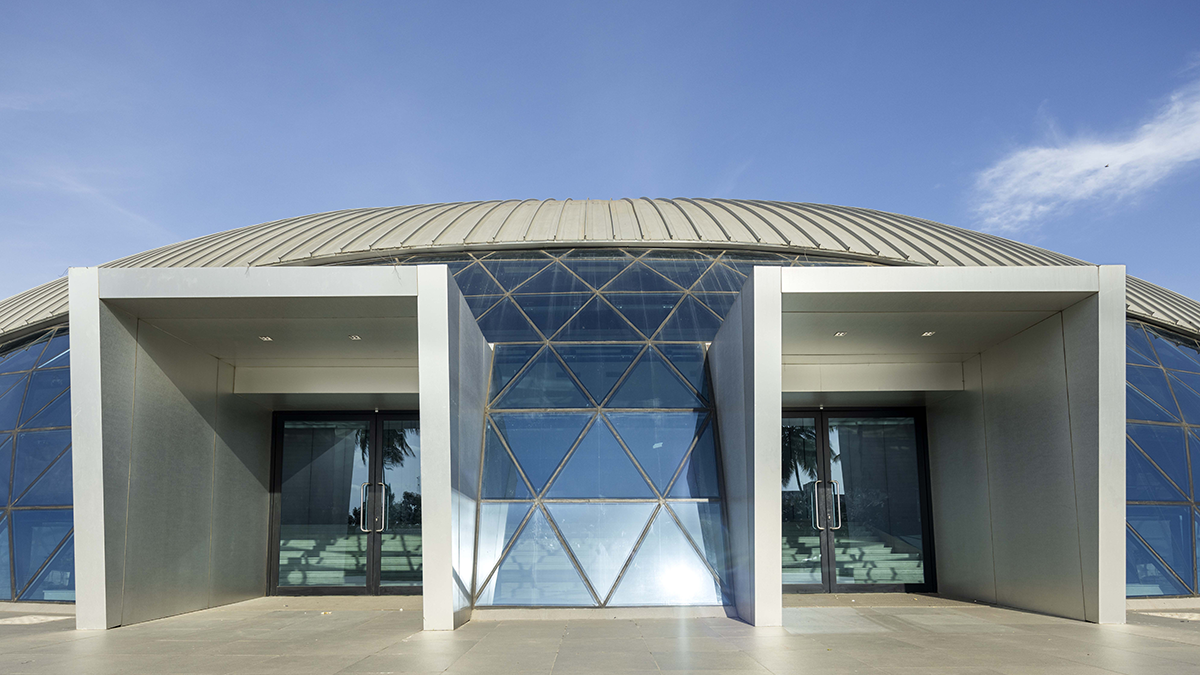
Across my institutional projects, this philosophy has found varied expression.
The Library Block at NIT Jalandhar exemplifies Cubist Modernism through circulation-driven form generation, where the expressive interlocking staircase system becomes both spatial organiser and architectural identity. Here, movement itself generates geometry.
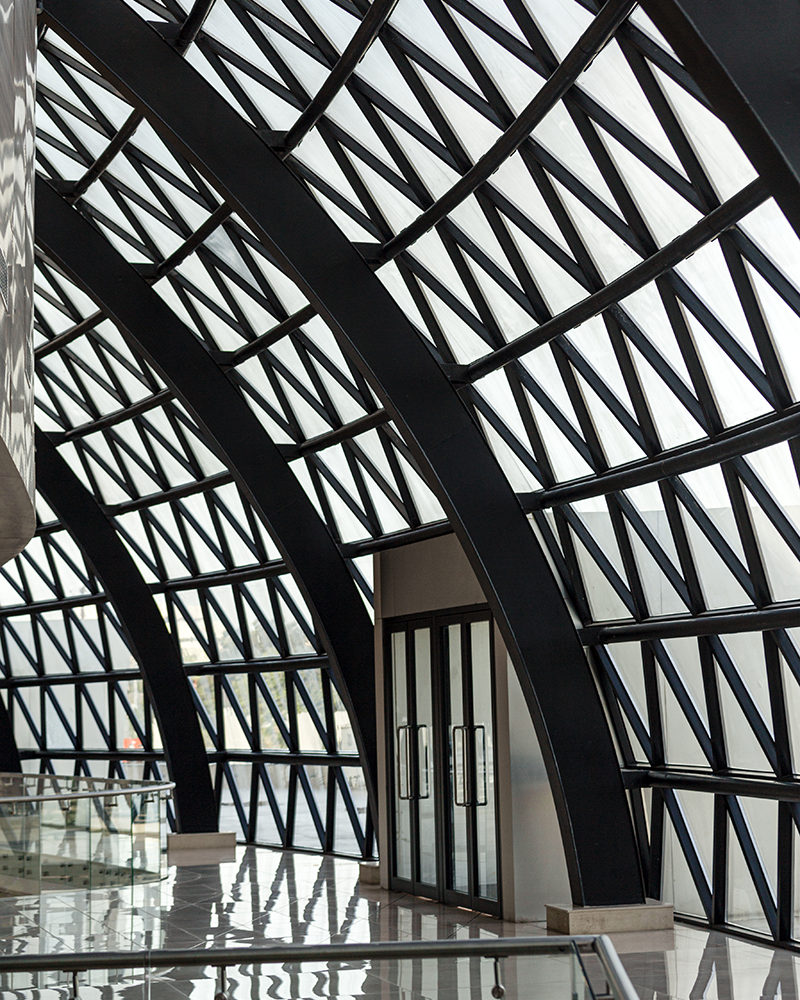
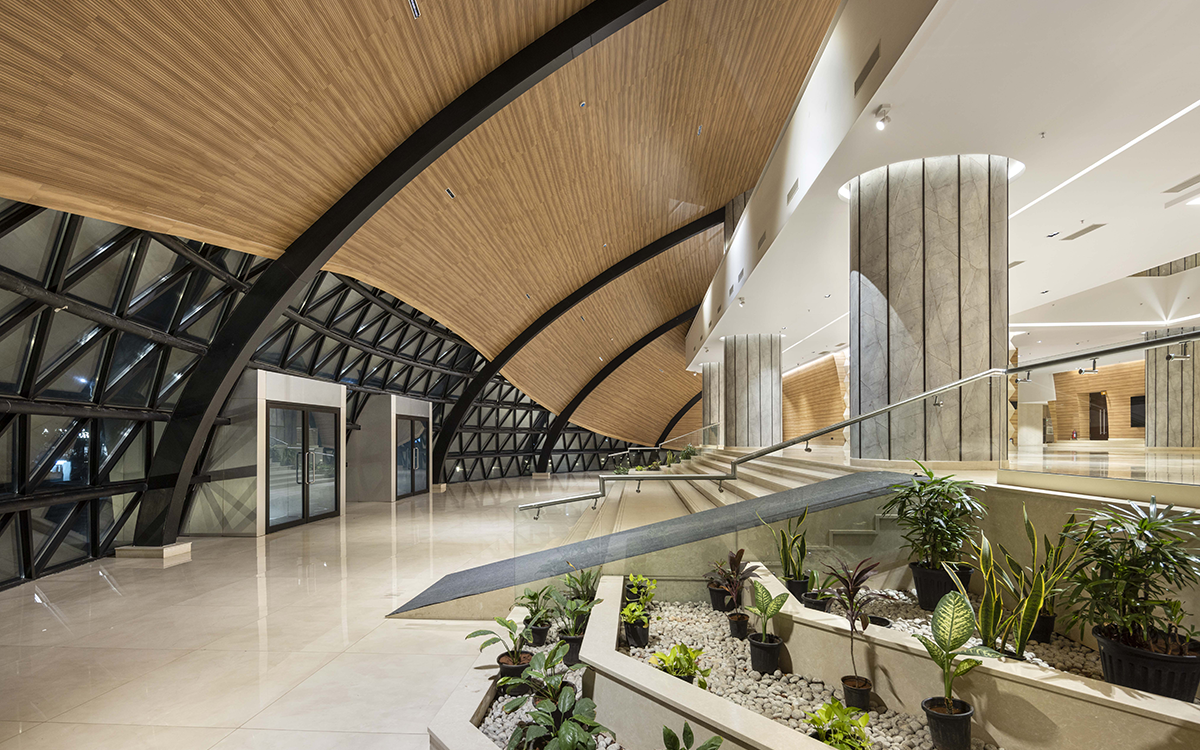
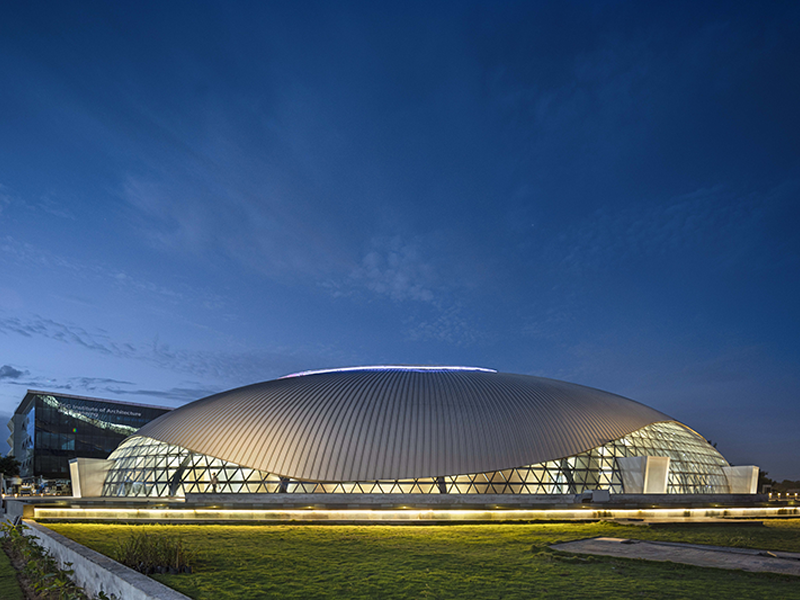
At the PSG Convention Centre, Coimbatore, the formal language becomes more fluid and sculptural, translating monumentality into a contemporary civic object while maintaining geometric purity and restraint. The architecture seeks symbolic presence without abandoning contextual discipline.
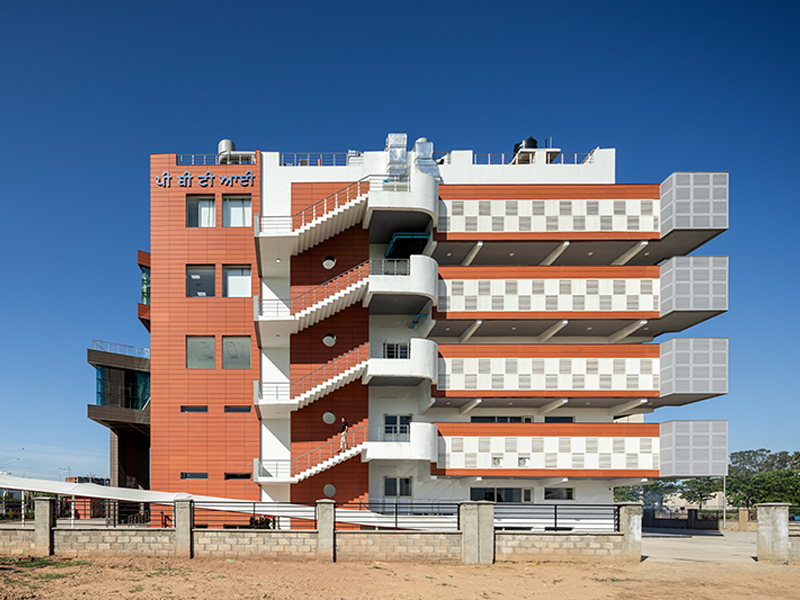
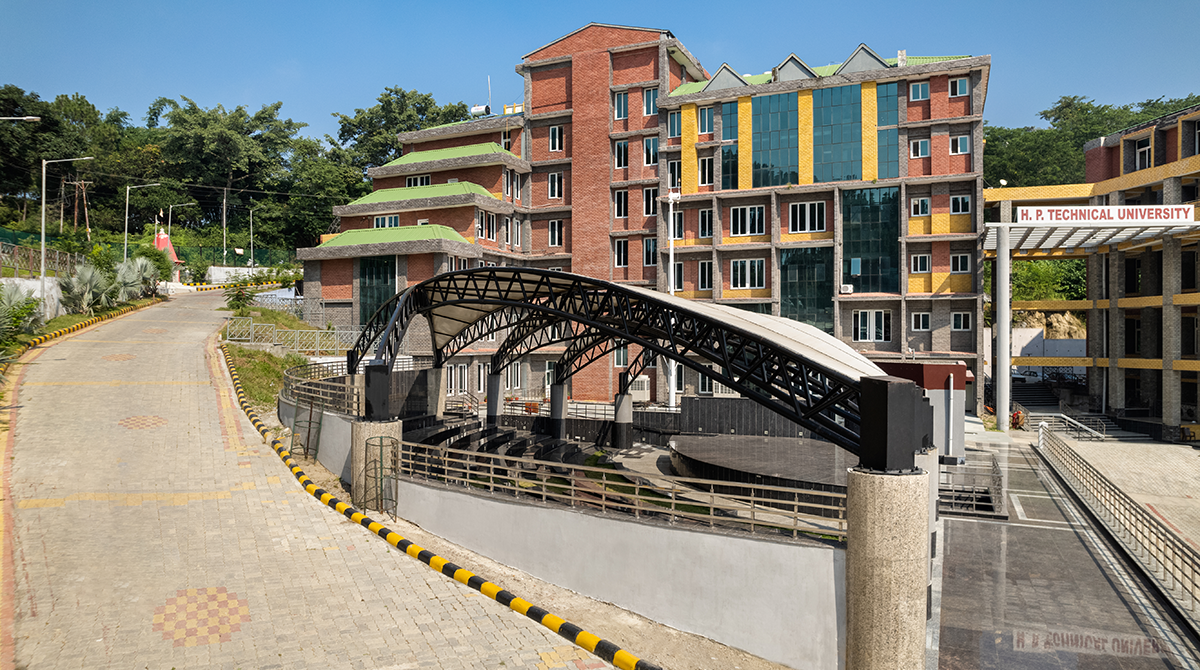
The Punjab Biotech Incubator and IIT Roorkee Academic Blocks further investigate abstraction, tectonic layering, and dynamic façade articulation, using geometry not as decoration but as the consequence of spatial and environmental logic.
Across these works, Cubist Modernism is not applied as a stylistic template. Rather, it acts as an intellectual framework—an attitude toward form-making, proportion, sequence, and perception.
In reflecting upon this body of work, I increasingly came to realise that architecture today demands a renewed intellectual breadth from its practitioners. The great masters of history were never merely builders. They were thinkers, artists, writers, philosophers, and cultural agents. The Renaissance architect occupied a broader role in society—as synthesiser of disciplines and interpreter of civilisation.
Contemporary architecture, in contrast, risks becoming increasingly image-driven and commercially expedient. In such a climate, the architect must reclaim intellectual authorship. He must once again become more than a service provider. He must become thinker, educator, writer, and cultural contributor.
It is in this broader context that I view architecture as part of a new renaissance—not a stylistic revival, but a renewal of architecture’s intellectual and cultural mandate.
My monograph, Cubist Modernism: The Architecture of Sangeet Sharma, was conceived not as a coffee-table compilation of projects, but as a documentation of this philosophical journey. It attempts to demonstrate that architecture can still emerge from rigorous thought, from inherited values critically reinterpreted, and from a sustained pursuit of design as intellectual inquiry.
If my work contributes anything to contemporary Indian architecture, I hope it is this proposition:
- That legacy is not preserved through imitation, but through evolution.
- That modernism remains relevant only when reinterpreted.
- That geometry can be both rational and emotional.
- That sustainability can coexist with sculptural ambition.
- And that architecture, when rooted in philosophy, may once again aspire toward the status of art.
If the 20th century gave us modernism, then perhaps the task of our generation is not to repeat it, but to transform it. That transformation, for me, has found its form in Cubist Modernism.
While Cubist Modernism draws upon abstraction and geometric discipline, it remains deeply committed to human scale, emotion, and contextual responsiveness.