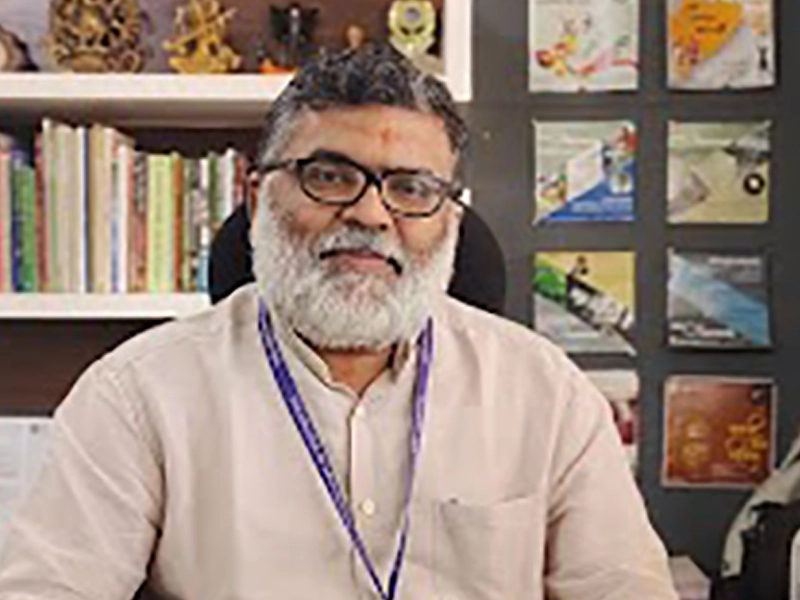
Dr. Prof. Anand Achari, Principal, VES College of Architecture
Architecture education is slowly but steadily moving away from a purely project-driven mindset. Earlier, the success of a student’s work was often measured by how impressive a structure looked on paper or how technically precise the model was. Today, that definition is expanding. The focus is shifting toward something more grounded and far more important - how a space actually serves people.This change is not cosmetic. It reflects a deeper understanding that buildings are not isolated objects. They are lived experiences. A classroom is not just walls and desks. A hospital is not just functional zones. A public space is not just an urban design exercise. Each of these spaces carries human behaviour, emotion, comfort, and accessibility within it.
Architecture schools are beginning to recognize this shift in how they train future designers. The emphasis is now on empathy as much as it is on engineering. Students are encouraged to observe how people move, interact, pause, and respond to environments. A design is no longer considered complete if it only looks strong on paper. It must feel right when experienced.
This approach is also changing how studios function. Instead of starting with abstract briefs, students are increasingly asked to begin with people. Who will use this space? What challenges do they face in their daily environment? How does light, sound, temperature, and movement affect their comfort? These questions are shaping the foundation of design thinking in modern architecture education.
There is also a growing emphasis on context. A building does not exist in isolation from its surroundings. It is part of a larger ecosystem; social, cultural, and environmental. Understanding this context helps students design with sensitivity rather than assumption. Even a small design decision, such as the placement of a staircase or the openness of a corridor, can significantly impact usability and experience.
Technology has added another dimension to this evolution. Tools like simulations, 3D modelling, and AI-based design platforms are helping students visualize spaces more realistically. But the real value does not lie in the tools themselves. It lies in how they are used, to test human comfort, predict movement patterns, and evaluate accessibility.
At the same time, architecture education is becoming more reflective. Students are encouraged to step back and question their own designs. Does this space include or exclude? Does it simplify life or complicate it? Does it serve a diverse range of users or only a specific group? These are not technical questions. They are human ones.
Ultimately, the idea of designing for people rather than projects is not about abandoning creativity or technical rigor. It is about grounding both in real human needs. A well-designed space should not just be admired; it should be lived in comfortably, used intuitively, and experienced effortlessly.
Architecture, at its core, has always been about people. The only difference today is that education is beginning to place them back at the center where they always belonged.