The most successful envelopes are rarely those with the most expensive materials. They are the ones where the design strategy responds intelligently to local environmental conditions.
Manoj Kumar, Sr. VP-Operations & Technical, ModDwell Infra
A façade is far more than a skin. It is a filter. It controls how heat, light, air, noise, and weather interact with the spaces inside. It negotiates between the external environment and the expectations of the occupants. A façade that ignores climate is not a neutral design decision. It becomes a long-term liability.Start with Climate, Not Materials
One of the most common mistakes in building design is assuming that a successful façade solution can simply be replicated from one project to another. What works well in Ahmedabad may struggle in Chennai. What performs efficiently in Bengaluru may not be suitable for Shimla.Climate-responsive design begins with a simple recognition. It is one of the primary design inputs. Many façade discussions begin with glass specifications, aluminium systems, or shading devices. In reality, the conversation should begin much earlier. What is the climate? What is the building orientation? What are the seasonal solar patterns? What are the prevailing wind conditions? What level of thermal comfort is expected? These questions influence every subsequent façade decision.
Importance of Window-to-Wall Ratio
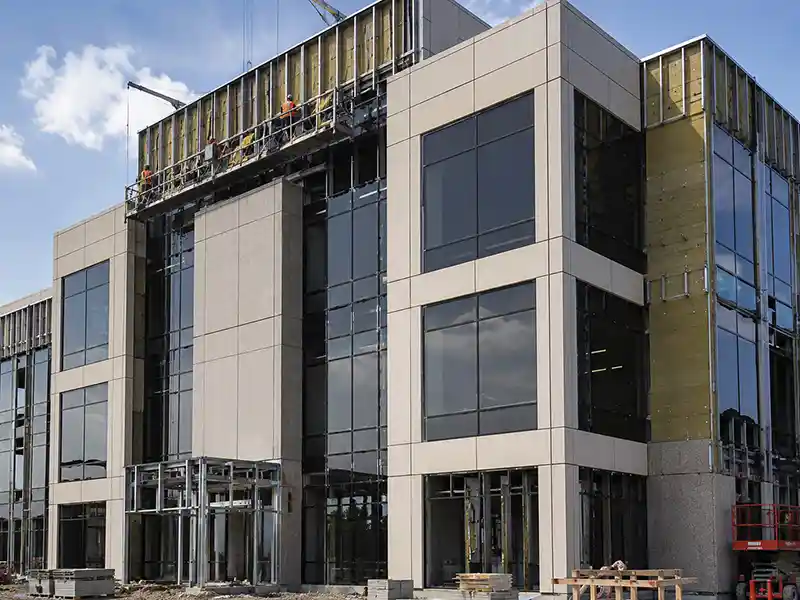
A climate-responsive façade rarely treats every elevation equally. Different orientations experience different solar exposures; hence they require different responses. North, south, east, and west façades should be designed according to their individual environmental demands rather than a single project-wide glazing percentage. This shift from uniformity to orientation-based design often produces significant improvements in overall building performance.
Glazing Selection Is About Balance
The industry frequently searches for the “best glass.” But in practice, there is no universal best glass. Every glazing selection represents a balance between daylight, solar control, thermal performance, visual comfort, aesthetics, and cost.In cooling-dominated climates, limiting unwanted solar heat gain is often a priority. In colder regions, allowing useful solar heat gain can become advantageous. The appropriate glazing specification therefore depends on climate, orientation, occupancy patterns, and project objectives. The goal is not simply to reduce heat gain. The goal is to achieve the right balance between energy performance and occupant experience.
Frames Matter
Façade discussions often focus heavily on glazing while giving comparatively little attention to framing systems. This can be a costly oversight. The thermal performance of the façade is influenced not only by the glass but also by the framing system that supports it. Poorly considered frame design can create thermal bridges that undermine the benefits of high-performance glazing.A façade should always be evaluated as a complete assembly rather than as a collection of individual components. Glass, frame, gasket, spacer, sealant, insulation, and shading devices all contribute to overall performance. Optimising one component while ignoring the others rarely delivers the desired outcome.
Manoj Kumar

Shading Remains One of the Most Powerful Design Tools
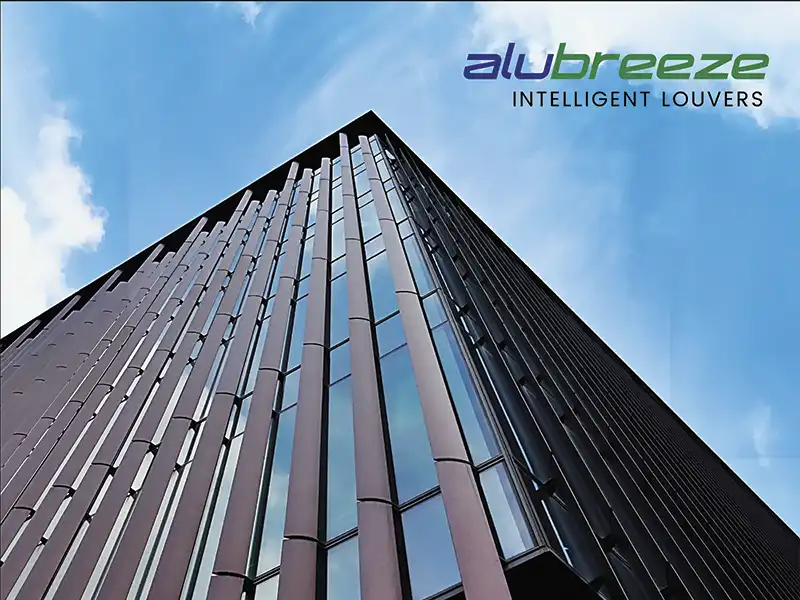
Among all façade strategies, external shading remains one of the most effective and often one of the most underutilised. Its advantage is straightforward: Solar radiation is most effectively controlled before it enters the building. Horizontal projections, vertical fins, recessed glazing, perforated screens, and dynamic shading systems can all play an important role depending on orientation and project requirements.When integrated early into the architectural concept, shading devices can improve thermal comfort, reduce cooling demand, and enhance visual comfort simultaneously. They are not merely architectural accessories but are performance elements.
Think in Systems. Not Components
A high-performance façade is not created by selecting the best glass. Nor is it created by adding shading devices, improving insulation, or specifying advanced framing systems independently. Performance emerges when all these elements work together.A highly selective glazing system may not deliver its full benefit if thermal bridges are ignored. An effective shading strategy may become unnecessary if glazing selection is inappropriate.
A well-insulated envelope may still underperform if orientation has not been considered from the outset.
The role of the façade consultant is therefore not simply to specify products. It is to understand how the entire envelope behaves as a system. Today, simulation tools allow designers to evaluate these interactions long before construction begins. When used correctly, they help teams make informed decisions during the design stage rather than solving performance problems after the building is complete.