As architecture confronts questions of resource consumption, environmental responsibility, and longevity, we are returning to a more fundamental understanding of material. It is not something applied to architecture. It is part of how architecture performs.
Ar. Sonali Bhagwati, Design Partner, Designplus Architecture
For a long time, material selection in architecture has been reduced to questions of appearance. What is the colour, texture, or finish? How does it photograph? How does it contribute to the visual identity of a space?But material has always done more: it carries weight, filters light, responds to climate, records use, and influences how a space is experienced. Climate, light, use, maintenance, touch, and context all influence what a material can contribute. The question is not simply what looks good, but what belongs, what performs, and what will continue to make sense over time.
Traditional architecture in India evolved through a close understanding of available materials and environmental conditions. Stone, brick, timber and lime were chosen not only for their visual qualities, but for their durability, thermal behaviour and relationship with light and shade. The opportunity today is to carry that intelligence forward without simply reproducing traditional forms.
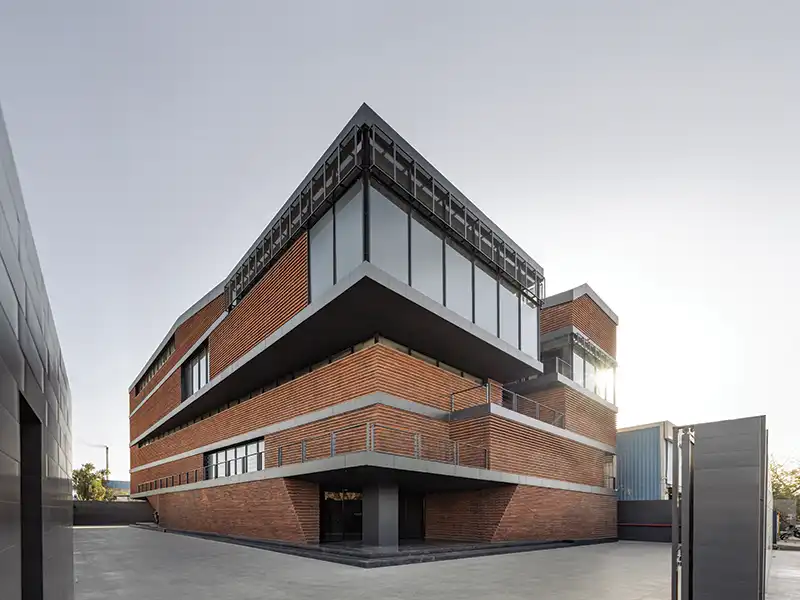
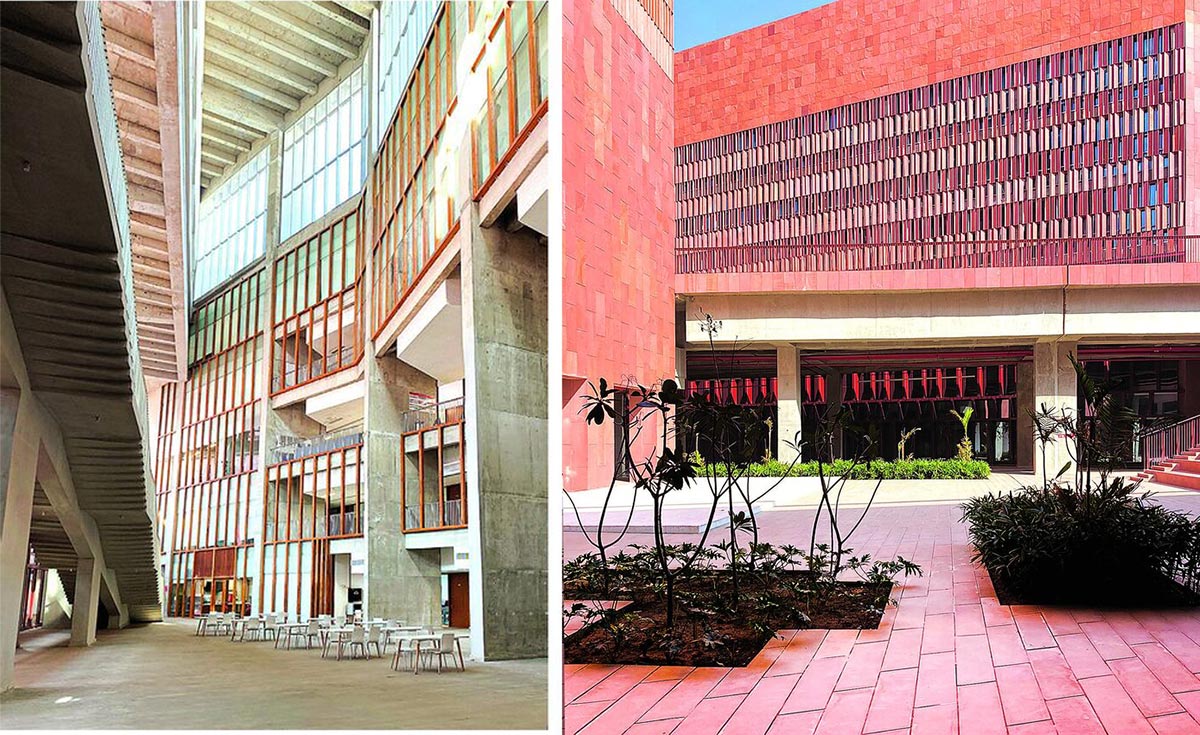
In our Thapar University project in Patiala, undertaken in collaboration with McCullough Mulvin Architects, material became an important part of establishing both identity and context. The campus uses red Agra stone across its academic buildings, complemented by stone slat screens inspired by traditional jaali work. Here, the stone is not merely a façade finish. Its mass, texture and depth work with the screens to filter light and shade, while creating a strong architectural language. The material palette works alongside shaded podiums, pergola walkways, green spaces and passive design strategies, allowing material and environmental response to become part of one architectural idea.
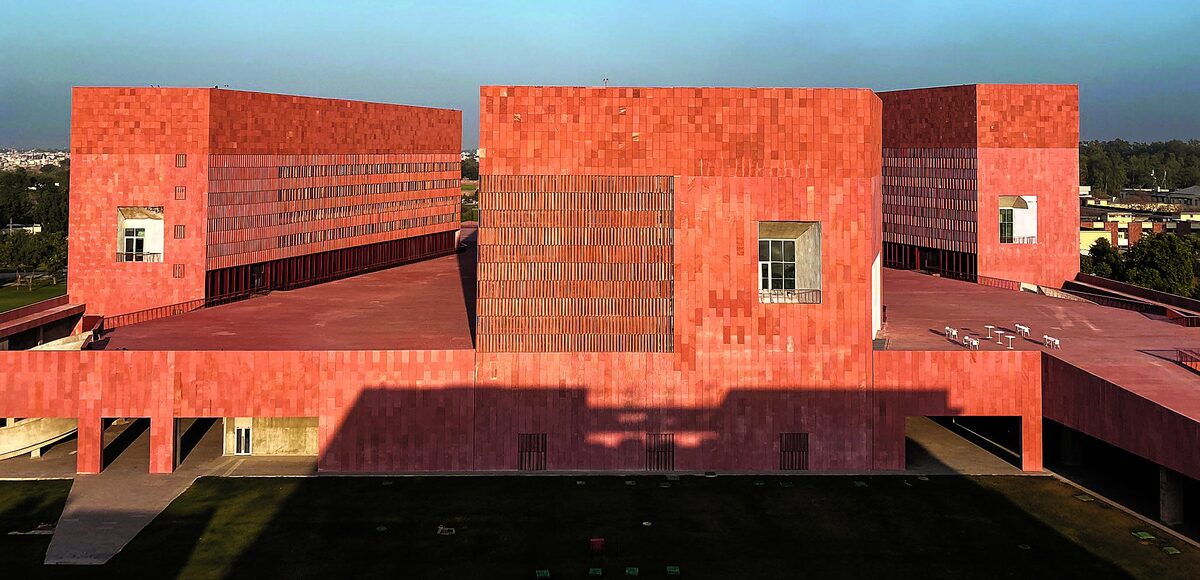
The same principle applies to elements such as sunbreakers. A façade device should not exist simply as a visual gesture. Its depth, orientation, spacing, and material can mediate sunlight, influence heat gain, and alter the quality of light within a space. The most effective environmental strategies are often those that become architecture rather than being added to it.
When material is allowed to regulate, connect, age, communicate, and create memory, it moves beyond decoration. It becomes part of the architecture’s intelligence.Ar. Sonali Bhagwati

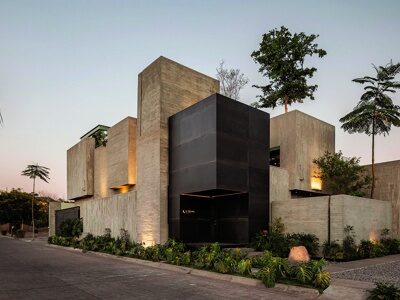
Material also has a sensory dimension. We do not experience it through sight alone. We encounter texture, temperature, weight, and sound. Concrete can retain the memory of its making. Stone changes as daylight moves across its surface. Timber develops a patina through use. These changes allow buildings to register time.
This is where craft becomes relevant again. Craft should not simply mean a return to handmade objects or traditional techniques. At its core, craft is knowledge of materials: understanding how something behaves, how it should be joined, how it will weather, and how it can belong to its setting. The renewed interest in local materials and craft is valuable when it comes from understanding rather than nostalgia. This approach often means allowing material to establish character while controlling light, creating visual continuity while concealing functional elements, or providing texture while contributing to the atmosphere of a space.
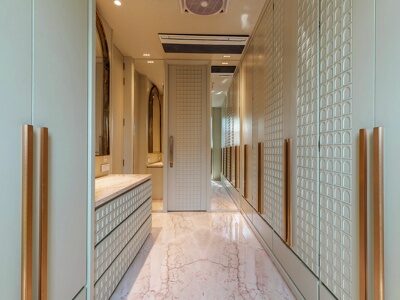
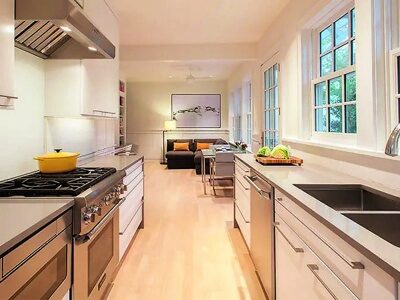
For instance, restrained palettes allow texture, proportion, and carefully placed details to carry the spatial experience rather than an excess of finishes. This is evident in our Apartment 616B project in Gurugram, where fluted paneling, marble, walnut tones and textured surfaces create continuity while concealing doors and reducing visual clutter.
Ultimately, material intelligence is also about restraint. The strongest material palettes are rarely those with the greatest number of finishes. They are the ones where every material has a reason to exist.
Perhaps we need to ask fewer questions about what the next material will be and more about what the materials we already have can do. How will they perform? How will they age? How will they respond to light and climate? What will they feel like to touch? What will they say about the place?