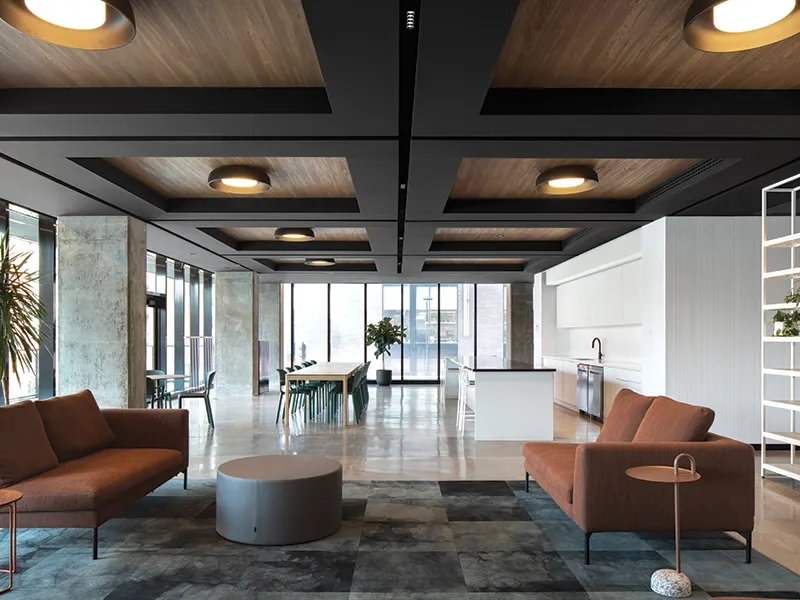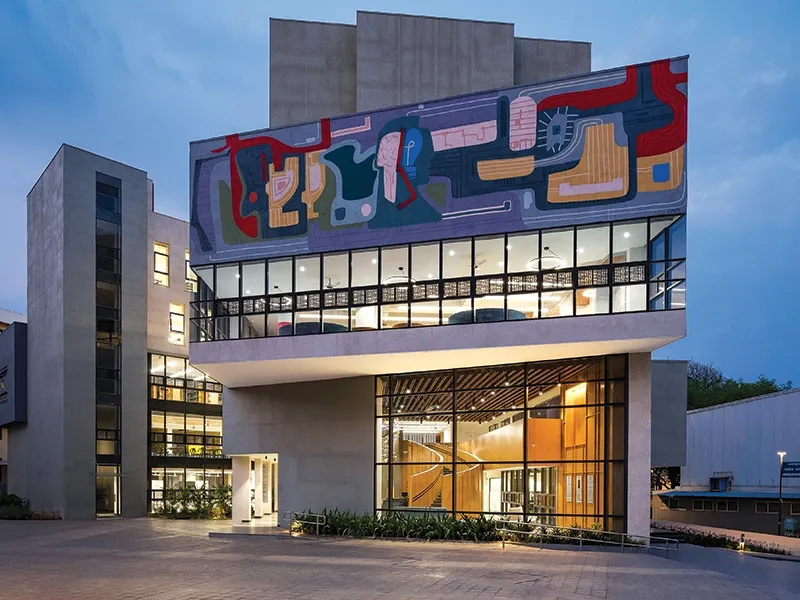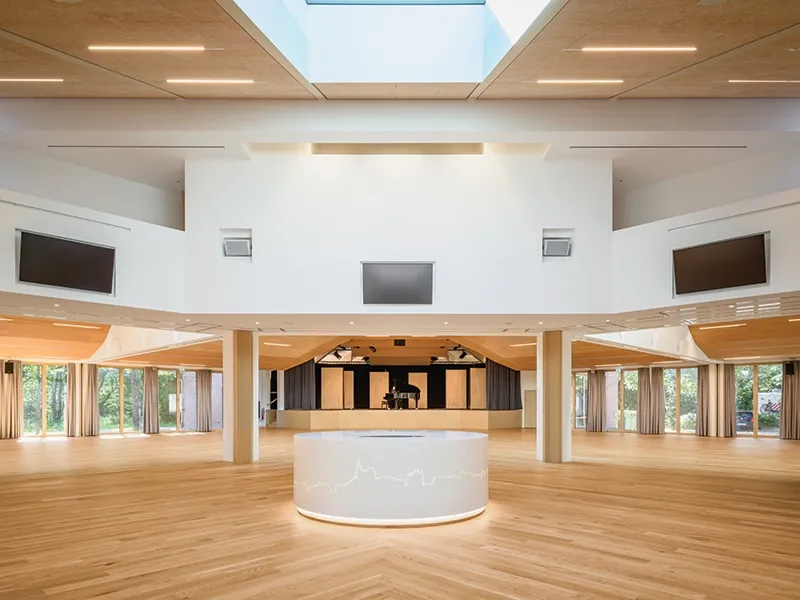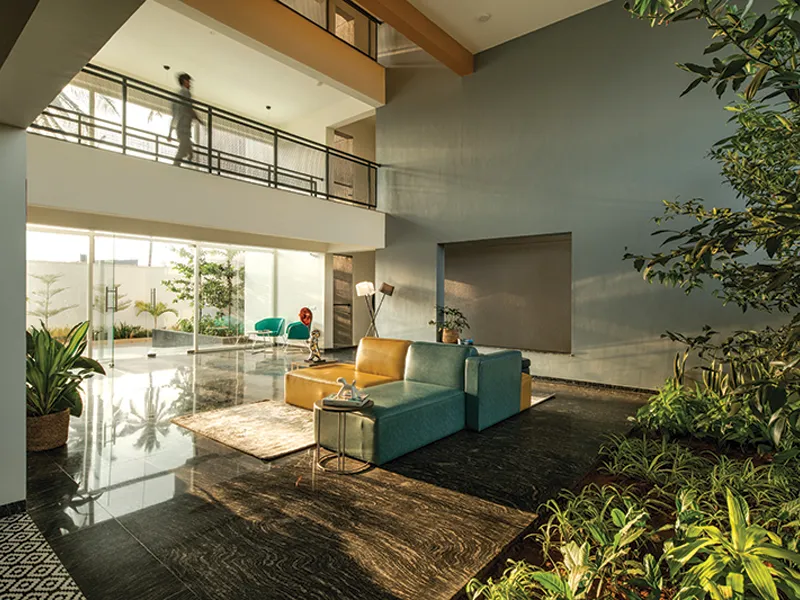
The original structure, form, materials, and spatial organization of the building was maintained to honor its contextual significance. Preserving the material authenticity was done by exposing original materials, allowing the building’s historical character and craftsmanship to show through.
Mueen Haris

PopWorks is an example of adaptive reuse, transforming an existing industrial warehouse into a high-performance office facility. The original context of the site was an abandoned wheat mill and car shed. The building is repurposed for contemporary use through thoughtful design strategies that adapt its functionality to current needs while retaining its original framework.
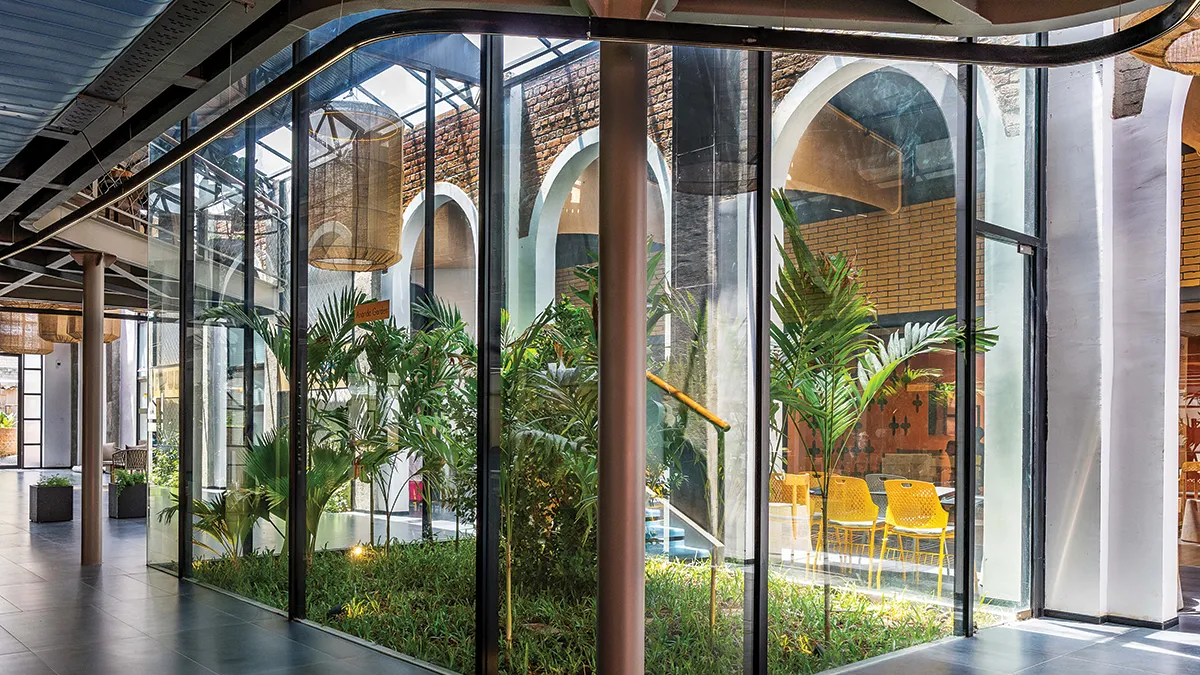
The entire design is driven by a rigorous Zero-Waste ideology. Every single element on the site is viewed as an adaptable resource, significantly minimizing the need for new material procurement.
Spatial articulation to achieve 100% utilization of the property area was accomplished by designing every quadrant and habitable crevice to seamlessly amalgamate, providing an efficient and cohesive sense of openness, organization, and flow throughout the facility.
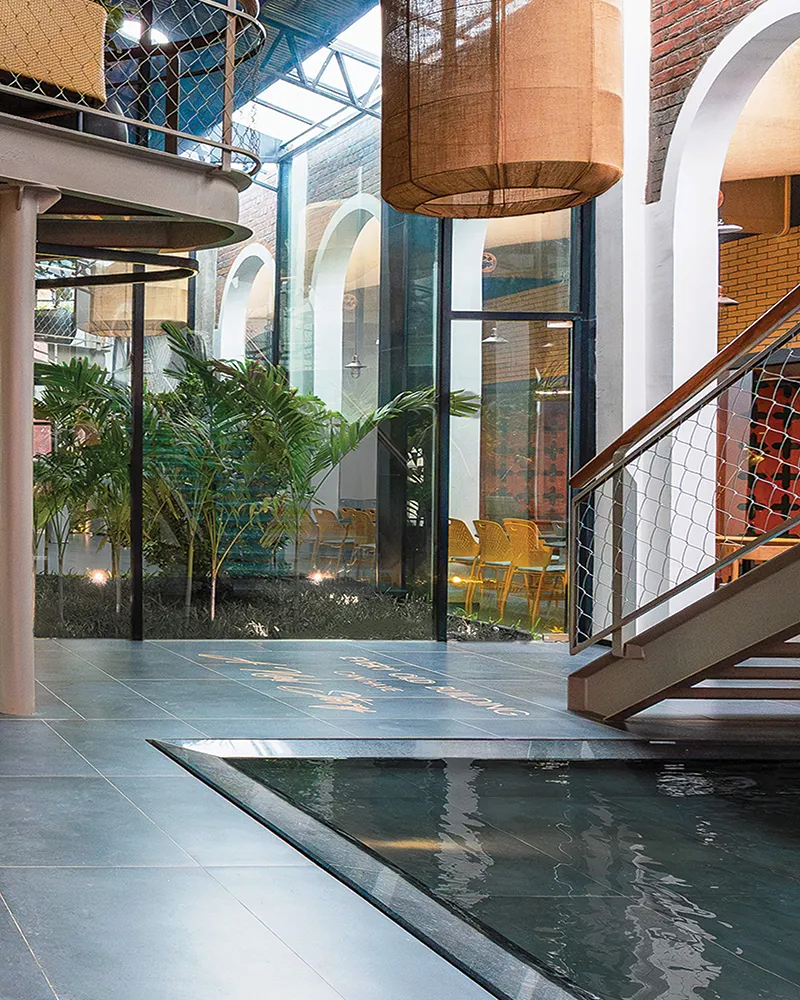
The design execution deliberately exposes and preserves original materials like brick, concrete, and stone, paying homage to the building’s history. The aesthetic leans toward a bold Brutalism & Industrialism style, where all structural elements are left in their authentic, inherent state. Jute was used for creating the monumental hanging lamps in the project, in order to convey a sense of raw appeal to the spaces, while providing homage to the original context of the site – of a wheat mill. MS was used predominantly to enhance the industrial look and feel of the space, especially in the staircase and the mezzanine. Existing MS Rolling Shutters were disassembled and used to fabricate the ceiling of the meeting rooms and cabins.
Fact File
Typology: Commercial
Client: Popular Motors (Toyota)
Location: Kudlu Gate, Hosur Road Bengaluru
Built Area: 12,000 sqft
Site Area: 85,000 sqft
Photography: Ar. Rayaan Raheel, Adulya ER, Rasha Fathima
Visualization: Ameen Mohammed, Roshan Rati
Project Credit: Ar. Mueen Haris, Ar. Raghuvamshi AB, Ar. Shridhar S
Interior Design & Landscape: DS2 Architecture
Completion: 2025
Civil & Structural: DS2 Architecture
Environmental, Construction & MEP: DS2 Architecture
Lighting & Automation: DS2 Architecture
Beyond the aesthetic, the team achieved true Adaptive Reuse by modifying the building’s function while retaining its original structural framework, coupled with contextual sensitivity. The expansive final facility successfully incorporates a comprehensive operational program, including flexible workstations, executive cabins, a dedicated training room, board room, a communal central garden, a reflective mirror pool, and high-capacity parking.
100% of the debris from all the demolition and construction was used for ground levelling and grading. Therefore, the number of tractor loads that left the site was zero. The original estimate of the project was Rs. 3 crores, but the actual cost after recycling materials came down to Rs 1.7 crores.