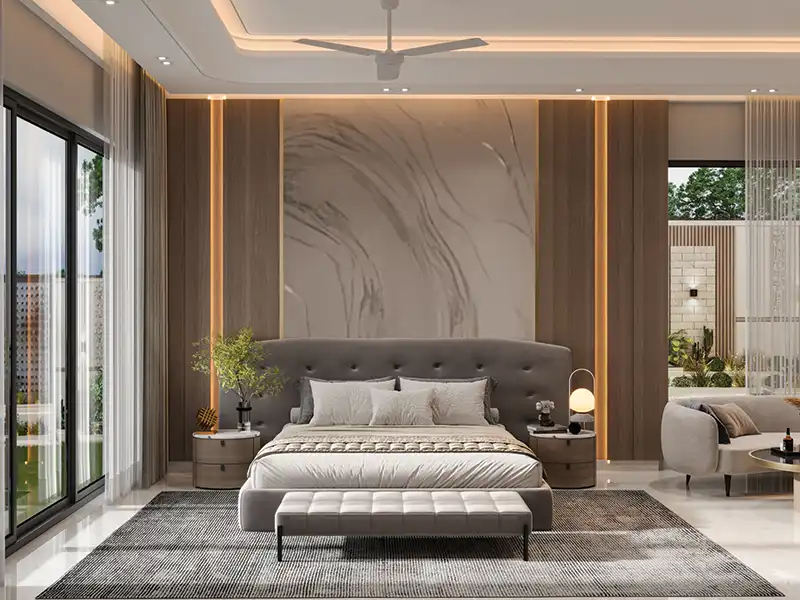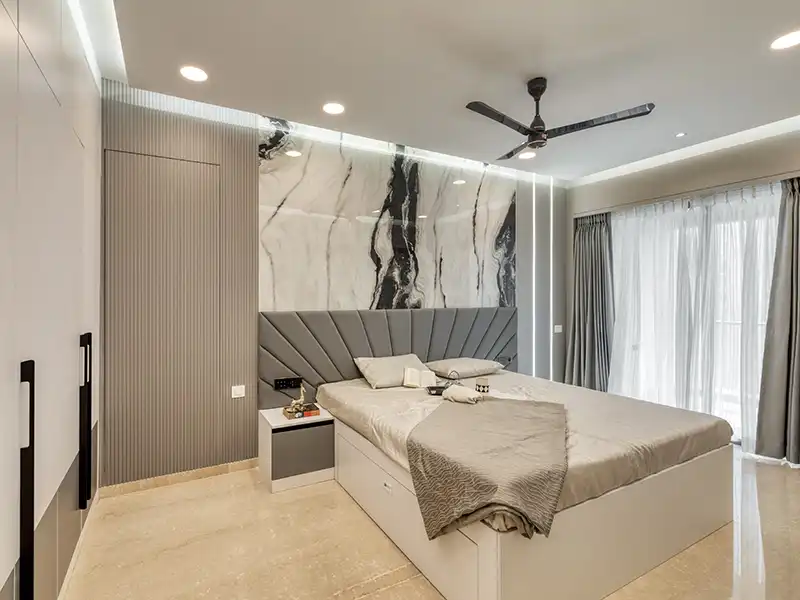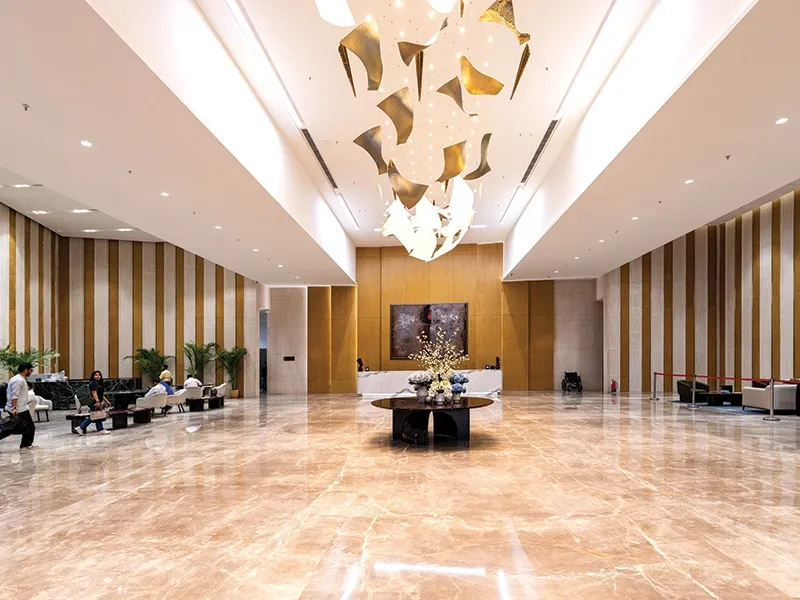
The design of this residence is a blend of intricate craftsmanship and modern innovation, wherein materiality plays a pivotal role in shaping its sensory experience, while honoring the region’s cultural heritage.
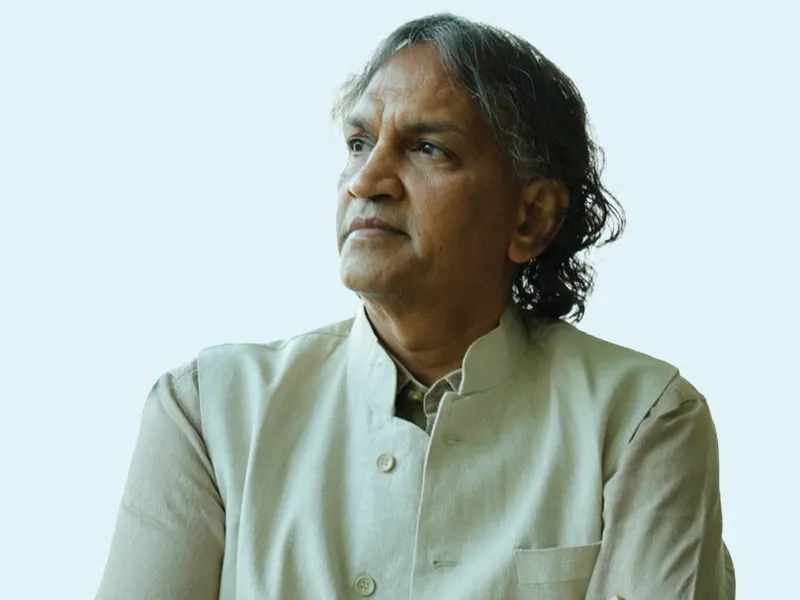
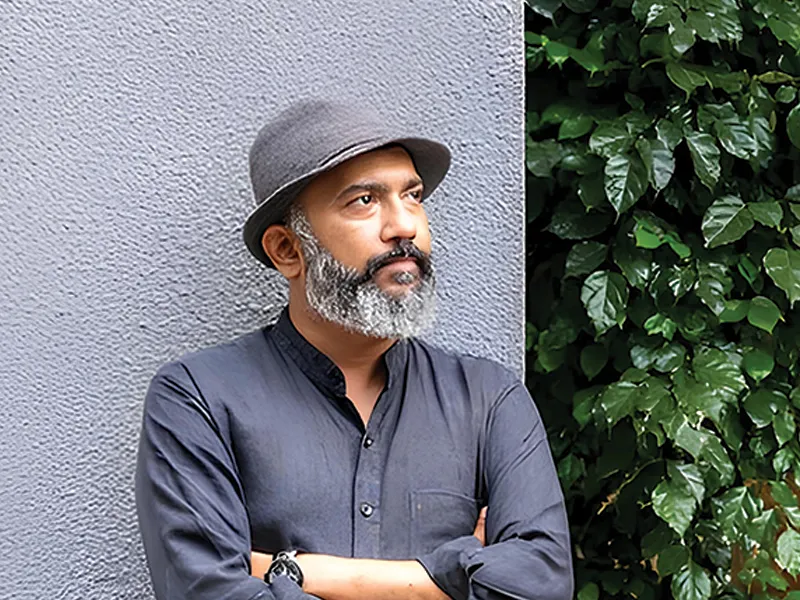
Akshay Selukar
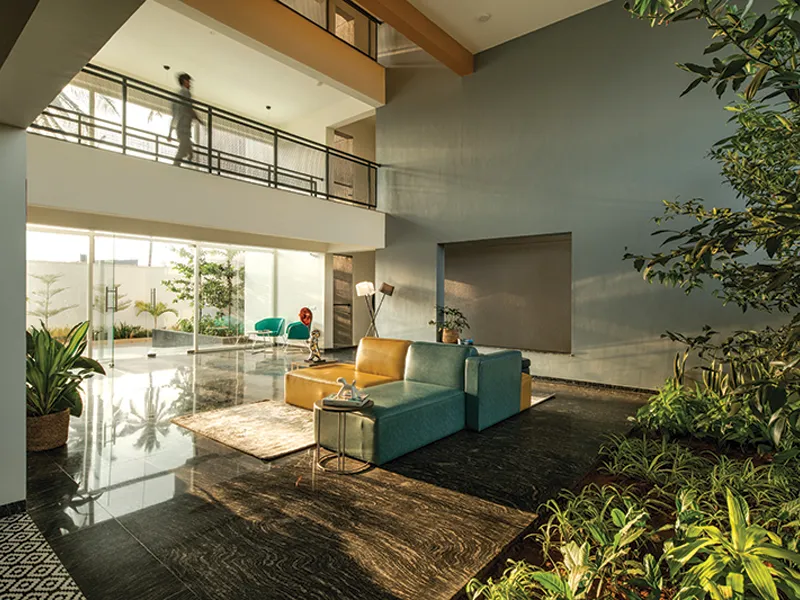
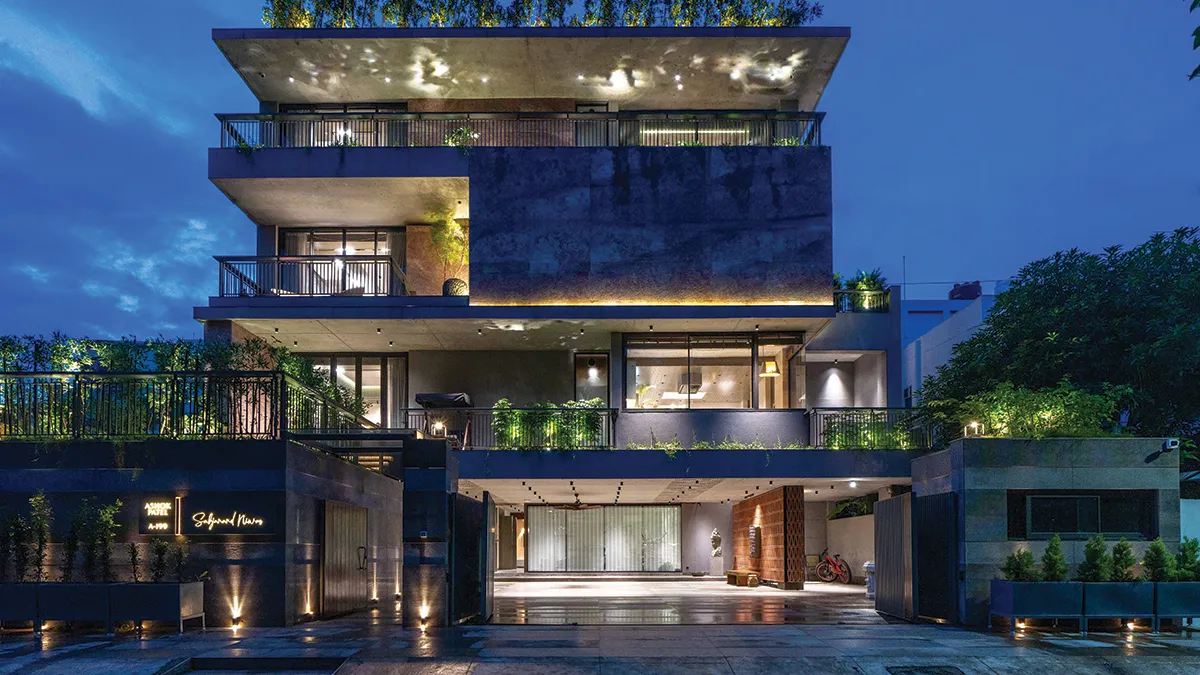
The design of this house masterfully crafts a home that transcends mere functionality, offering an immersive experience where space, light, and materiality converge to create a living environment that is deeply rooted in cultural sensibilities. It blends tradition and nature with modern elements. Open layouts and interconnected volumes facilitate an effortless flow of movement, light, and air, ensuring that every corner of the home remains visually and spatially engaging.
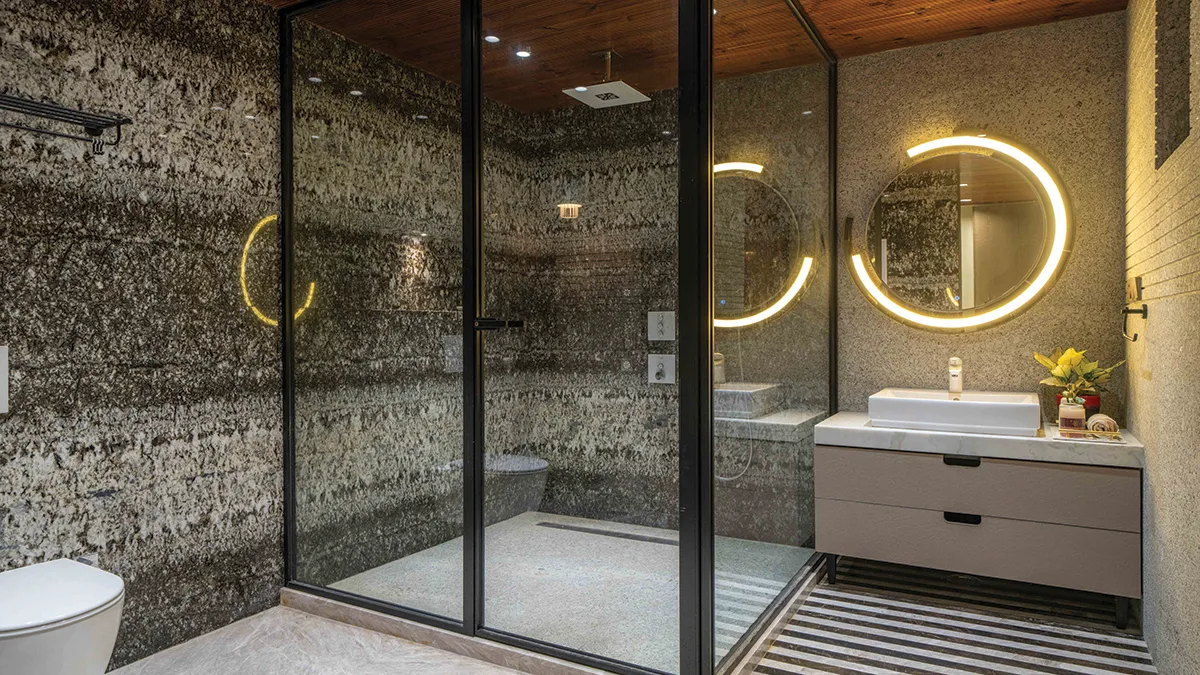
The interiors come alive with a diverse palette of textures—hydro, river-washed, leather, and grooved stone finishes interwoven with fluted wooden surfaces and rich veneers. Grey stone walls create a striking contrast against the greenery spread across different levels. Terracotta screens add depth by playing with light and shadow while also hiding utility areas. Stone sculptures and handcrafted details bring cultural charm, making the home feel rich in heritage and artistry.
Fact File
Typology: Residence
Location: Bhopal
Built Up Area: 10,000 sqft
Date of Completion: 2025
Photo Credit: Ricken Desai
Kitchen: Stosa Cucine
Hardware & Fittings: 90 Degree
Lift: Kone
Furniture: Nivasa
Lighting: Oorja
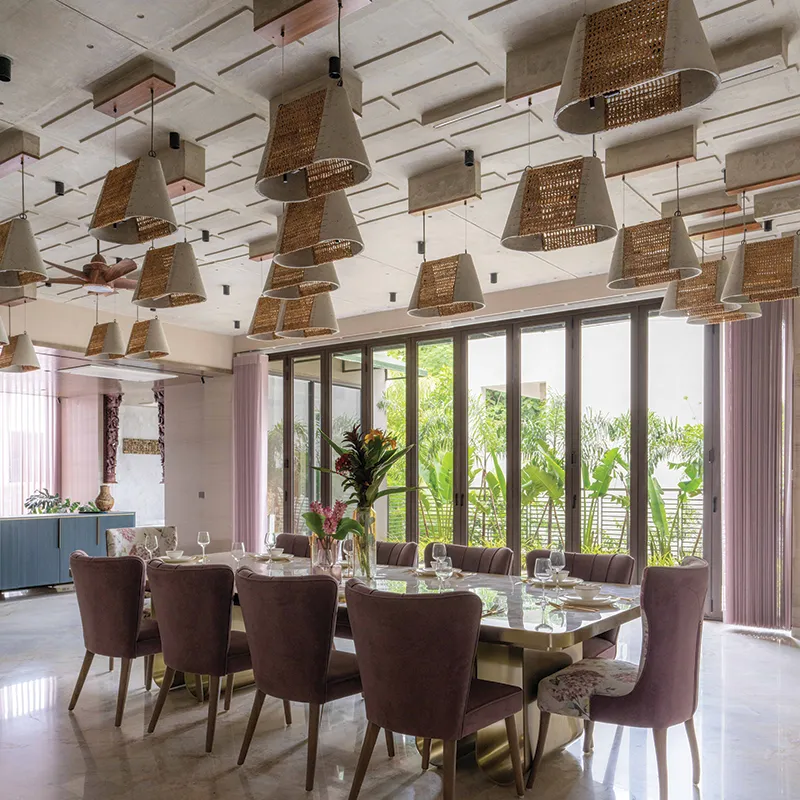
The exposed concrete ceiling has a distinctive design, with precisely formed suspended concrete volumes, integrated and reinforced within the slab. These units not only serve as structural elements but also double as lighting fixtures, creating a dual function that elevates the design. The woven rattan allows for diffused, soft lighting, creating a warm ambiance. This unique approach highlights the raw beauty of concrete while maintaining a sophisticated, industrial aesthetic.
The terrace houses a traditional kitchen (chulha) set beneath a locally sourced kavelu roof from a village house. This architectural gesture reinforces the residence’s commitment to honoring ancestral traditions within a contemporary framework.