This climate-responsive built environment was designed by considering the structural and construction elements and using the right materials.
Nishan M, Vivek PP
This three-bedroom weekend home set within a farmland is designed as a space to celebrate the client’s passion for music and nature and also serving as a gathering place for like-minded friends. The six-acre site, dotted with arecanut trees and a seasonal canal running through its center, provides a rich natural context. About a quarter of the land has been developed for the house and its immediate landscape. Responding to the tropical wet climate, marked by heat, humidity, and heavy monsoons, the design emphasizes climate sensitivity through cross ventilation, shading elements, and appropriate material choices.
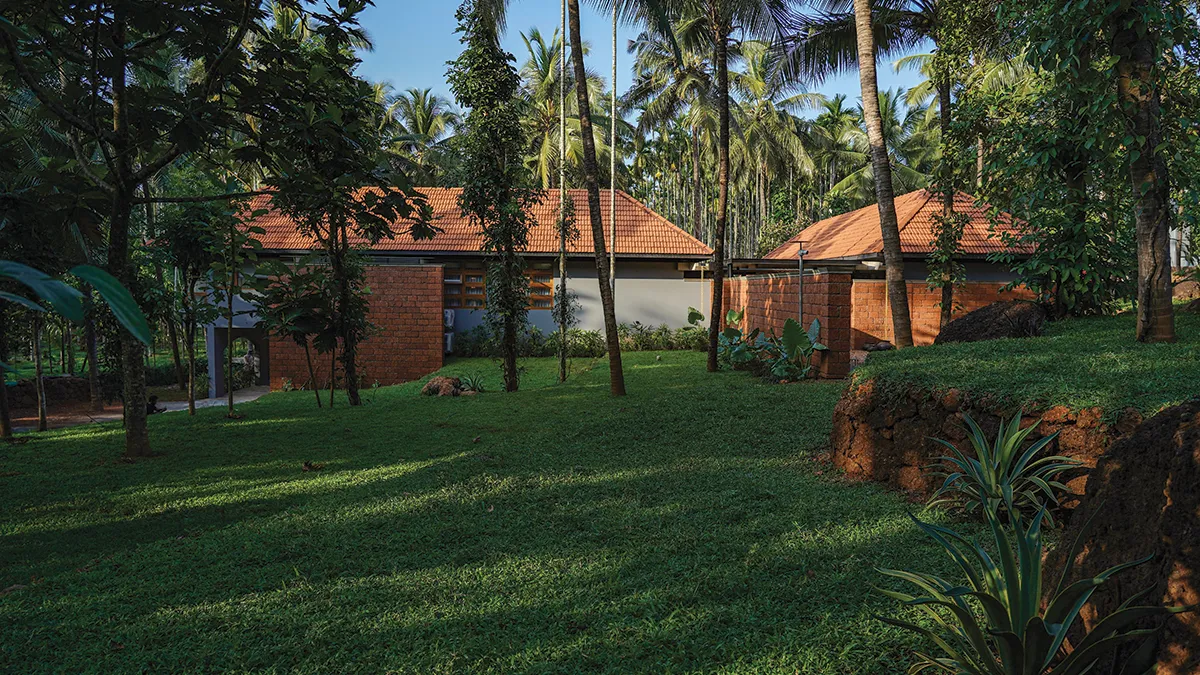
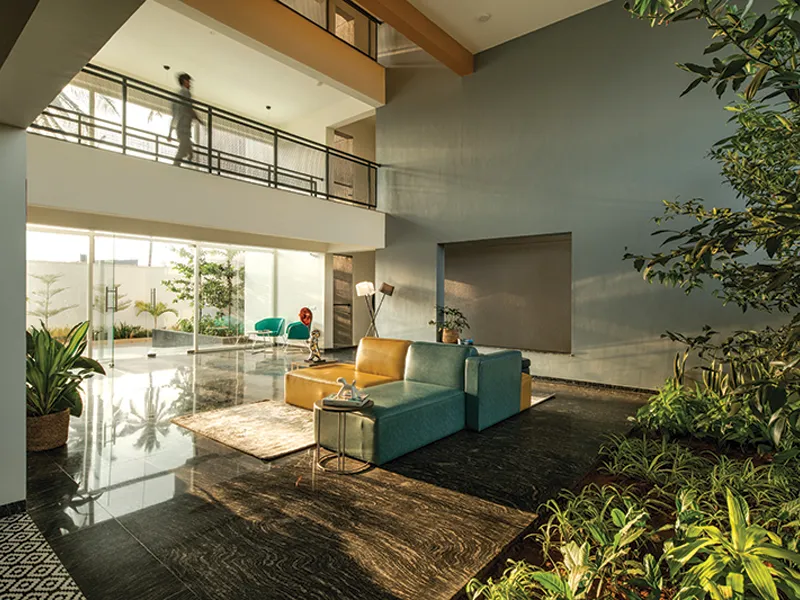
Named after a raga associated with rain, Malhar is envisioned as an open, fluid plan where architecture seamlessly merges with nature. The various rooms in the home are all oriented to maximize views, breeze, and the sensory experience of rain and greenery.
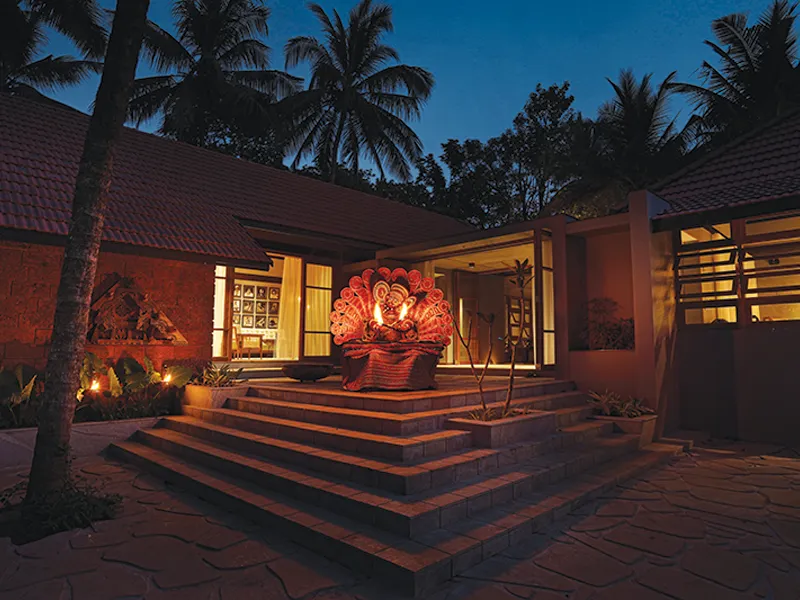
The structure emerges organically from the contoured site, with exposed laterite walls guiding movement and visually linking built and unbuilt spaces. Entry unfolds through a layered sequence into a foyer that frames views of a courtyard, infinity pool, arecanut grove, and a music gazebo.
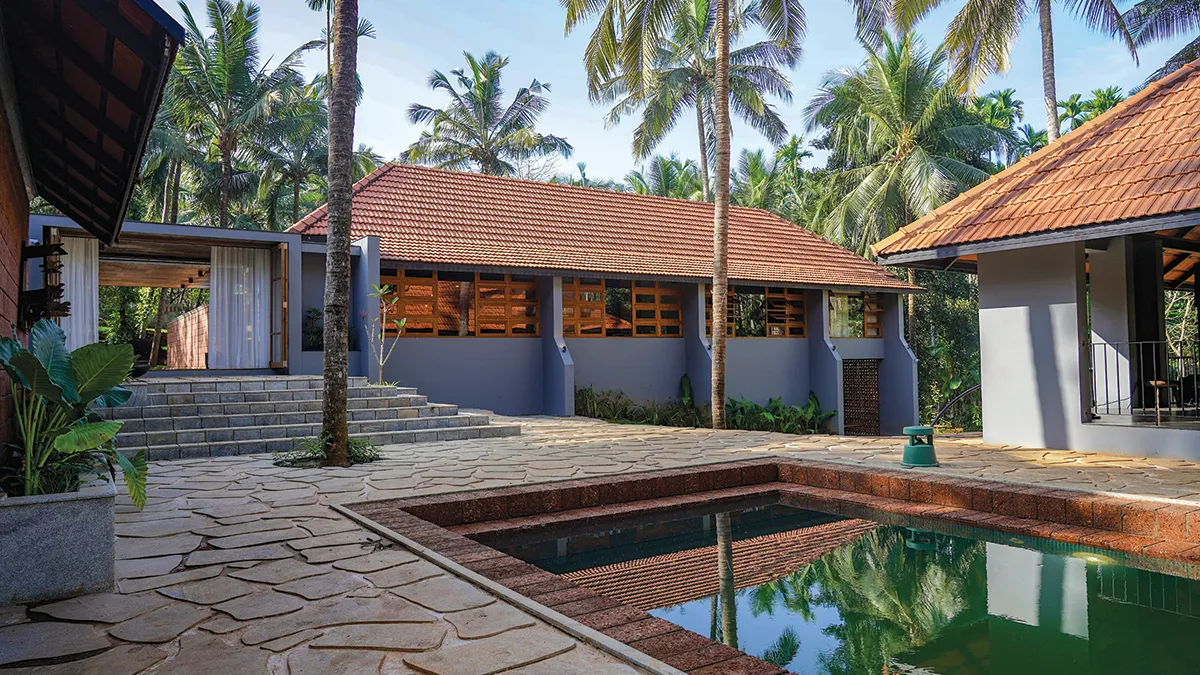
An L-shaped plan ensures openness, light, and ventilation. The sloping Mangalore-tiled roof responds to climate and terrain, while restrained use of concrete and a muted palette of laterite, grey, and Kota stone create a calm, understated backdrop.
Fact File
Location: Alappadamba, Kerala
Built-up Area: 405m2
Plot Area: 559.79 CENT
Completion: May 2024
Sanitaryware: Jaquar, Kohler
Furniture: White Décor
Lighting: Kiara
Landscaping: Malabar Landscape
Ceiling: Greenwood
Pool: Mirus Tekhne
Soft Furnishings: Instyle
Automation: Curiousfly
Electrical Switches: Norisys
Malhar is a tropical residence which extends its spatial connections to the surrounding landscape seamlessly. Laterite dominates the material palette and was sourced from the site and local quarries, reducing the carbon footprint considerably. The monotone of the house is consciously decided to make the architecture a quiet, immersive setting and an extension of the landscape.