Varanasi Urban Ropeway depicts material intelligence in heritage mobility. As India’s first urban public transport ropeway, the project demonstrates how material selection can shape not only performance, but also cultural continuity.
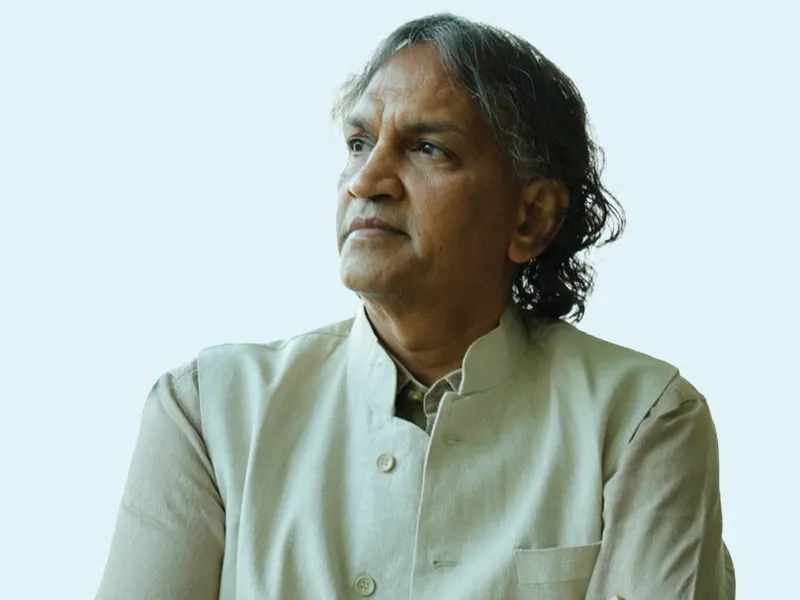
Prof. Charanjit Shah
The Varanasi Urban Ropeway is not merely a mobility intervention—it is a carefully crafted dialogue between advanced engineering and the timeless materiality of Kashi. In a city defined by dense fabric and sacred geography, the design adopts a light-touch, elevated strategy, minimising ground disruption while maximising efficiency.
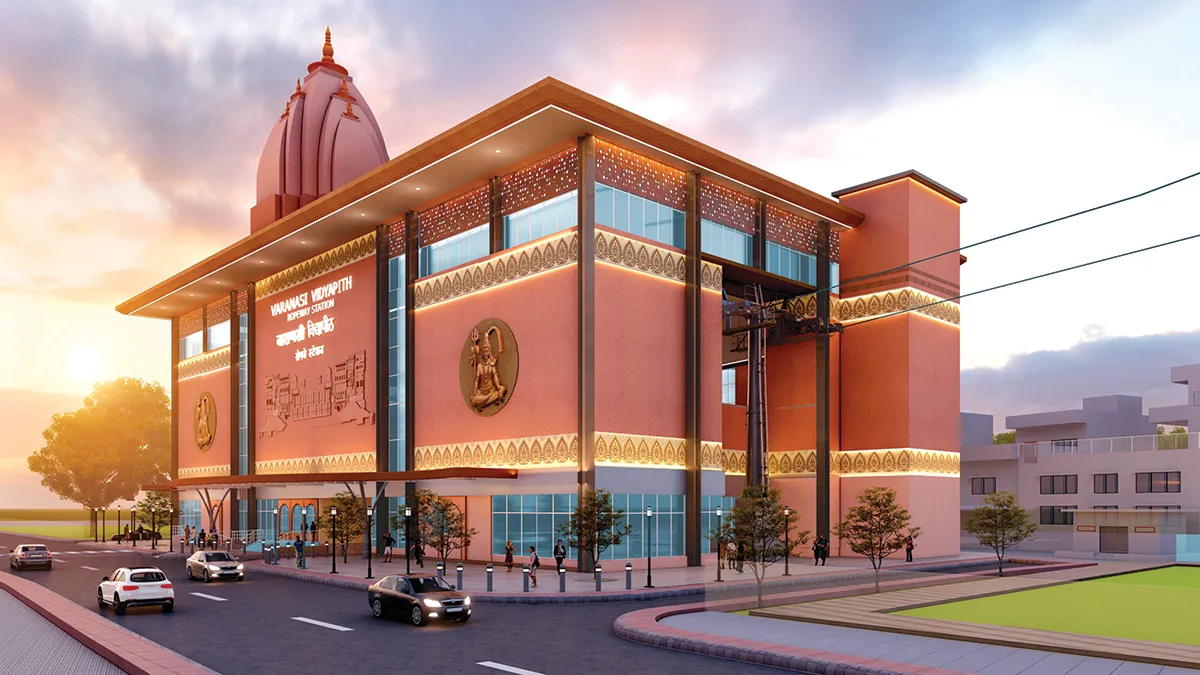
The 3.75 km corridor is anchored by five strategically located stations: Varanasi Cantt, Vidyapeeth, Rath Yatra, Girja Ghar, and Godowlia — each responding to its unique urban context. From high-capacity transit integration at Cantt to the dense, multi-level resolution at Godowlia near the sacred ghats, the stations are designed with minimal footprints, ensuring seamless connectivity while preserving the city’s historic fabric. The structural system comprising slender steel towers ranging from 10 to 55 metres ensures strength with minimal visual intrusion, preserving the historic skyline.
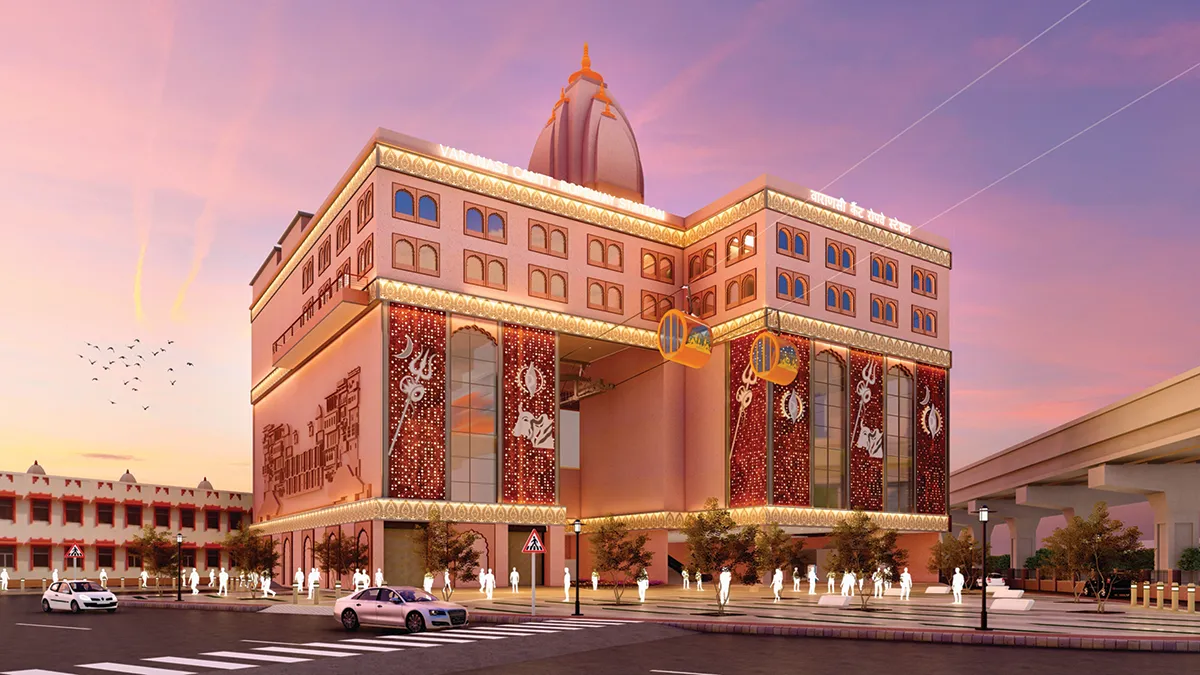
Materiality plays a central role in defining both experience and sustainability. The stations integrate stone-finish surfaces, muted palettes, and textured cladding, echoing the ghats and temple architecture of Varanasi. These materials have been selected not for ornamentation, but for resilience, environmental performance, and their capacity to harmonize with the city’s layered heritage.
The Varanasi Ropeway exemplifies how materials can become agents of harmony—bridging heritage and innovation. It sets a precedent for future infrastructure in historic cities, where design is not imposed, but thoughtfully integrated through material intelligence.
Gurpreet Shah

The gondolas, developed in collaboration with Studio F.A. Porsche, feature high-performance glazed envelopes, offering panoramic views while ensuring thermal comfort and safety. The use of advanced glass systems enhances passenger experience, reduces heat gain, and strengthens the visual connection to the city’s cultural landscape. The key design concept was a light-touch, elevated infrastructure system that preserves Varanasi’s historic fabric while integrating advanced materials and technology to deliver efficient, sustainable urban mobility.
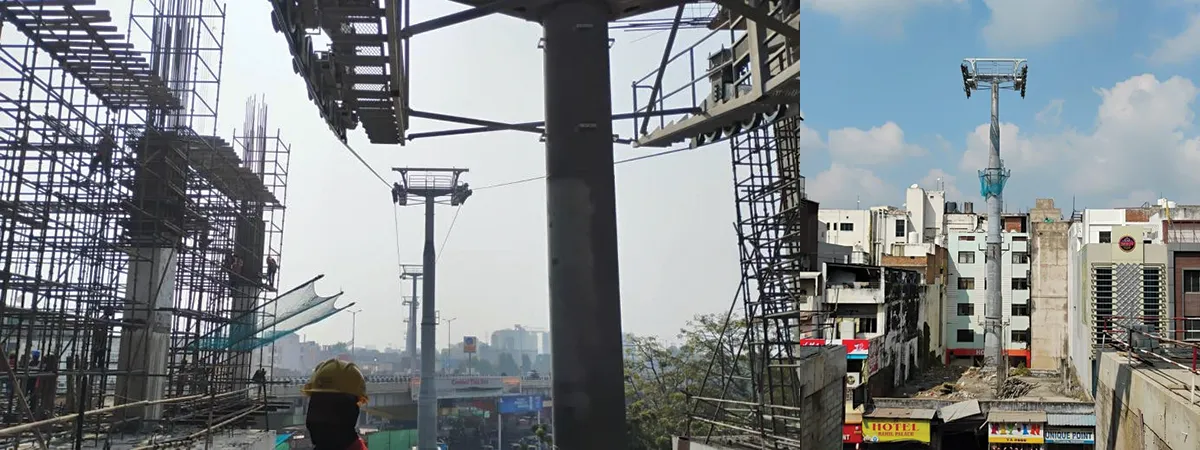
The ropeway operates on electric propulsion, ensuring zero direct emissions, while the elevated alignment eliminates extensive land use and protects existing urban ecosystems. Materials and systems are chosen for longevity and low maintenance, aligning with the project’s 15-year operational framework. 100% electric propulsion (zero direct emissions), minimal land footprint due to elevated alignment, reduced air and noise pollution, long-life, low-maintenance material palette, integrated accessibility: ramps, lifts, and a universal design.
Fact File

Location: Varanasi, Uttar Pradesh
Client: National Highways Logistics Management Limited (NHLML)
Principal Architects: Prof. Charanjit S. Shah, Creative Group LLP
Project Type: Urban Transport Infrastructure (Ropeway Transit System)
Project Status: Expected Completion: End-2026
Corridor Length: 3.75 km linear corridor
Number of Stations: 5
Capacity: Approx. 3,000 PPHPD (~96,000 passengers per day)
No. of Gondolas: 153 (10 passengers each)
Travel Time: 16 minutes (end-to-end)
Technology: Monocable Detachable Gondola (MDG) System
Gondola Design: Studio: F.A. Porsche
Implementation: NHLML under Parvatmala Pariyojana
Architect Firm: Creative Group LLP
Project Cost: Approx. Rs 815 crore (incl. 15-year O&M, HAM model)
Structural System: High-strength steel towers (10–55 m height)
Station Envelope: Stone-finish cladding, textured surfaces inspired by the ghats
Facade Glazing: High-performance glazing systems for visibility & thermal control
Roofing & Skin: Metal cladding and composite panels for durability and low maintenance
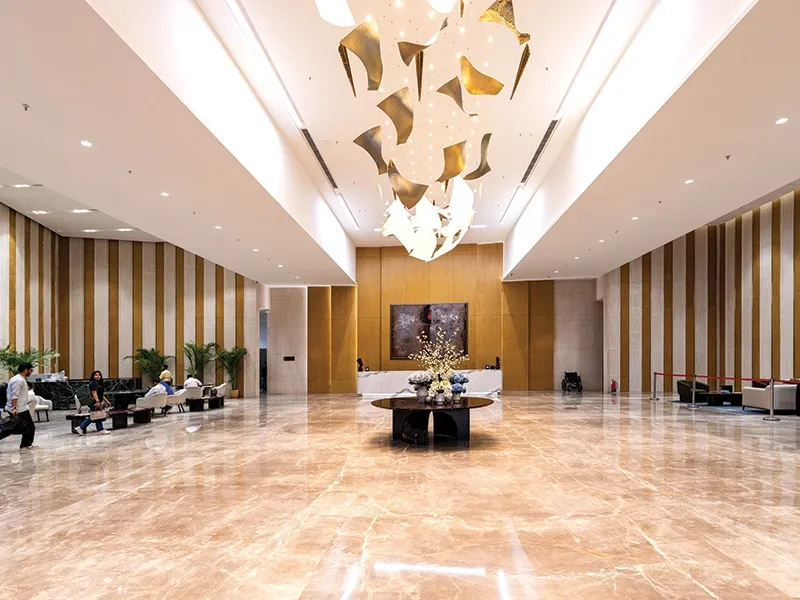
Interiors: Durable flooring, anti-skid surfaces, neutral palettes aligned with cultural context
Gondolas: Panoramic glass cabins designed in collaboration with Studio F.A. Porsche
Sanitaryware: Cera, Hindware
Flooring: Parikh Tiles & Decors
Furniture: Godrej Interio
Lighting: Philips (Signify) and Havells
Ceiling: Knauf
Fenestration: Saint-Gobain
Lift & Escalator: Schindler