Sustainable building design is not an ideological position; it is the most practical, cost-effective response available to us. The tools exist, the products exist, the certification frameworks exist. What is needed is the commitment to use them from the very first design conversation.
Mansi Parikh, Principal Consultant & Founder, Building for Climate Solutions
India is heating up — literally. The climate emergency is measurable — in rising temperatures, failing power grids, and shrinking water tables. Sustainable building design is the most effective, most equitable response to heat stress. Reduce heat gain through the building envelope, reduce the cooling load, reduce AC tonnage, reduce energy consumption, and reduce carbon emissions. The result is a building that costs less to run, is more comfortable for its occupants, and carries a significantly lighter environmental footprint.
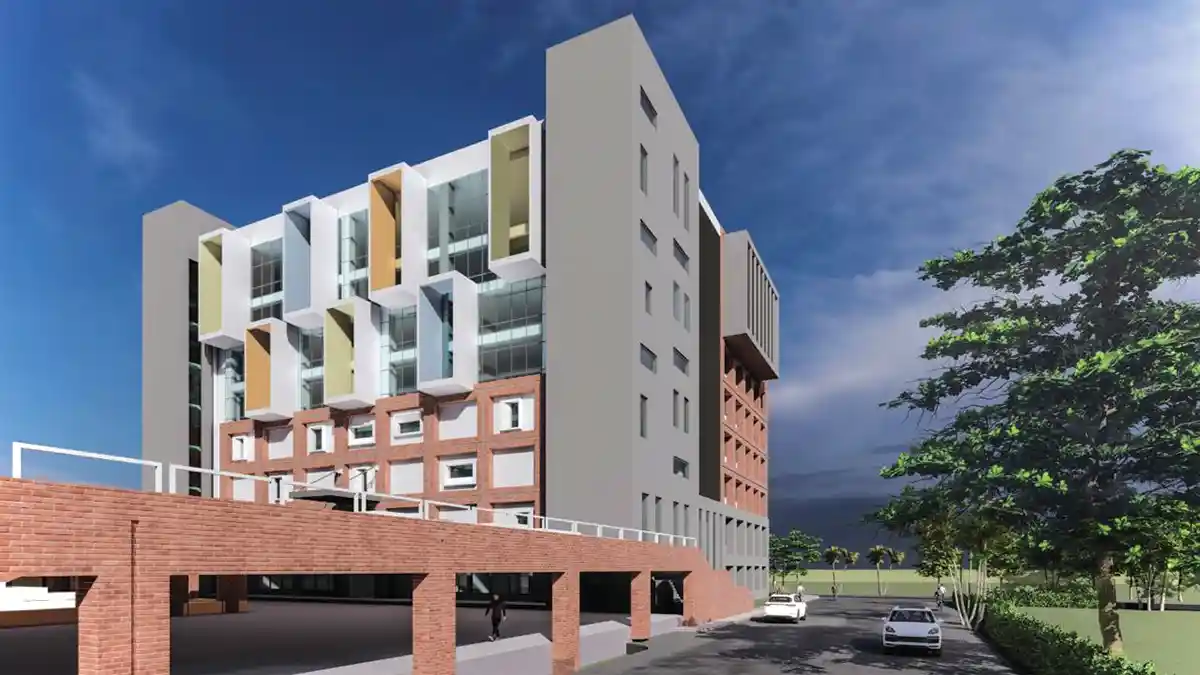
Design Out the Heat Before It Gets In
The best moment to do this is at concept stage for new buildings, where orientation, massing, envelope design, and passive strategies can be optimised at virtually no additional cost. At Building for Climate Solutions, we deploy a suite of analytical tools precisely at this stage.Massing and orientation studies evaluate how a building’s form and placement respond to the local sun path and prevailing winds — decisions that define lifetime energy performance and cost nothing to change on a drawing. Daylight simulations determine the optimal Window-to-Wall Ratio, ensuring generous natural light without the solar heat gain penalty of uninformed glazing choices.
CFD-based natural ventilation analysis maps airflow potential across a site, identifying where cross-ventilation and stack effect can be harnessed to reduce mechanical ventilation dependency. Together, these studies give a project team a data-backed, climate-responsive design direction from day one — not a checklist appended at the end.
There is a growing demand for sustainable and resilient buildings. Though they may incur an initial higher cost, the long-term savings on energy and maintenance makes them economically viable.
Mansi Parikh

Upgrading Existing Buildings
Water and Waste: The Coming Frontier
Water scarcity is set to become one of the most acute pressures on Indian cities and buildings. Innovative solutions like Eco STPs — compact, low-footprint sewage treatment plants designed for residential and commercial buildings — make on-site water recycling practical and affordable.STPs and WTPs should be standard in all large residential and commercial developments, enabling buildings to recycle grey water for flushing, landscaping, and cooling tower makeup — reducing dependence on municipal supply significantly.
Similarly, source-segregated waste management at the building site — with organic, recyclable, and inert waste separated and channelled to third-party vendors — can turn a liability into a value stream, reducing landfill burden and generating revenue.
Innovative Materials Make a Difference
AAC blocks offer superior thermal insulation and lower embodied energy compared to conventional brick, reducing wall heat gain and structural dead load simultaneously. Cool roofs with insulated slab systems combining high-SRI coatings and EPS layers can cut roof heat gain by over 60% — one of the highest-return envelope investments available.BambooCrete, a Vadodara-based innovation, combines bamboo and agri-waste into a bio-composite building material that is lightweight, thermally insulating, and carries significantly lower embodied carbon than conventional construction — a circular economy solution grown from locally available resources.