The design offered for the project establishes a model where infrastructure and development coexist—not as compromise, but as mutual reinforcement.
Sundeep Gwash
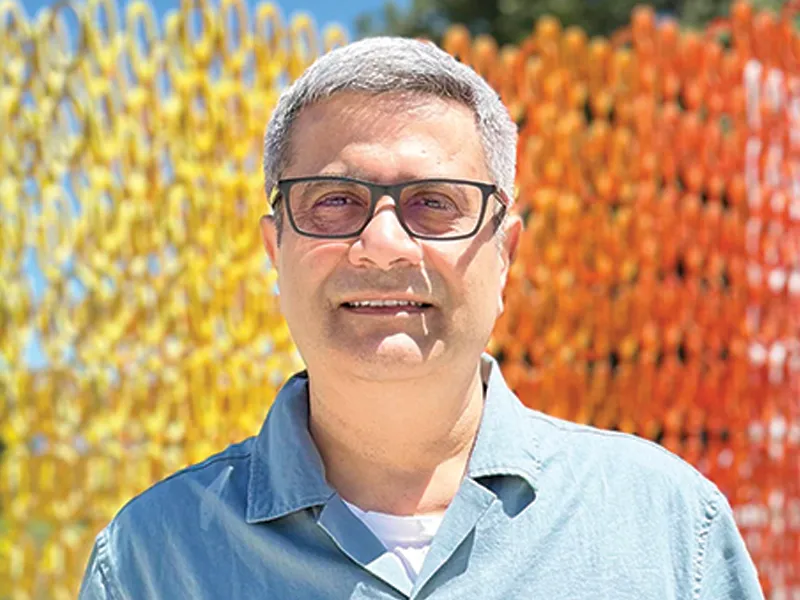
Located at one of Navi Mumbai’s busiest urban nodes, the project reimagines an existing, fully operational bus terminus as a seamless integration of public infrastructure and commercial development. The primary challenge was to introduce a high-value commercial program without disrupting the daily functioning of the transit hub.
Circulation emerged as the key design driver. A looped bus movement system was retained and refined in line with existing entry and exit points, ensuring continuity with established traffic patterns. Within a constrained site, pedestrian and vehicular flows are carefully segregated and aligned, eliminating the need for commuters to cross active bus routes — a critical improvement over the earlier condition.
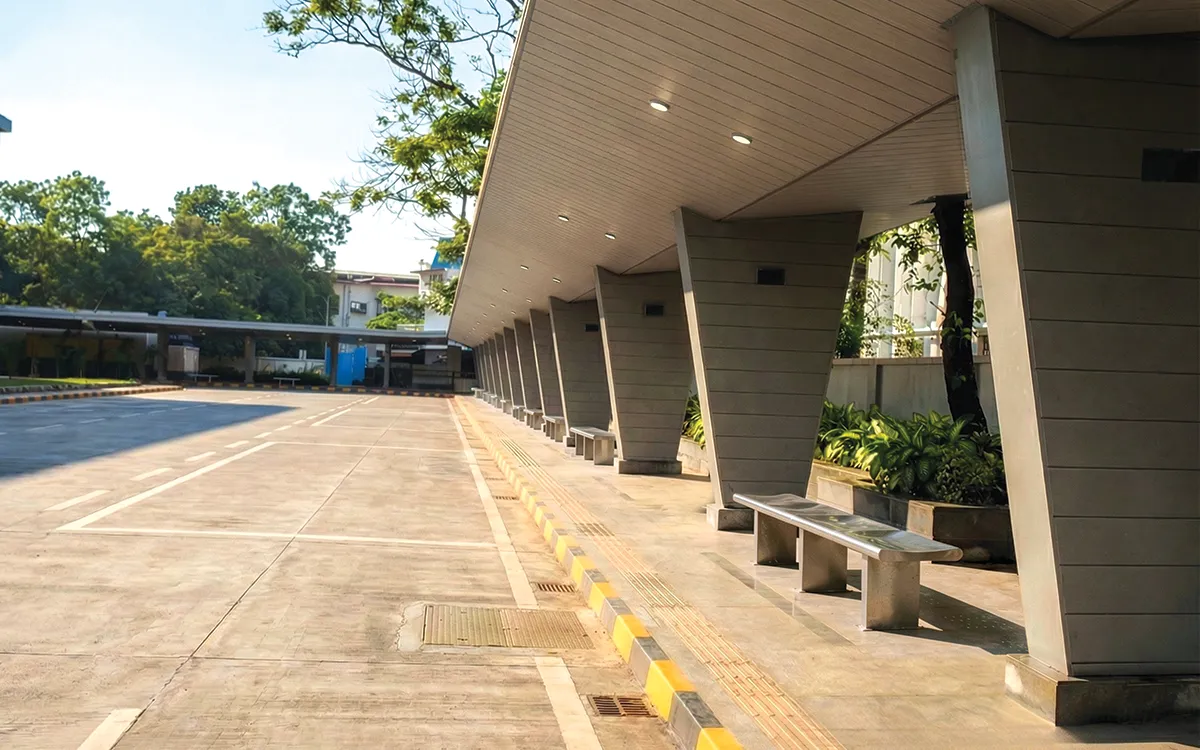
Enhancing user experience formed a core objective. Instead of fragmented bus shelters, a continuous canopy defines the pedestrian spine, offering uninterrupted protection during Mumbai’s monsoons. Public amenities, including toilets and kiosks, are seamlessly integrated along this loop, with an emphasis on visibility, accessibility, and natural light. Durable, low-maintenance materials such as zinc and granite reinforce the project’s resilience to heavy public use.
The commercial component is organized as a podium-and-tower development. Retail and parking occupy the lower levels, while landscaped recreational greens activate the upper podium. Office floors above are designed as flexible, daylit plates aligned with market expectations, supported by an efficient service core.
Fact File
Location: Vashi, Navi Mumbai
Built-up Area: 1,66,950 sqft
Plot Size: 10373.42 sqm.
Collaborators: Knight Frank & SACPL
Completion: 2025
Photography: Rahul Gade
Sanitaryware: Jaquar
Flooring & Dado: Kajaria Vitrified Tiles
Exterior Roof: VM Zinc Seamless
Fenestration: Domal Series
Lifts: Fujitec
Solar: Waaree
Glass: Saint Gobain (FG Climacool Pro 2 and Lamisecure Advanced)
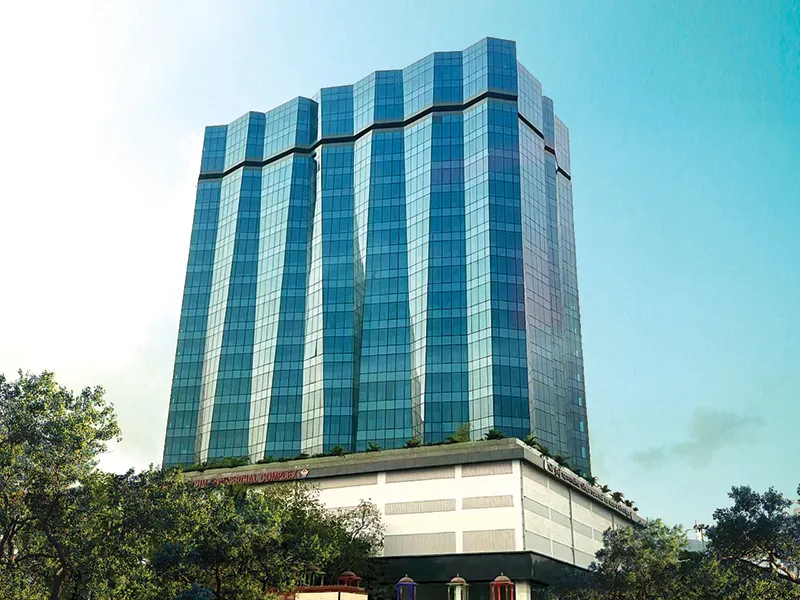
Responding to adverse solar orientation, the tower departs from a conventional flat façade and adopts a folded, in-and-out geometry—akin to a pleated surface. This articulation increases self-shading across the building envelope, significantly reducing direct solar exposure compared to a straight façade. The resulting play of light and shadow not only improves thermal performance but also lends a dynamic visual identity to the structure.
Sustainable strategies include energy-efficient systems, solar panels, and integrated waste management. Existing trees were transplanted, with new plantation strengthening the site’s green edge. This project transforms a purely utilitarian transit space into a cohesive urban interface—enhancing functionality, identity, and everyday public experience.