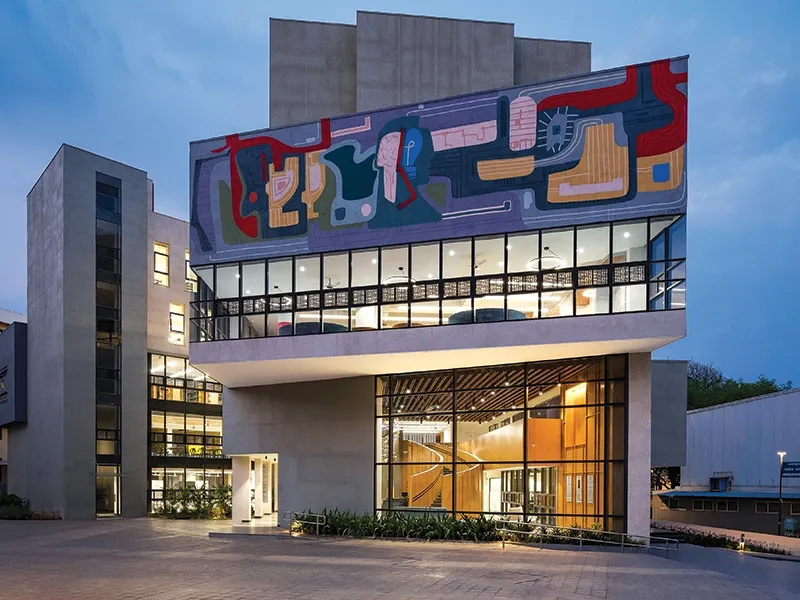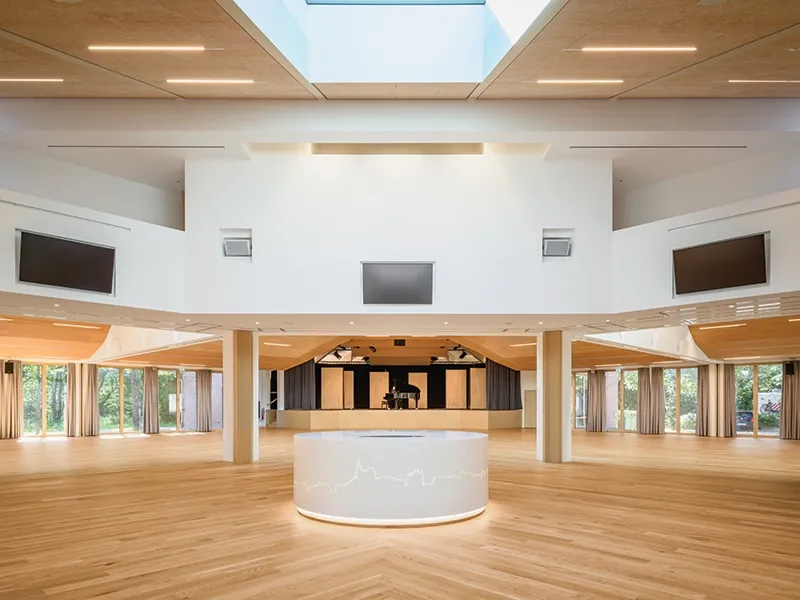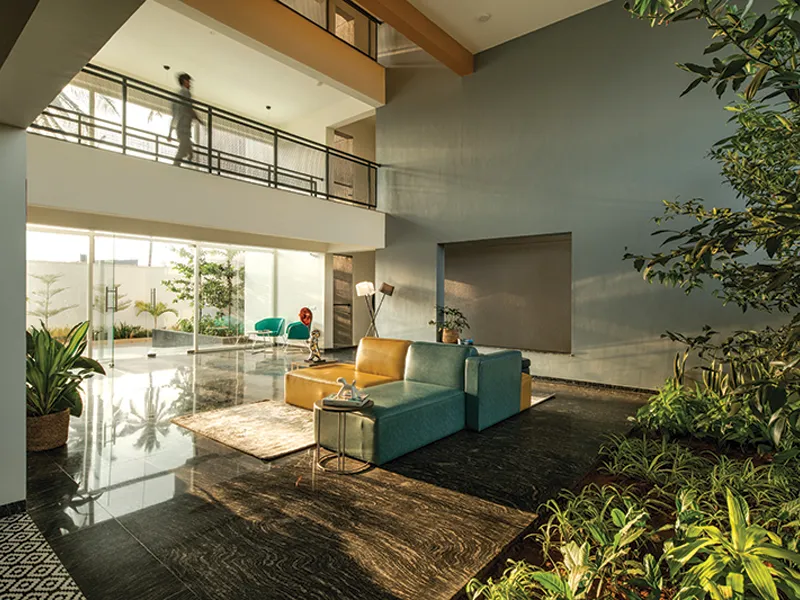
This project explores how the quintessentially urban phenomenon of the street, with its layered social life, can be reinterpreted within a compact apartment building.
Praveen Bavadekar & Namrata Betigiri

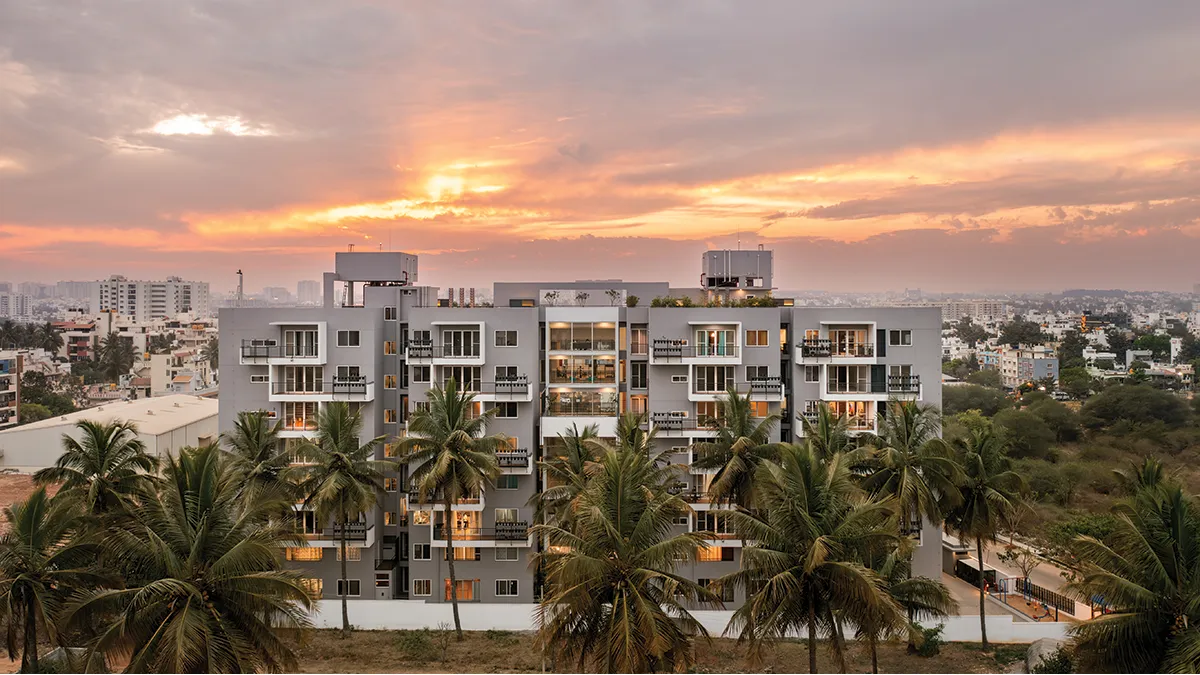
The design of The Formist Treehouse reinterprets the urban street as a social spine within a compact apartment block of just 56 homes by fostering neighbourhood interaction in a vertical format. Set on a site of approximately 2,500 sqm, the building accommodates seven units per floor across eight levels. Despite its compact footprint, the design resists the rigid frameworks of fire norms, local bylaws, and conventional typologies, seeking instead to carve out a dynamic and participatory housing model.
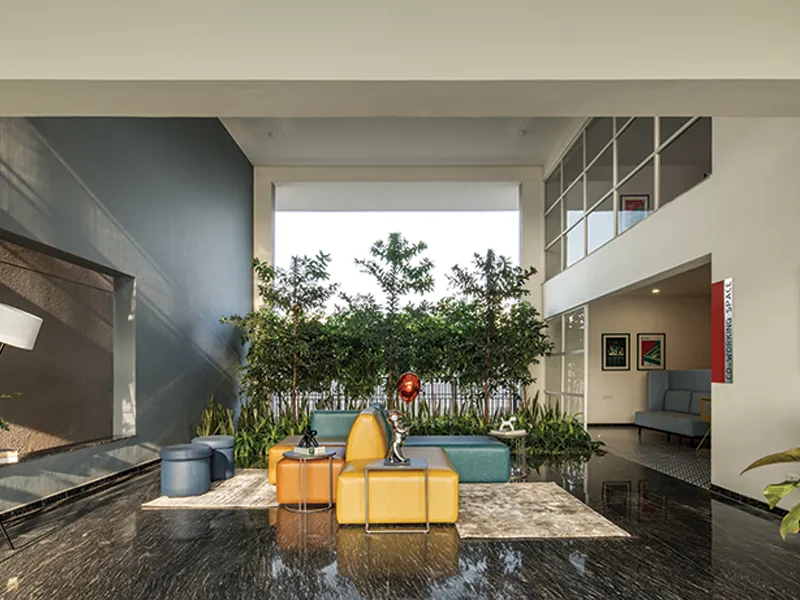
Reimagined as The Treehouse, the Club branches upward with open, semi-open, and enclosed programmes from billiards rooms and yoga terraces to squash courts and breakout decks.
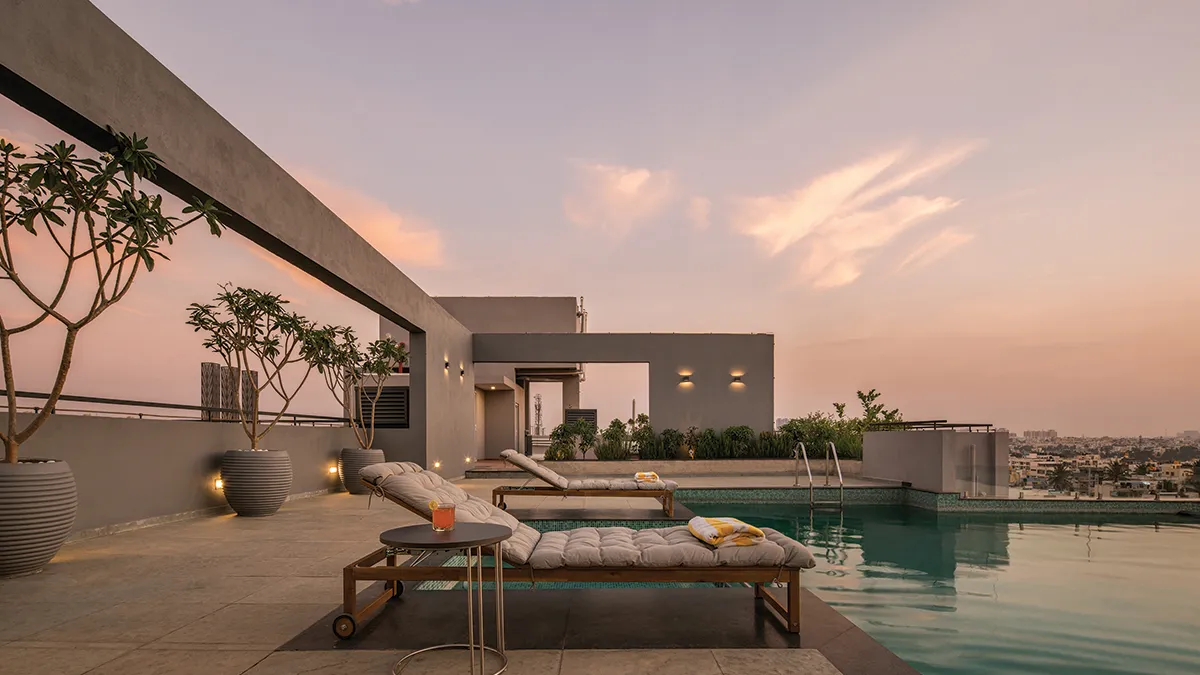
A distinctive dimension of the design lies in its integration of ‘edible landscapes’. Each balcony incorporates vertical screens that accommodate herbs, climbers, and vegetable planters. These living façades not only temper sunlight and channel breezes but also cultivate a domestic ecology that blurs the boundary between dwelling and garden. Along the building’s periphery, groves of tropical fruit trees create a living green buffer. At the terrace level, the pool is flanked by a lush orchard-like garden featuring a variety of fruits, enhancing biodiversity while enriching the sensorial experience of everyday life.
Fact File
Client: The Formist Group
Gross Built Area: 10,000 sq.m
Location: Bengaluru
Typology: Multi-family Housing
Structural Design: Ambarish and Associates, Bengaluru
MEP + PHE: Manoj and Associates
Landscape Architects: Sudhir Choughule, EcoInscape
Photography: Shamanth Patil
Vitrified Tiles: Motto and Nitco
Interior & Interior Lights: Hybec
Landscaping: Nirvana Landscapes
Façade Glass: Saint Gobain
By reconceptualising the role of shared amenities and embedding ecological productivity into its architectural fabric, the project challenges the conventions of speculative housing. It proposes a new typology for peri-urban living, one that fuses community, ecology, and lifestyle into an active, resilient, and environmentally attuned model of suburban housing.