After decades of neglect and urban encroachment, the dharamshala has been carefully restored and reimagined as a local community museum—a living archive of the Rung people, a minority trans-Himalayan community to which Jasuli Devi herself belonged. Rather than treating the building as a static monument, the intervention positions it as an active cultural space. Importantly, the project also functions as a modular prototype, offering a scalable model for the revival of other abandoned dharamshalas across Uttarakhand—as museums, community libraries, cultural centres, or locally run homestays, linking heritage conservation with sustainable livelihoods and cultural tourism.
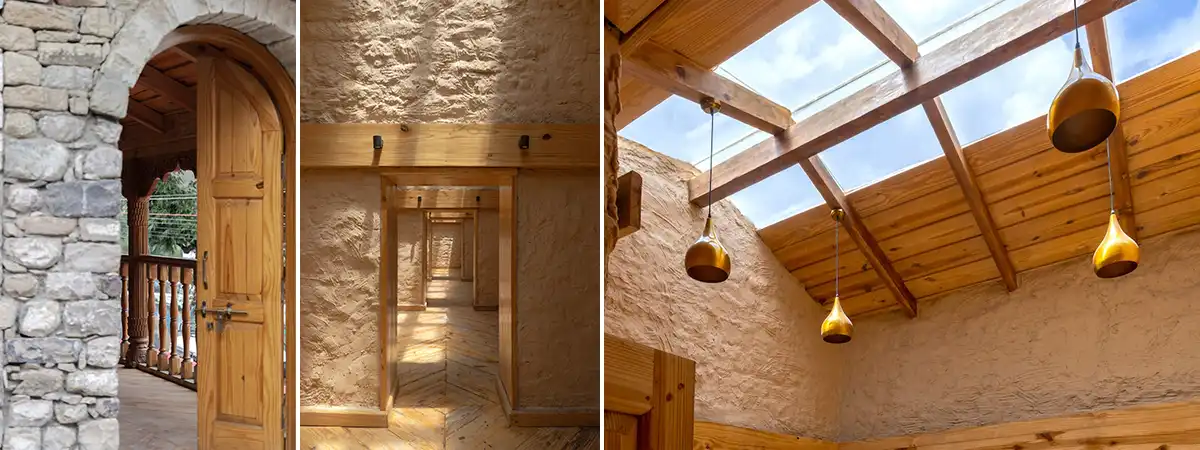
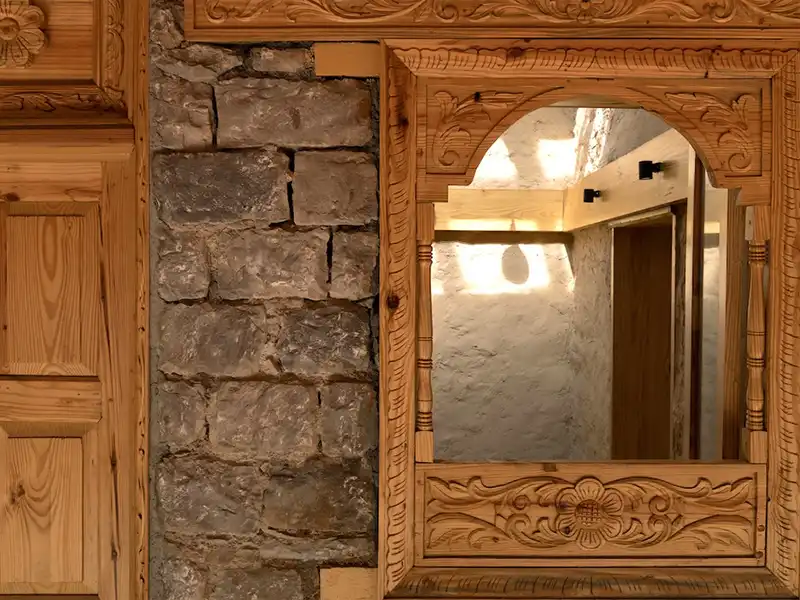
Architecturally, the project addresses a challenging urban condition. Perched above active shops and embedded within a dense grain, the upper floor of the structure had long been unusable, with collapsed roofs and floors. The intervention preserves the building’s spirit while redefining its utility. New doorways connect the upper-level rooms, allowing the museum to unfold as a continuous spatial sequence. A skylight introduces natural light, gently illuminating carved details and exhibits, and transforming the once-dark interior into a calm, contemplative environment.
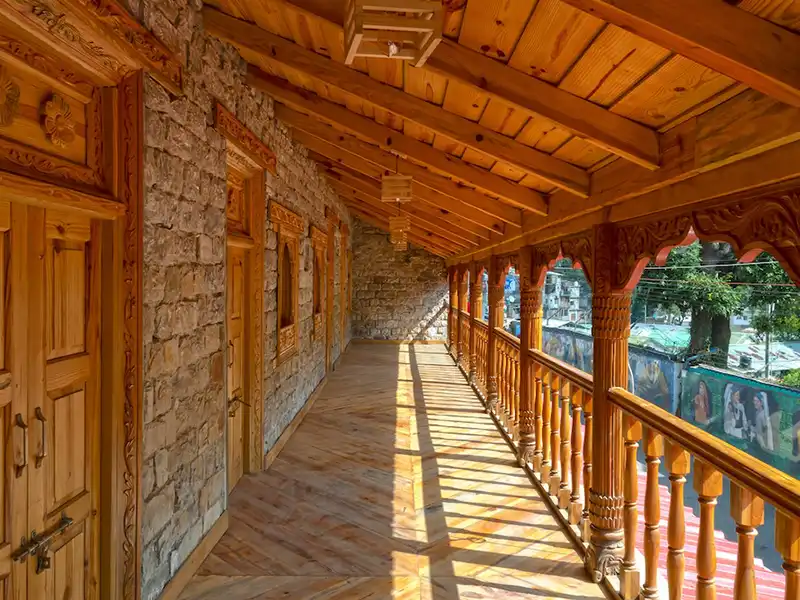
A key aspect of the project is the use of Likhai, the traditional wood-carving craft of Uttarakhand. Local artisans were engaged to carve doors, columns, railings, brackets, and windows, ensuring cultural continuity while embedding local knowledge within the architecture. Wooden flooring lends warmth to the interiors, while the exterior facade was retrofitted using mud plaster, wooden signage, and traditional chajjas, carefully stitching the building back into its historical context.
More than a single restoration, the project represents an ongoing initiative to reclaim structures that once supported a travelling culture and now lie unused or encroached upon. Here, architecture acts both as a carrier of memory and a catalyst for future livelihoods. Standing quietly above the bustle of the street, the restored dharamshala demonstrates that conservation need not be nostalgic—it can be functional, contemporary, and deeply relevant. Sometimes, re-inhabiting what already exists can be more powerful than building anew, allowing stone, wood, and story to once again hold life.