Ædifica presents a multi-residential project, which is part of an integrated vision of densification of the urban fabric, and an inspiring example of sustainability and social innovation.
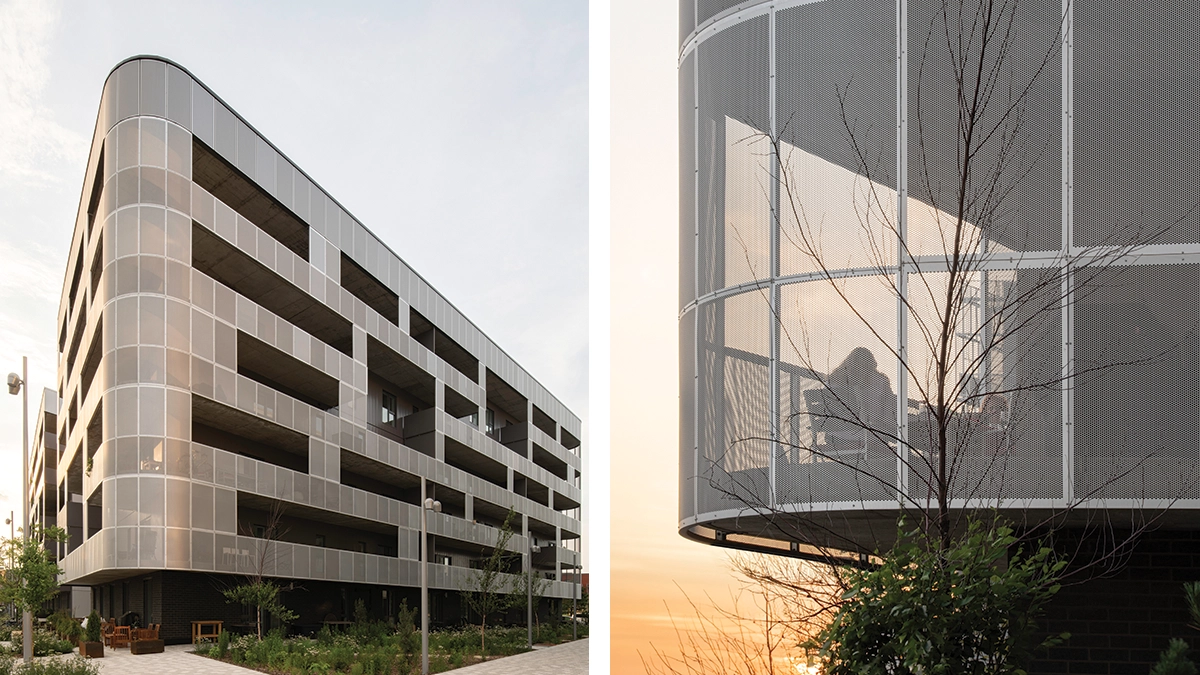
The Block 4 project known as Cité Angus phase II, is located at Technopôle Angus in Montreal, Canada. It is an urban revitalization and sustainable-development, with organizations, businesses, and commercial establishments. Cité Angus is a 6-storey building comprising 88 condominium units, including two small commercial premises on the first floor facing the public square.
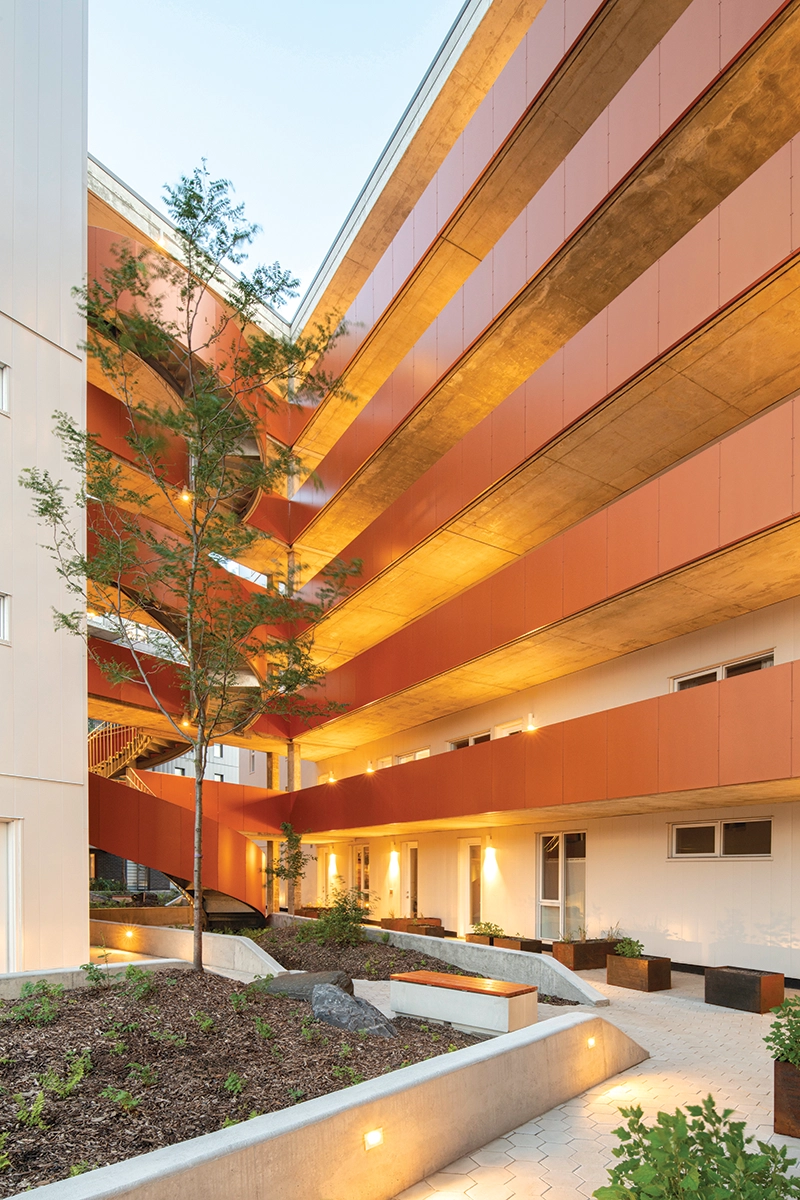
The building takes the form of two volumes facing each other, giving way to an inner courtyard running through its center. The integration of this courtyard with its pedestrian walkway, private spaces, and landscaping at the heart of the project allows permeability with the urban fabric, encouraging human appropriation at the center of the site without compromising the program’s minimum density objective.
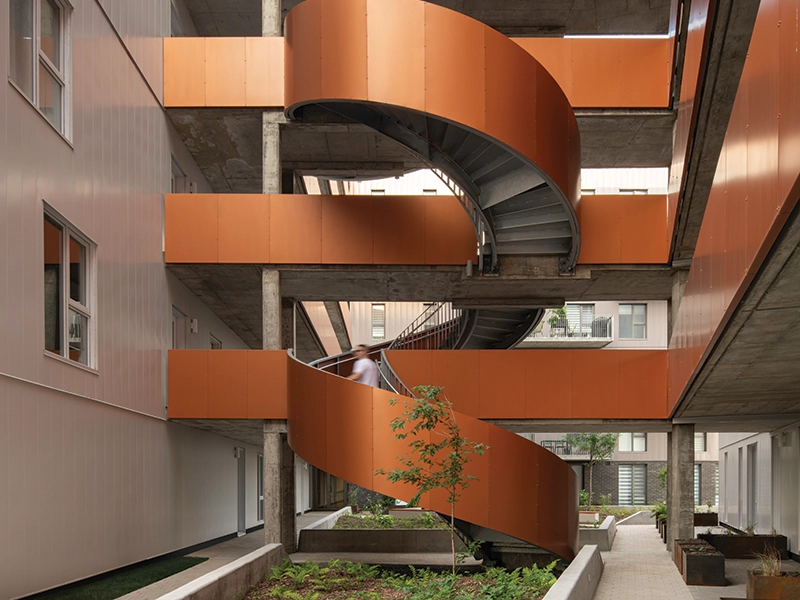
From the interior courtyard, visitors can discover a monumental spiral staircase at the center of a network of exterior passageways, extending across all floors, enabling residents to access their homes directly from the public space. Design choices support the project’s main guidelines: density, diversity of residential typologies responding to evolving needs, access to natural light and views, biophilia, and integration of outdoor spaces.
On the exterior facades, a perforated, diaphanous second skin of metal, inspired by the district’s industrial heritage, follows the rhythm of the balconies. On the façades facing the inner courtyard, the continuous walkways clad in a second skin are interrupted to maximize the amount of natural light entering the apartments. By removing the second skin formed by the perforated metal mesh, the first skin is revealed, exposing the splitting of the building into two distinct volumes, revealing the heart of the project and its own identity. The light-coloured metal cladding of the envelope, and the bright copper colour of the railings on the walkways in the inner courtyard, contrast with the more sober, monochrome materiality of the public interfaces.
Human values guide the development decisions, supported by use of local, sustainably sourced, low-contaminant materials, and integration of water- and energy-efficient equipment. The heating and cooling system, both private and common to the building, is connected to an energy loop, ensuring exchanges of thermal loads between all the buildings. This will ultimately reduce greenhouse gas emissions in the project by 26% - an innovative strategy in the face of the climate crisis.
Photos: David Boyer Photographe
Source: V2com