In the design of the museum by Studio Link-Arc, the traditional human-oriented architectural perspective is deconstructed into a nature-oriented scattered perspective.
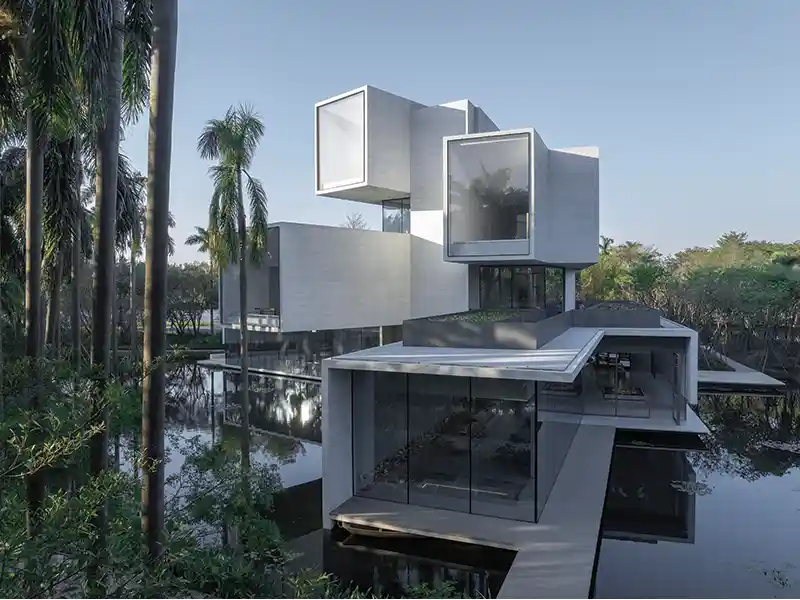
The architects chose to hide the building behind a row of existing cedar forests. The shape of the building consists of four vertically stacked concrete tubes, resembling four horizontally rotating “lenses” that capture the activities of egrets. The design aims to minimize the presence of the building and harmoniously coexist with the indigenous creatures. Looking at the museum from Egret Island, the building “disappears” into a lush subtropical forest.
Each tube of the museum is rotated to an optimal viewing direction according to site conditions, forming four staggered “framing frames” in the internal space. Floors 1 to 4 look towards the tree roots, trunks, crowns, and treetops. People can observe the swaying of tree shadows and the fluttering of birds on Egret Island from different heights inside the building.
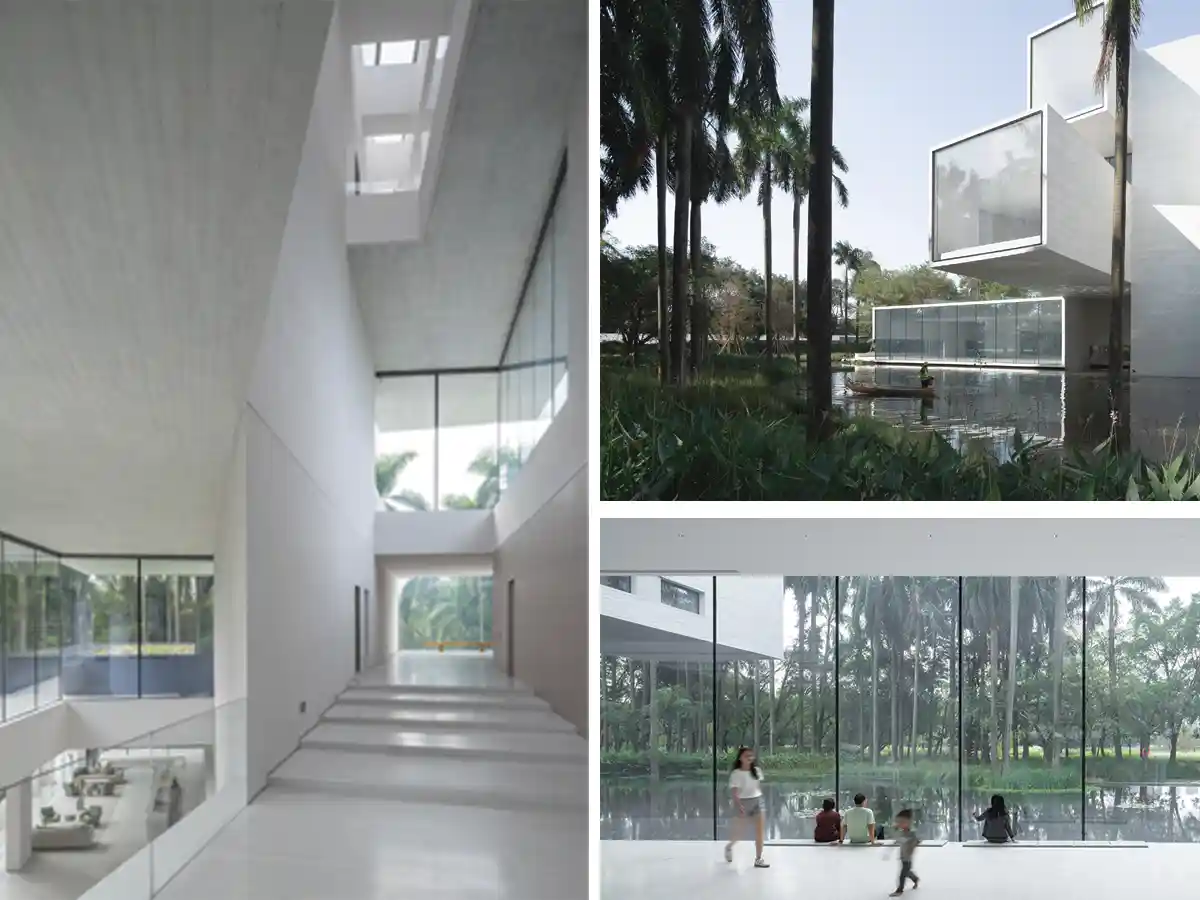
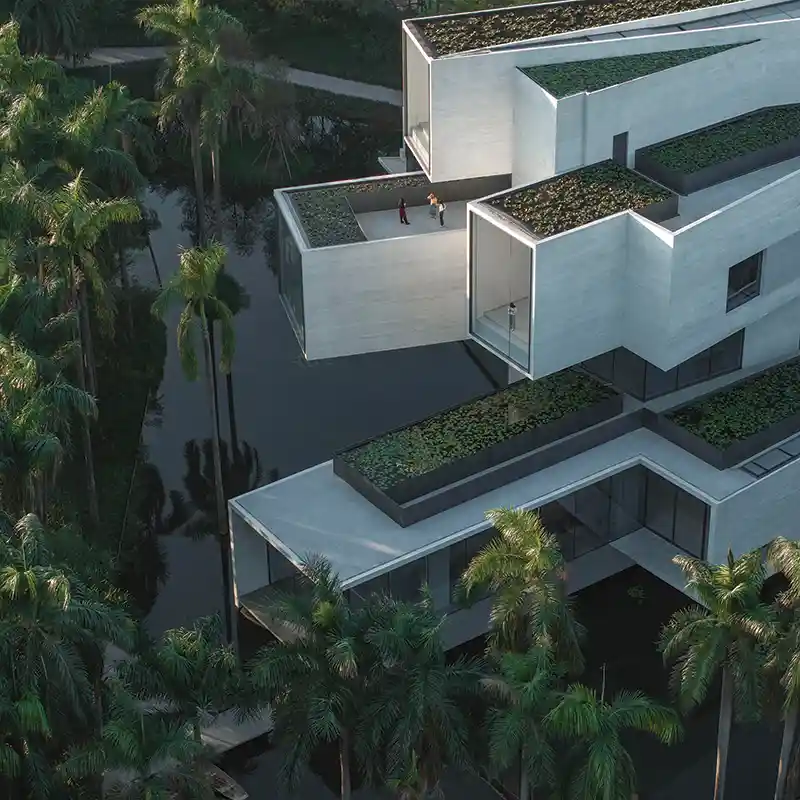
The building adopts a box-type concrete structure system. The side walls, top plate, and bottom plate of each tube work together to provide overall load-bearing support. Softened by deep beams, sunlight filters through the upper skylights and penetrates into the interiors.
The exterior facade is made of cast-in-place pine molded concrete, lending it a natural texture. The roof of the building is covered by lotus ponds, and the ecological water features weaken the presence of the building on the fifth elevation.
Photo credit: Arch-Exist and Tian Fangfang
Source: V2com