The Kalaignar Dr. Karunanidhi Kottam Museum, Library & Cultural Center, designed by Ponni, Oscar, Rahul Architects, honours the legacy of Dr. M. Karunanidhi, the five-time Chief Minister of Tamil Nadu.
This multifaceted complex comprises a large museum, a library, and a convention centre, which showcase the political, personal, and cinematic journey of Dr. Kalaignar M. Karunanidhi. Located at his birthplace, Thiruvarur, near Thanjavur, it functions both as a repository of historical and cultural artifacts and as a centre for knowledge and learning.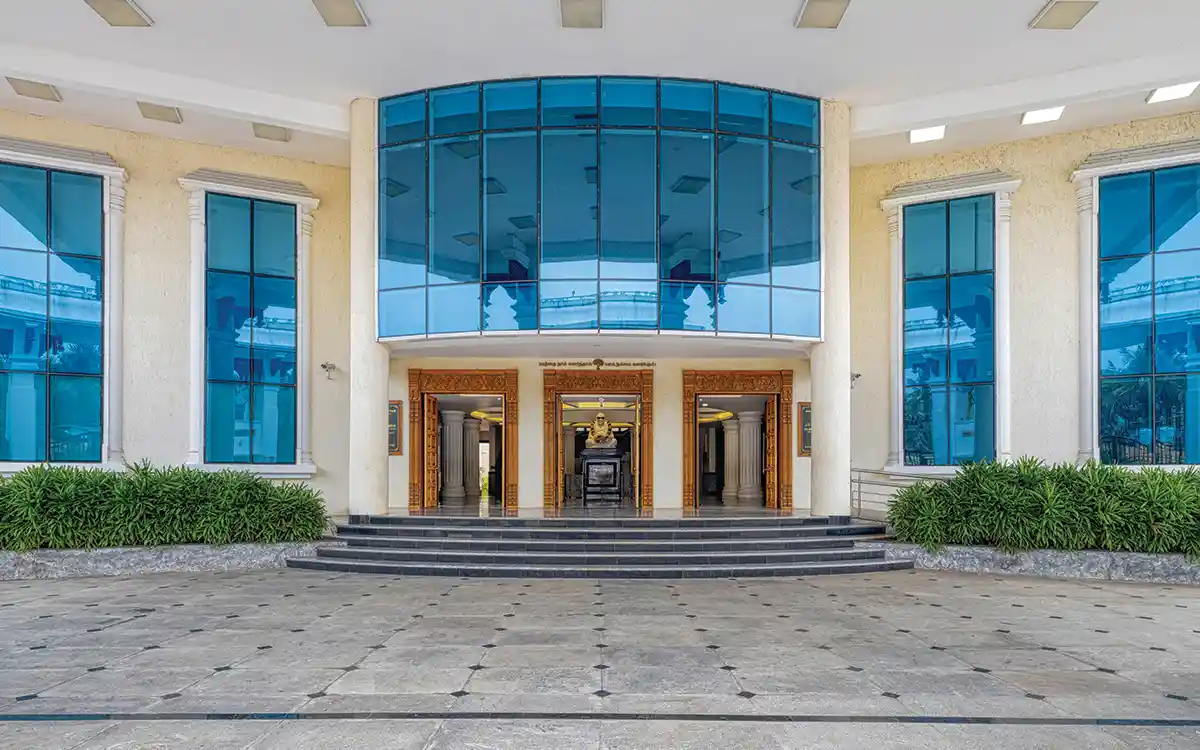
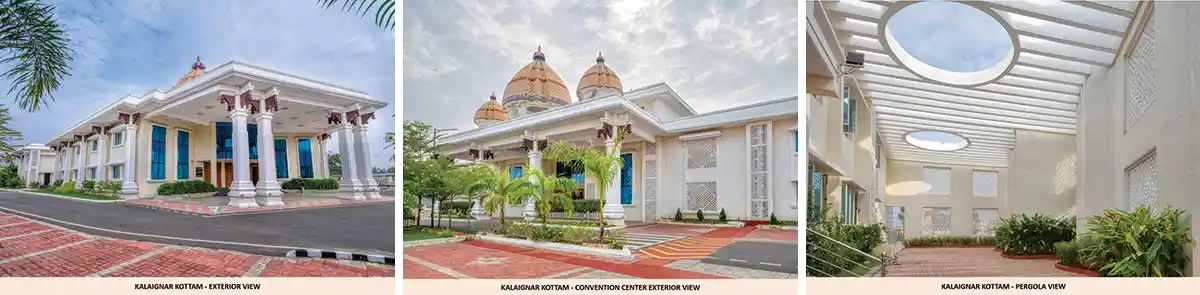
Its architectural style and design features, typically associated with temples, underscores the building’s significance. This influence is evident in the façade, featuring wooden-capped pillars, a striking entrance arch, a grand porch supported by magnificent Pallava-inspired pillars, domes reminiscent of early Pallava temple gopurams, and segmental arches above the windows. Carefully designed landscaping, featuring paved pathways and lush greenery, further elevates the building’s visual appeal.
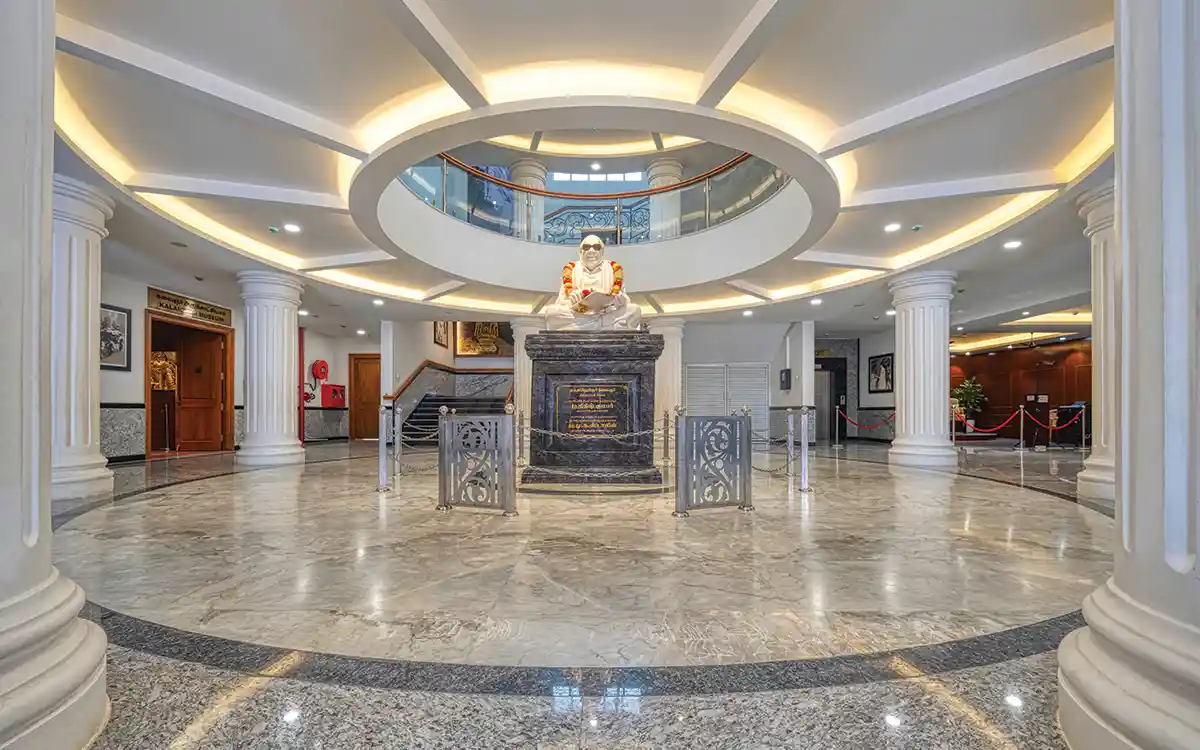
The Museum section provides a rich and immersive experience with carefully curated spaces featuring framed photographs and displays that chronicle the significant moments and contributions of Dr. Kalaignar’s life and legacy. Sculptures and busts are thoughtfully positioned, adding a three-dimensional depth to the historical narrative. Lighting is meticulously controlled to highlight the exhibits, while clear and intuitive pathways allow visitors to navigate seamlessly through the displays.
The building integrates elements of cultural heritage with contextual design, engaging interiors, and is both resource efficient and sustainable.
Dr. Ponni M Concessao Principal Architect

In the spacious Library, modern design elements with traditional architectural touches, create an intellectually stimulating environment. An auditorium/convention hall features high ceilings, decorative wall panels, and chandeliers, and outdoor communal spaces are enclosed with lattice screens done in GRC.
The Museum is designed and operated to be resource-efficient, focusing on energy and water conservation, using sustainable materials, rainwater harvesting, advanced insulation, natural ventilation and lighting, shading canopies, roof top pergolas, and solar panels.
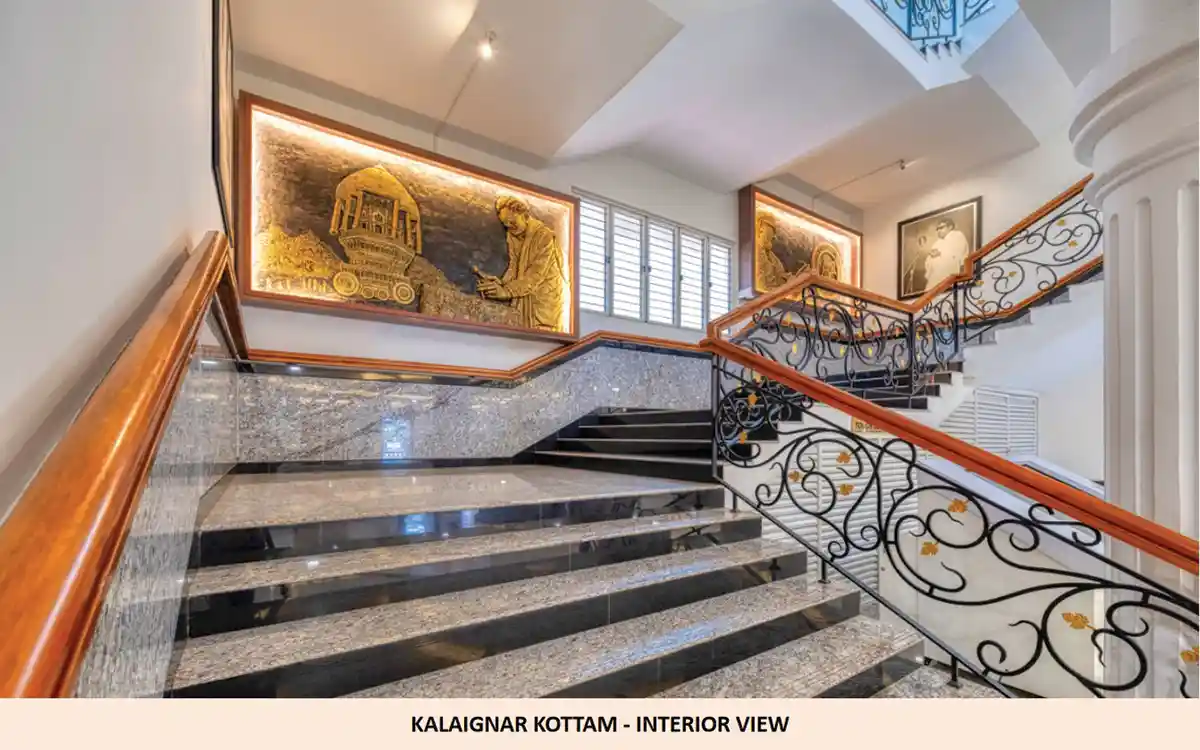
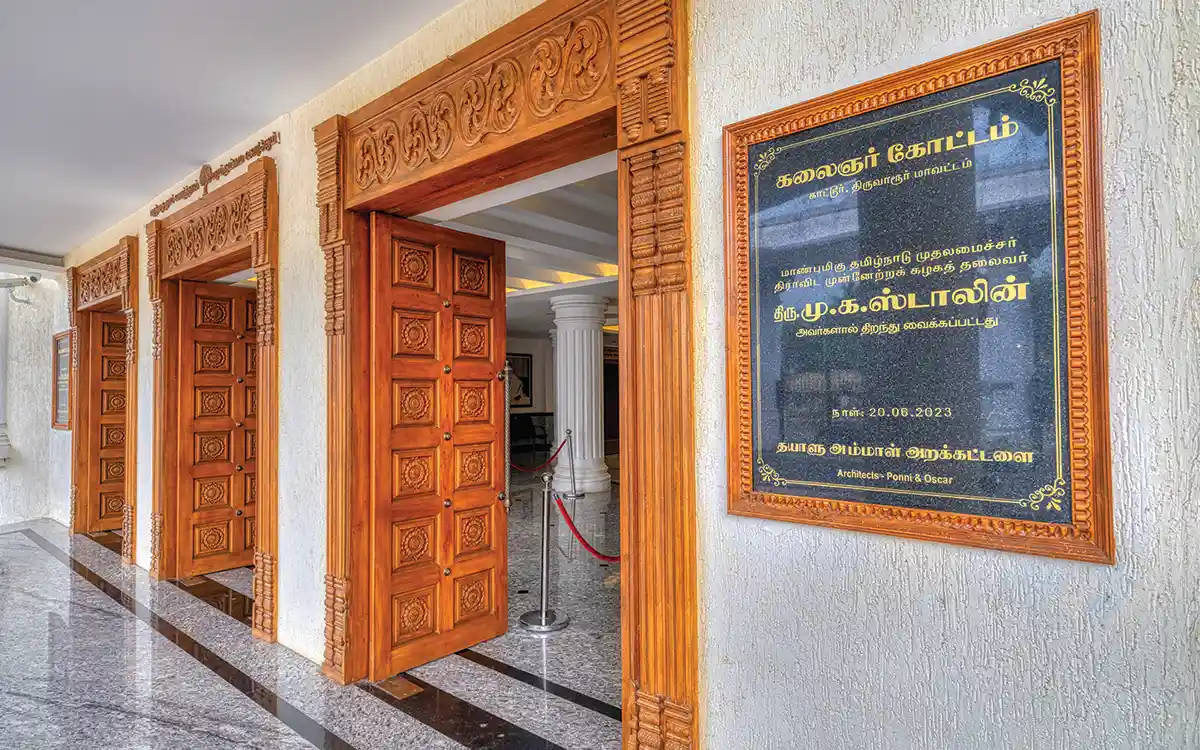
The structure is primarily constructed using RCC and terracotta bricks for structural elements and walls. Granite flooring has been extensively used, GRS screens, and pergola shading elements. In the interiors, wall carvings in the auditorium and wall paneling highlight traditional architectural motifs seen in temples across the region.
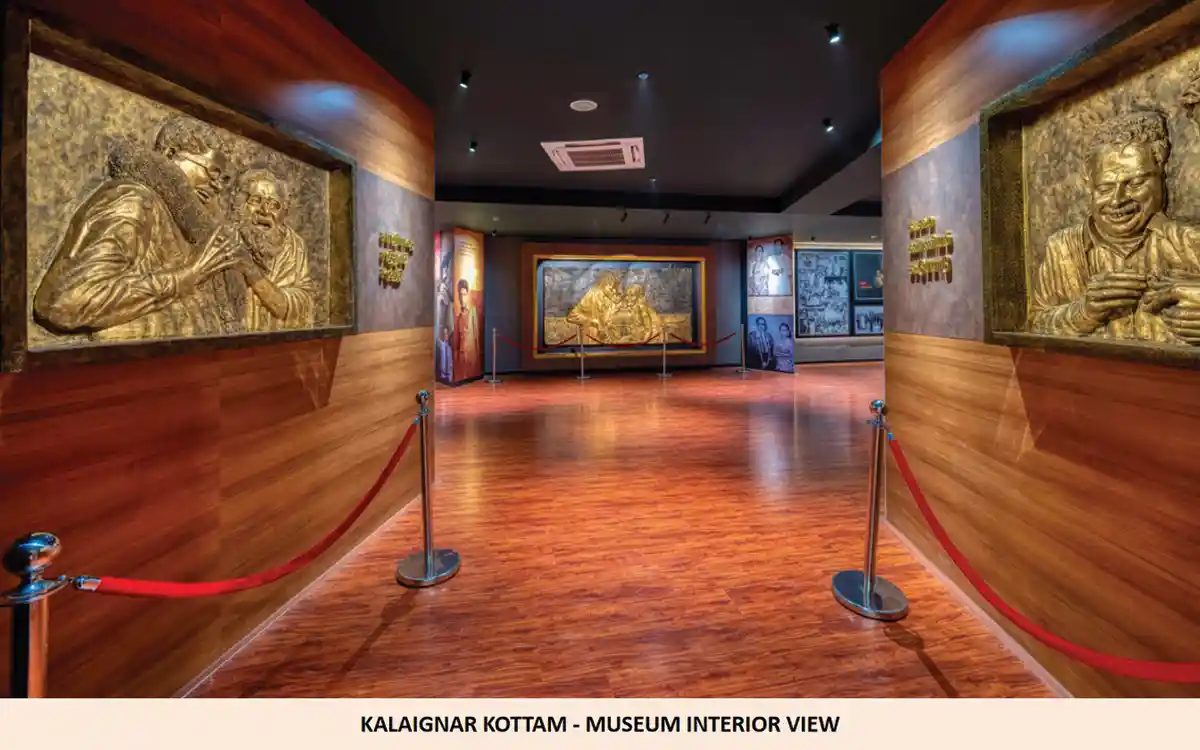
The layout is functional and minimal, with well-connected spaces and semi-open buffer spaces connecting different parts of the building, enclosed with jaali walls, acting as breathing zones and enhancing the quality of the overall structure. The central planning emphasizes the double-height atrium, which houses the statue of Dr. Karunanidhi. The central dome, modelled after the Thiruvarur temple chariot (Aazhi Ther) gopuram, is positioned above the statue, evoking a sense of grandeur.