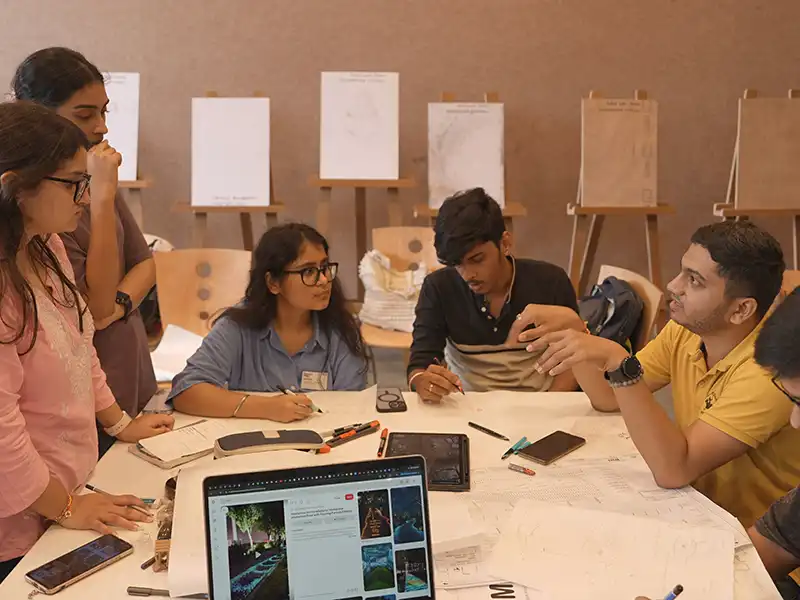
Open to Anant students across disciplines, the initiative will invite proposals through a three-stage design competition. Students will be challenged to develop a practical and implementable pedestrian bridge design while exploring how thoughtful design can improve usability, visual appeal and the overall experience of common people interacting with public infrastructure. The final selected proposal will be awarded and advanced in close collaboration with NHAI.
The initiative is being led at Anant by Dr Sanjeev Vidyarthi, Provost, Anant National University, and Ar Jabeen Zacharias, Professor of Practice, Anant National University. Shri Pradeep Atri, CGM (Tech) and Regional Officer, NHAI, and famous architect Habeeb Khan are also closely involved in the project.
Talking about the initiative and its significance, Dr Sanjeev Vidyarthi says, “Anant National University is committed to providing purposeful design education where students have the opportunity to work with the complexities of the real world. Designing for a real public site, the proposed pedestrian bridge in this case, is an example of that pedagogical approach. Such public spaces are part of the everyday experience for millions of city dwellers, and their design must respond to questions of people, place, safety, usability and the larger urban context. Collaborations like these offer our students the unique opportunity to learn to negotiate real constraints, engage with multiple stakeholders and understand what it takes to move an idea from the drawing board towards implementation.”
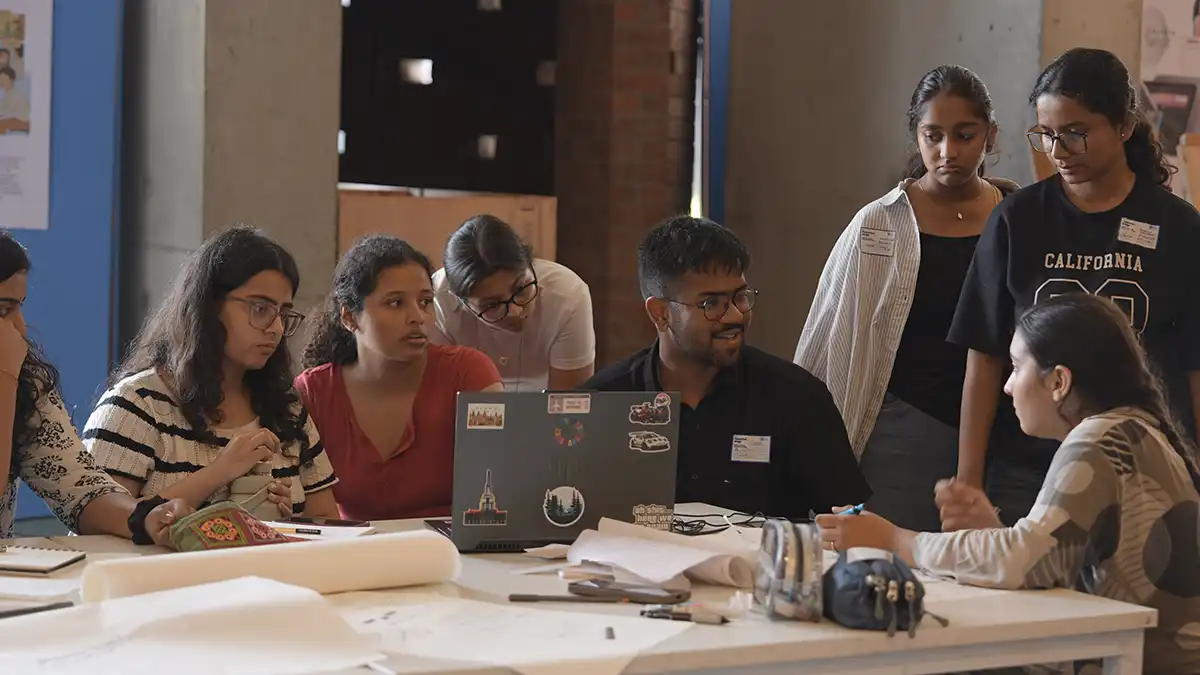
Unlike typical academic briefs that often remain confined within classroom learning, this project exposes students to the processes involved in developing a design for implementation. As their proposals progress through different stages, students will encounter practical requirements, design iterations and the considerations involved in translating an idea into a workable public structure.
Ar Jabeen Zacharias adds, “Design is zero until it works for people. The ‘Imagine’ initiative, conceived to harvest ideas for people-oriented design, encourages students to understand and respond to people and contexts, with design as an instrument for positive change in society. A pedestrian bridge is a simple example, an everyday structure where a thoughtful intervention can transform how people experience and engage with it for the better. This collaboration with the National Highways Authority of India marks an important moment for Anant, a stepping stone into the national design scene, bringing interdisciplinary design thinking into public infrastructure. It is a significant moment where collaboration, design and education come together to touch everyday lives.”
The collaboration reflects Anant’s emphasis on learning through real projects, industry and institutional engagements and problem-solving in actual contexts.
By opening the challenge to students across disciplines, the initiative also encourages different approaches to the brief and brings together perspectives from across design. The selected students will gain firsthand exposure to how public projects evolve through collaboration among designers, technical experts, institutions and implementing agencies.