
By Megha Verma, Principal Director, Design, Table Space.
There is a workplace I often return to in my mind. Every individual space had been designed with remarkable care. The arrival felt considered. The collaborative settings had energy. The quieter environments invited focus. Every destination fulfilled its purpose beautifully.And yet, moving through it, something felt unresolved.
It wasn't the spaces that were missing something. It was the relationship between them. The experience felt like a series of well-designed moments rather than a continuous narrative.
That memory has stayed with me because it changed how I think about office space design.
As designers, we spend months refining layouts, balancing adjacencies, resolving technical complexities, accommodating future growth, and ensuring every square foot performs with purpose. Today, we are equally expected to respond to evolving work patterns, sustainability goals, technology integration, and changing business priorities. These remain the fundamentals of our profession.
Yet I have increasingly come to believe that great workplace design is remembered for something else entirely.
People rarely experience the built environment as a collection of individual spaces. They experience it in motion. They remember how one moment leads naturally into the next, how the environment gradually unfolds, and how every transition shapes the experience that follows.
The true craft of design lies not only in shaping spaces, but in shaping the relationships between them.
Designing What Happens Between Spaces
Every workplace begins with a clear design brief. A reception creates a first impression. A café encourages interaction. Focus areas support concentration, while collaborative settings bring people together. Individually, each space may be thoughtfully designed and perform its intended role.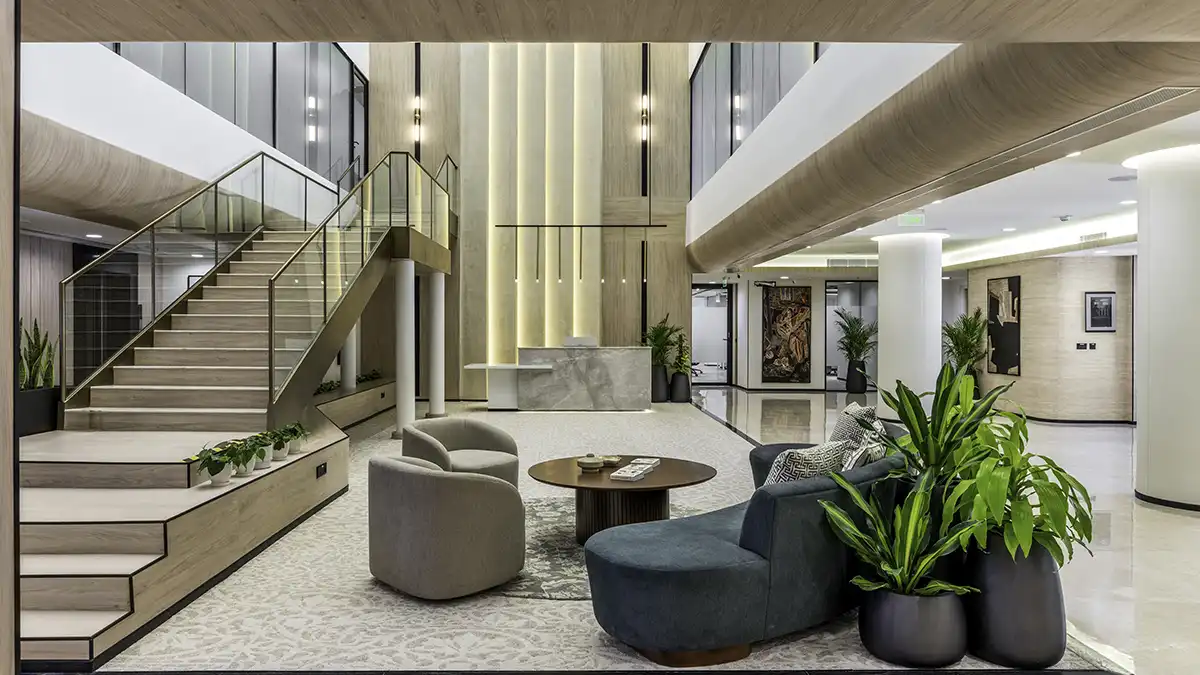
Yet no one experiences them in isolation.
The built environment reveals itself through movement. The first glimpse as the elevator doors opens. The gradual transition from an energetic social setting into a quieter environment. A subtle change in light. A moment of pause before entering an important discussion. These experiences often last only seconds, yet they shape how every destination is perceived.
Architecture has always understood this. Great places are rarely defined by a single extraordinary space. They are remembered because movement itself has been designed. Thresholds, transitions, changing perspectives, and the choreography between spaces create a sense of rhythm that allows the experience to unfold naturally.
Perhaps workplace design has become so focused on perfecting individual destinations that we have underestimated the importance of designing what connects them.
The Invisible Language of Design
Some of the most influential design decisions are also the least visible.Why does one route instinctively become everyone's preferred path? Why do certain environments naturally invite conversation while others encourage quiet reflection? Why does one space feel calm without us immediately understanding why?
These are behavioural outcomes, and they rarely happen by chance.
They emerge through invisible design decisions: circulation, spatial hierarchy, sightlines, materiality, acoustics, scale, natural light, and carefully considered moments of pause. Individually, these decisions may appear subtle. Together, they quietly shape how people move, interact, collaborate, and develop a sense of belonging.
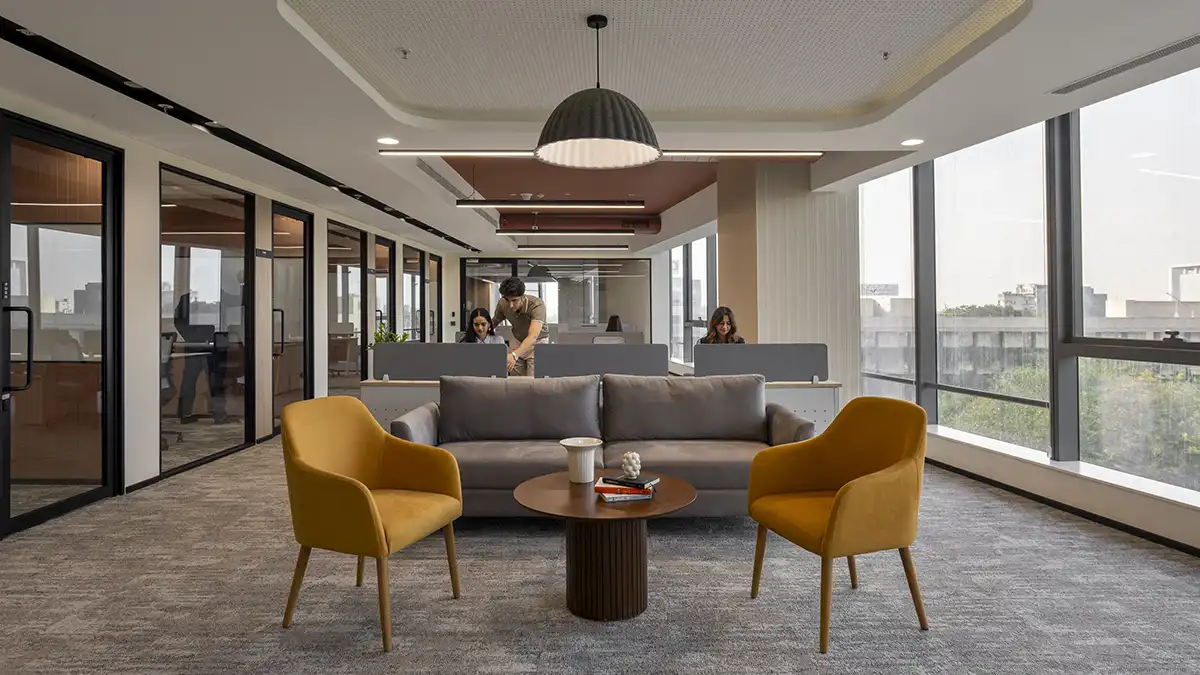
This is the point where design moves beyond aesthetics and becomes experience.
Hospitality has long embraced this philosophy. The most memorable hotels are rarely remembered because of a beautiful lobby or an elegant guest room alone. They are remembered because every arrival, transition, discovery, and departure feel intentional. The emotional journey is carefully choreographed, allowing every experience to build naturally upon the one before it.
There is much workplace design can learn from that approach.
Beyond Efficiency
For decades, workplace design has been measured by efficiency, functionality, and utilization. Those measures remain important, but perhaps they no longer tell the complete story.As workspaces continue to evolve, the quality of experience is becoming just as important as the quality of execution. That experience is rarely defined by a single destination. It is shaped by the continuity between spaces, by the transitions that often go unnoticed, and by the subtle design decisions that influence how people feel without ever demanding attention.
As designers, we naturally celebrate the spaces we create. Perhaps it is time we placed equal emphasis on the relationships between them.
Because people rarely remember the built environment one space at a time. They remember it as a continuous narrative.
Perhaps that is the next evolution of workplace design. Not simply creating exceptional spaces, but creating meaningful relationships between them. Because ultimately, the true measure of design is not how beautifully individual spaces are resolved, but how thoughtfully they connect to create an experience that people remember long after they have left.
That, to me, is what it truly means to go beyond the floor plan.