The kitchen countertop is the hardest-working surface in an Indian home. It carries the weight of daily cooking, from early morning tea to late dinners, and it faces conditions that many international buying guides simply overlook. Choosing the right kitchen slab stone is a decision that a family lives with for a decade or more, so it deserves more thought than a quick showroom visit usually allows.
Indian kitchens place particular demands on a surface, and those demands should shape the shortlist from the start. Understanding them makes the difference between a countertop that ages gracefully and one that stains, cracks, or dulls within a few seasons.
Why Indian Kitchens Demand High-Performance Countertops
Cooking styles across the country lean toward high heat, heavy use of oil, and ingredients that stain easily. A tempering pan straight off the flame, turmeric that marks porous surfaces, and acidic tamarind or lemon all put a surface under regular stress.Climate adds another layer. Coastal humidity, hard water in many cities, and long summers affect how materials behave over time. A kitchen slab stone that performs well in a dry, temperate climate may struggle with the moisture and mineral deposits common in Indian homes. These realities are worth keeping in mind before appearance takes over the decision.
Popular Kitchen Surface Materials
Several materials are commonly used for kitchen countertops in India, each offering a different balance of durability, maintenance, aesthetics, and cost. Understanding their strengths and limitations makes it easier to choose a surface that suits your cooking habits and long-term expectations.Granite
Granite has remained a popular choice for Indian kitchens for decades because of its durability, natural appearance, and widespread availability. It withstands daily cooking, hot cookware, and regular wear with ease, making it well suited for busy households.Its main consideration is porosity. Without proper sealing, granite can absorb oil, water, and colored liquids, leading to stains over time. Periodic sealing helps preserve its appearance, while darker shades naturally conceal marks better than lighter ones.
Quartz
Engineered quartz is made by combining natural quartz with resins to create a non-porous, low-maintenance surface. It resists stains, does not require sealing, and offers consistent colors and patterns that suit contemporary kitchens.While highly durable, quartz is less tolerant of direct heat than natural stone because of its resin content. Using trivets or heat pads helps prevent surface damage, making it an excellent choice for homeowners seeking easy maintenance and reliable performance.
Marble
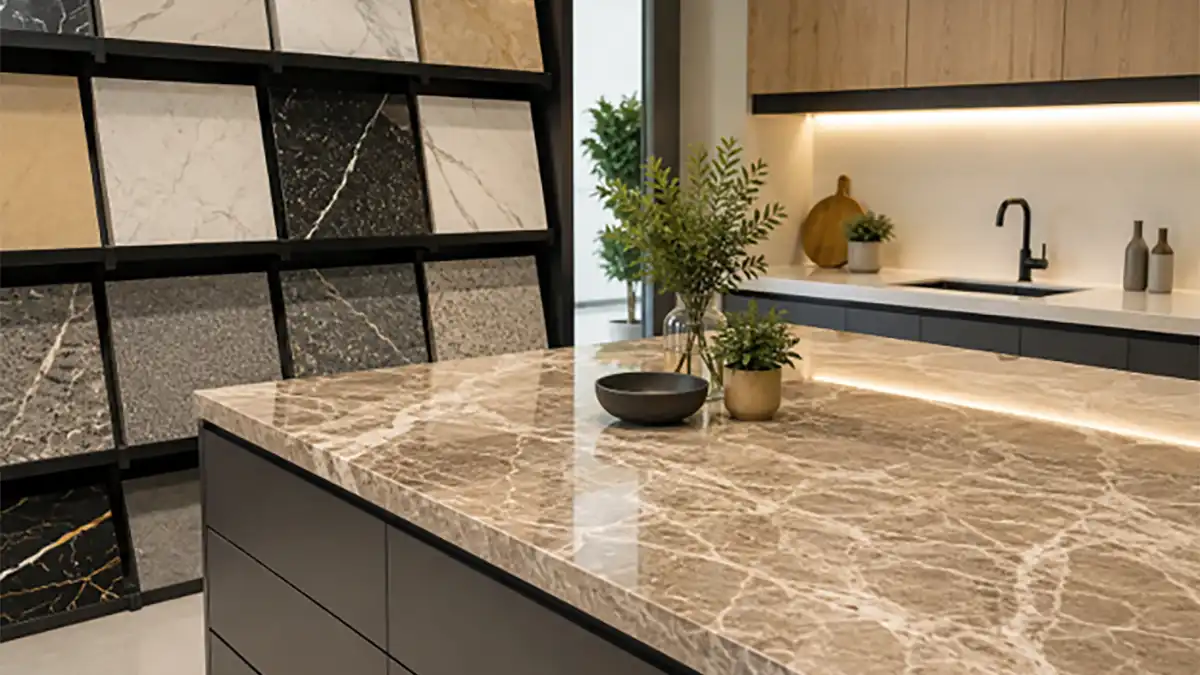
Marble is valued for its distinctive veining and timeless elegance, bringing a refined look to any kitchen. Its naturally cool surface also makes it suitable for certain food preparation tasks.However, marble requires more care than most alternatives. It is softer than granite, making it more susceptible to scratches, while acidic ingredients can cause etching. For homeowners who appreciate its natural character and are comfortable with regular maintenance, marble remains an attractive option.
Sintered Surfaces
Sintered surfaces are engineered by compressing natural minerals under extremely high heat and pressure, creating a dense, non-porous material with exceptional durability. They are highly resistant to heat, scratches, stains, moisture, and UV exposure, making them well-suited to the demands of Indian kitchens.Their large-format slabs also minimise visible joints, resulting in a cleaner, more seamless countertop. Premium brands such as Neotra Surfaces showcase how this technology combines durability with contemporary design. While sintered surfaces typically involve a higher upfront investment and require experienced fabricators for installation, they offer excellent long-term performance with minimal maintenance.
Practical Points Every Buyer Should Check
The material is only one part of the decision. Installation quality, maintenance requirements, and product specifications all influence how well a kitchen surface performs over time. Reviewing these factors before making a purchase can help you avoid unnecessary repairs or replacements.- Maintenance requirements: Understand whether the surface needs periodic sealing or any specialized care, and factor this into its long-term upkeep.
- Fabrication and installation: A well-fabricated countertop with precise cuts and neatly finished edges is just as important as the material itself. Choose experienced installers for the best results.
- Slab size and joint placement: Larger slabs create a cleaner, more seamless appearance by reducing the number of visible joints.
- Product quality and warranty: Verify the material's origin, quality standards, and warranty coverage, particularly when selecting engineered surfaces.
Matching The Surface To Your Home
No single material is right for every household, so the choice comes down to how a family actually cooks and what upkeep it will accept. A daily cook who wants low maintenance and high heat tolerance leans toward a sintered or engineered surface. A budget-conscious buyer who does not mind resealing is well served by granite. A homeowner who wants stain resistance without much effort finds quartz a sensible fit, while a marble lover who welcomes some patina can choose it with realistic expectations.Budget threads through all of this, and it should include fabrication and installation rather than the slab price alone. The labor to template, cut, and fit a large surface can add meaningfully to the total.