Designing and engineering façades for high-rise structures is one of the most demanding tasks. For façade contractors, it means balancing design intent with safety, energy efficiency, and buildability — all within the limits of time and space in dense urban environments. Rahul Miskeen, Director – Exports, Glass Wall Systems (India) presents challenges and solutions in designing and constructing the façade of Raheja Altimus.
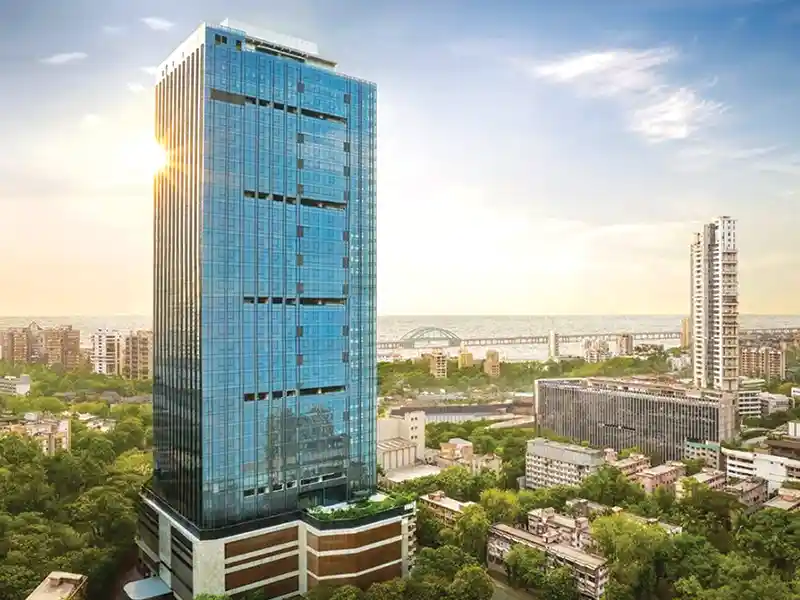
Design and Engineering: A Case of Raheja Altimus in Mumbai
The façade defines how the building looks and how it performs. At Raheja Altimus, the façade system was engineered to manage constant stress throughout the building’s lifecycle. Wind loads increase with height, thermal expansion causes movement, and structural sway introduces additional pressure at joints. The design had to accommodate all these factors while maintaining perfect alignment and water tightness.Detailed studies of wind pressure, seismic drift, and deflection were carried out to size mullions, anchors, and fixings accurately. Systems were tested for air permeability, water resistance, and structural stability to ensure reliable long-term performance.
Every interface — from the slab edge to the parapet — was coordinated early between the architect, structural engineer, and façade consultant. This collaboration minimized tolerance errors and ensured precision during on-site installation, even at heights above 200 meters.
Material Selection and Orientation
The choice of materials for Raheja Altimus was influenced by Mumbai’s tropical coastal climate and the tower’s multi-directional orientation. The façade uses low-emissivity double-glazed units (DGUs) filled with argon gas, achieving a U-value of 1.8 W/m²K and Solar Heat Gain Coefficient (SHGC) below 0.3. This provides thermal comfort while maintaining ample daylight.East and west façades were treated with high-performance solar control glass, while the north side used higher-VLT glass to enhance natural light.
The structural framing uses low-carbon aluminium with polyamide thermal breaks, reducing heat transfer and embodied carbon. All sealants, adhesives, and coatings are low-VOC and asbestos-free, improving indoor air quality and aligning with IGBC and LEED green building standards. Each material was evaluated not only for its technical properties but also for its embodied carbon footprint and environmental compliance.
The façade of Raheja Altimus showcases the integration of engineering, sustainability, and practical execution. It balances aesthetics with performance — achieving safety, comfort, and efficiency through careful detailing and responsible material choices.

Hardware and Components
The hardware system at Raheja Altimus was designed to handle high wind pressures of up to ±4 kPa. Anchors and brackets were detailed with generous safety margins, using stainless-steel (SS316) brackets, cast-in inserts, and crack-control anchors that resist long-term stress and vibration.The façade is in constant dynamic stress throughout its service life, so seismic anchors were incorporated to absorb lateral building movement without compromising integrity.
To achieve high precision and uniform quality, factory-assembled unitized panels were the preferred approach. Each unit was pretested for air, water, and structural performance, with structural silicones ensuring stable bonding and flexibility under varying loads.
Energy Efficiency, Sound, and Indoor Environment
The façade of Raheja Altimus plays a major role in energy conservation and occupant comfort. Airtight construction and insulated glazing help reduce HVAC energy consumption by around 25 percent.Shading devices, thermal breaks help maintain steady internal temperatures and limit direct solar radiation. Operable windows and pressure-controlled vents allow natural ventilation when conditions are favorable. The façade also improves acoustic performance — double-glazed units and sealed joints help block external noise from surrounding traffic.
Materials were chosen with occupant well-being in mind. Low-VOC, asbestos-free coatings and sealants enhance indoor air quality, creating a healthier environment for occupants. The project also prioritized embodied carbon reduction, using materials with Environmental Product Declarations (EPDs).
The company’s manufacturing facility operates entirely on solar energy, eliminating Scope 2 emissions and making façade production carbon-neutral. Scrap aluminium and glass from fabrication are recycled, creating a closed-loop system with minimal waste.
Fire Safety
Fire safety was a key design parameter for Raheja Altimus. The façade includes horizontal and vertical fire barriers at each floor to prevent flame and smoke spread between cavities.All insulation materials are non-combustible mineral wool with fire resistance exceeding 120 minutes and a density of 120 kg/m³, ensuring high thermal and fire performance.
The complete façade assembly complies with NFPA 285 and BS 8414 standards. Components such as A2-grade aluminium panels, fire-rated silicones, and metal back pans add further protection. Detailed coordination with fire consultants ensured complete sealing of slab edges, corners, and penetrations.
Site Execution and Logistics
Executing the façade installation at Raheja Altimus required efficient coordination and planning due to limited site space and urban constraints. Heavy façade panels were lifted and aligned using winch-operated material hoists, reducing travel time between ground and upper floors.Efficient project planning and experienced site teams ensured smooth sequencing of work in line with structural progress. Wind speed and weather conditions were continuously monitored to maintain safety during installation. Each stage, from factory fabrication to final installation, underwent strict quality checks to ensure compliance with design intent and performance criteria.
With solar-powered manufacturing, low-carbon materials, and high fire-safety standards, Raheja Altimus demonstrates how modern façade systems can meet today’s environmental goals while standing resilient against time and stress.