As buildings in India continue to soar past 30 and even 50 floors in metropolitan areas, the fenestration industry faces the challenge of balancing aesthetics, performance, and practicality at unprecedented heights.
Dr .h.c.Mario Schmidt, Managing Director, Lingel
Ensuring Safety at Every Level
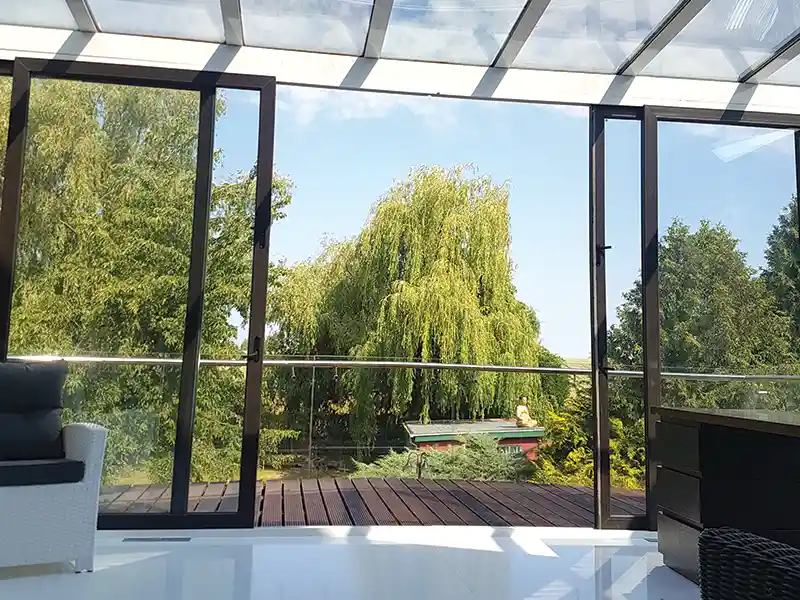
Safety remains the top priority in high-rise fenestration design. Moving large window panels or balcony doors to upper floors poses logistical and safety challenges even during construction. Once occupied, it becomes nearly impossible to replace or repair panels from the outside, as residential towers often lack maintenance platforms/scaffoldings commonly used in commercial buildings. The technical team has to make a note of all the aspects as to how the product will be installed and what caution the team will have to keep in mind. This makes it essential to plan the shifting and lifting process right from the design stage, coordinating with developers or builders to ensure provisions like wide staircases or sufficiently large service lifts are available.One must also keep in mind safety in installation and occupant safety and plan them meticulously. For instance, balcony glazing in buildings exceeding 100 meters should be at least 1.1 to 1.2 meters high to provide a secure feeling without restricting the view. Standard tempered glass, while popular, can pose risks as it shatters completely on impact. Even laminated tempered glass may leave openings upon breakage, creating safety hazards.
We recommend LPG (Lingel Panzer Glazing), which is a unique combination of glazing solution that stays intact even when broken. This prevents shards from falling and ensures that the balcony remains secure, offering both transparency and peace of mind to residents.
Strength and Durability Against Natural Forces
High-rise structures are constantly exposed to strong wind pressures, temperature variations, and potential seismic activity. Fenestration systems in such buildings must be designed to withstand these forces without compromising performance or aesthetics. The choice between uPVC and aluminium has long been debated, but with advanced engineering, Lingel’s uPVC systems perform at par with aluminium in terms of durability, wind resistance, and water tightness.High-performance windows with reinforced frames, multi-point locking, and properly sealed joints can resist the suction and pressure cycles of high winds. Moreover, these systems contribute to fire safety by preventing flame spread through gaps and ensuring structural integrity under thermal stress. Earthquake-prone regions require additional flexibility in design to absorb lateral movements without glass breakage or frame distortion.
Choosing the Right Glass
Glass selection is one of the most critical aspects of fenestration design. Keeping in mind India’s diverse climatic zones, glass must balance heat insulation, light transmission, and sound reduction. For high-rise buildings, insulated glass units (IGUs) with a U-value around 2.8 W/m²K are highly recommended. They significantly improve energy efficiency, reducing cooling loads by up to 50% compared to single glazing.The use of solar control glass or low-emissivity (Low-E) coatings further enhances comfort, cutting down on glare and UV radiation. During peak summer months, a roller shutter or venetian blind combined with glass ensures that the living space remains energy-efficient and maintains a cool temperature.
At Lingel, we are crafting solutions with windows and doors that protect, perform, and last. Whether it’s through innovations like Lingel Panzer Glazing (LPG), durable uPVC and aluminium systems, or energy-efficient insulated glass, our goal is to make every high-rise home safe, strong, and beautiful.

Hardware and Components
The performance of any window system is only as good as its hardware. In high-rise applications, every hinge, locking point, and handle must be tested to withstand high wind pressure and repeated use. Corrosion resistance is equally vital, especially in coastal regions where humidity and salt content can degrade materials over time. Stainless steel or powder-coated aluminium hardware ensures longevity.The drainage system must be carefully designed to prevent water seepage during heavy rains. Proper sealing gaskets and multi-chamber profiles help achieve air and water tightness (a hallmark of Lingel’s window and door systems), and ensure that the walls don’t get dirty. Use of a window trim or an architrave is cost-effective and saves time and money.