Façades and window systems are no longer just design elements; they play a critical role in a building’s safety, durability, and long-term performance.
Dr.h.c.Mario Schmidt, Managing Director, Lingel
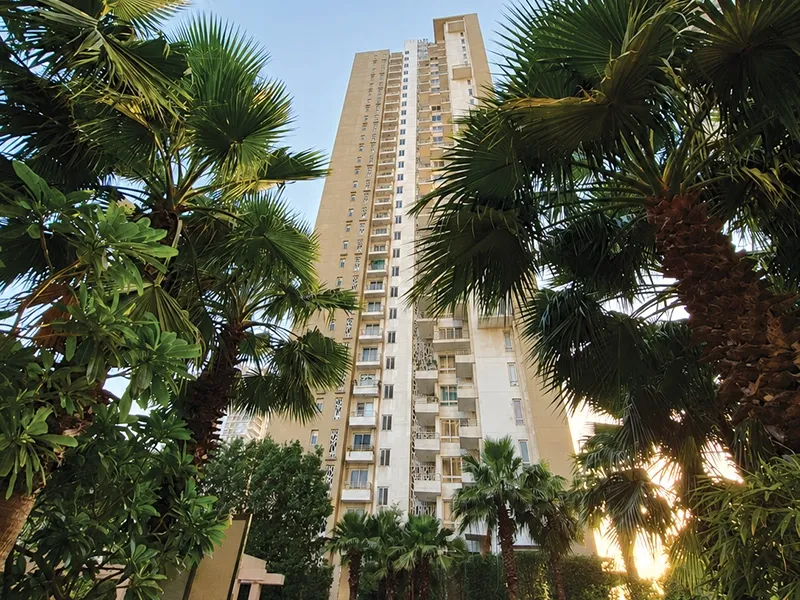
Urbanisation and the rise of high-rise buildings have increasingly exposed structures to extreme environmental conditions. Window systems should therefore offer thermal insulation, acoustic control, and solar management, which are key considerations in high-rise buildings with extensive façade exposure. By reducing heat gain and external noise, these systems improve indoor environments while lowering energy consumption, enabling architects to achieve both performance and sustainability goals.Wind Load Performance: Designing for Indian Conditions
Among the most critical factors in high-rise façade design is wind pressure. In a country like India, where wind loads vary significantly—from moderate inland zones to high-pressure coastal and cyclone-prone regions—fenestration systems must be engineered to respond to region-specific demands.Lingel windows and doors are tested in accordance with IS 875 – Part 3, the Indian Standard governing wind loads on buildings. This ensures their suitability across diverse climatic zones, including high-rise applications and coastal environments exposed to extreme wind events.
Windows engineered with tight sealing and compatibility with high-performance glazing that resist breakage under thermal stress enhance a building’s safety and durability.
Dr.h.c.Mario Schmidt

Performance benchmarks underline this capability. Lingel uPVC window systems are tested up to 3.0 kPa (3000 Pascal), while aluminium systems are tested up to 3.0 kPa (3000 Pascal). Test to failure above 4.5 kPa. These high-performance thresholds ensure minimal deflection, structural stability, and long-term reliability, even under intense wind pressure. Beyond structural integrity, this also safeguards air and water tightness which are critical parameters in maintaining performance under these conditions.
Designing for Extreme Weather Conditions
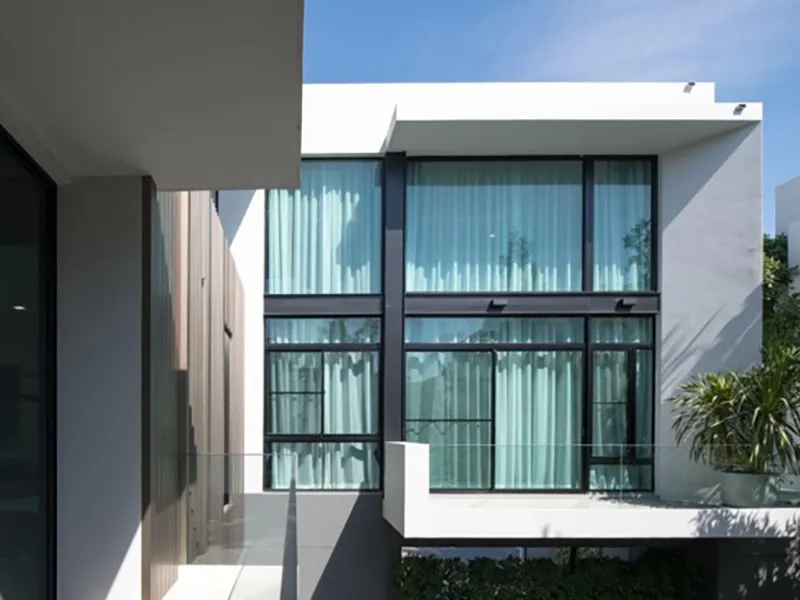
To complement this structural strength, high-performance hardware plays a very significant role, for instance, to support large sized glazing. This enables architects to design expansive openings while maintaining operational reliability and safety at height.