Why India Needs to Rethink Sports Courts as Long-Term Public Assets.
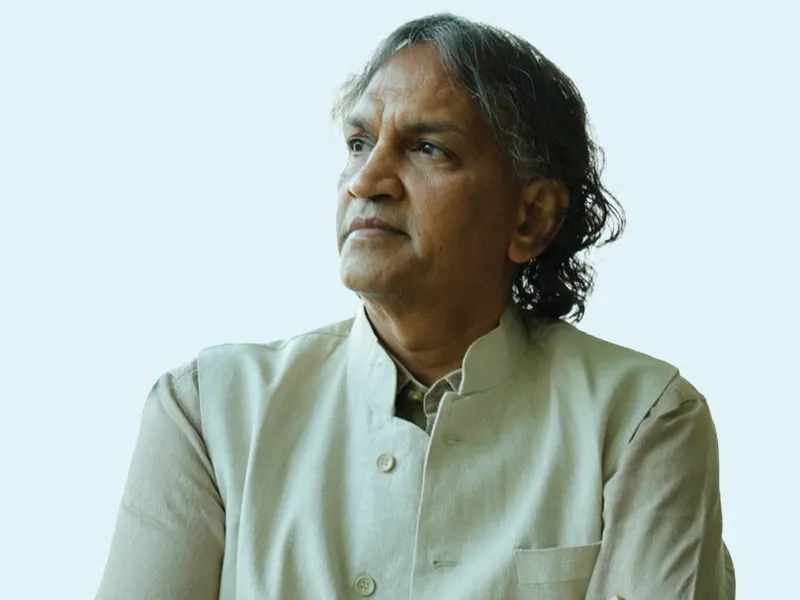
Deepak Verma, Head of Business, Pacecourt
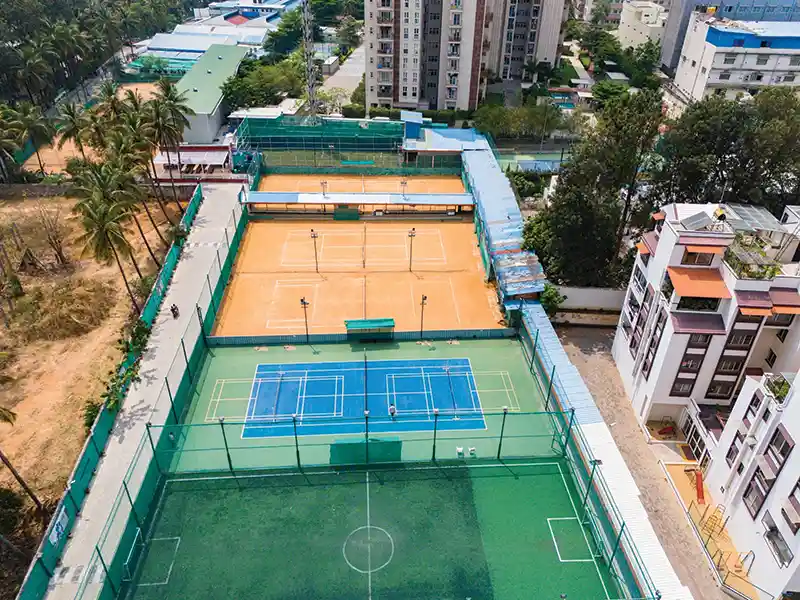
The ultimate cost of constructing a sports facility is based on the facility’s lifecycle performance as opposed to its initial construction costs. As a result of projects focusing on low initial costs, key factors such as site preparation, quality of raw materials and surface systems are frequently compromised, resulting in premature failures (cracks, discolouration, water damage, uneven play surfaces, etc) which require ongoing repairs within the first few years of use.
In addition to the financial costs associated with maintenance, these performance issues can also result in facility downtime and safety risks. A lifecycle-focused approach to the design, construction, and operation of sports facilities that includes factors such as durability, maintenance cycles, and long-term use will be more cost-effective.
The quality of the surface has a major influence on both durability and player safety and performance. Approved materials that conform to accepted slip resistance (anti slip), impact absorption, bouncing ability of balls and durability against weather, create an environment of predictable play and reduce the chance of injury. Facilities, schools or academies with high usage should also consider usability, maintenance, safety and performance when selecting surfaces that conform to established tests and approvals, as these factors are all part of their risk management process.
To provide benefit to the community over an extended period of time, all sports courts should be designed and built as long-term public infrastructure rather than as a one-time quick build project.
Deepak Verma

In designing an outdoor sports court in India, specific attention should be paid to the environmental realities. Typical environmental conditions such as extreme heat; heavy UV exposure; heavy monsoon rains; dust accumulation; and year-round use cause excessive stress on the surface. Surfaces that have not been engineered specifically for these unique conditions will exhibit failure in the form of peeling; hardening; water retention; and accelerated wear rates. Environmentally sustainable construction by designing and utilising best practice engineering such as proper base design, proper drainage, UV stable coatings, and flexible surfaces) provides a sustainable surface that can perform under extreme environmental conditions.
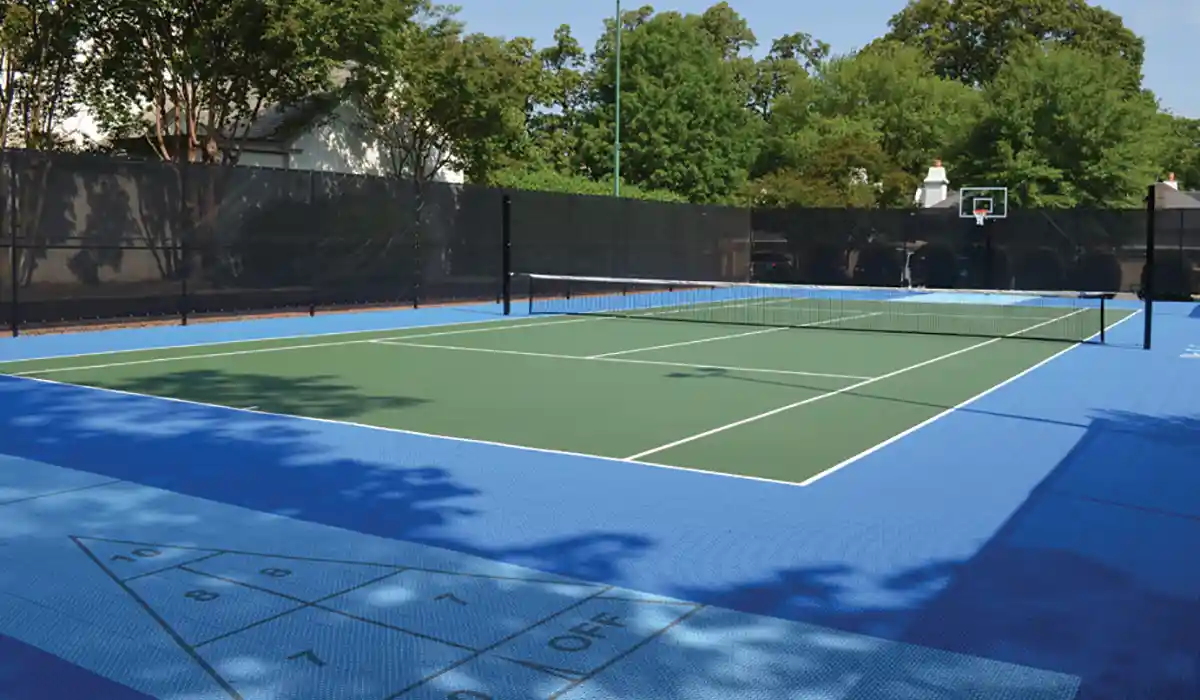
According to me, one of the most suitable materials for sports surfaces based on: India’s climatic conditions like heat, humidity, rain, and UV exposure is the Synthetic Acrylic Sports Flooring, which can withstand all these and has strong UV resistance which prevents fading and cracking, water resistance, an anti-slip texture, and thermal stability. With proper drainage and base preparation, its average lifespan is 8–10 years and requires low maintenance. This type of flooring is recommended for outdoor sports facilities due to its durability, consistent ball bounce, and player safety when used on tennis, basketball, badminton and volleyball courts, and in skating rinks, multipurpose courts, walking and cycling tracks. All these outdoor courts benefit from synthetic acrylic surfaces as they provide, long-term performance and cost efficiency.
UV-stable synthetic acrylic coatings are formulated with high-performance resins and UV-resistant pigments that prevent fading, surface cracking, and brittleness under strong sunlight. These coatings are highly suitable for Indian conditions, handling extreme heat, high UV exposure, humidity, and rainfall. They maintain surface color, grip, and playability even in harsh outdoor environments. With proper installation and regular care, the expected lifespan is approximately 5–7 years.
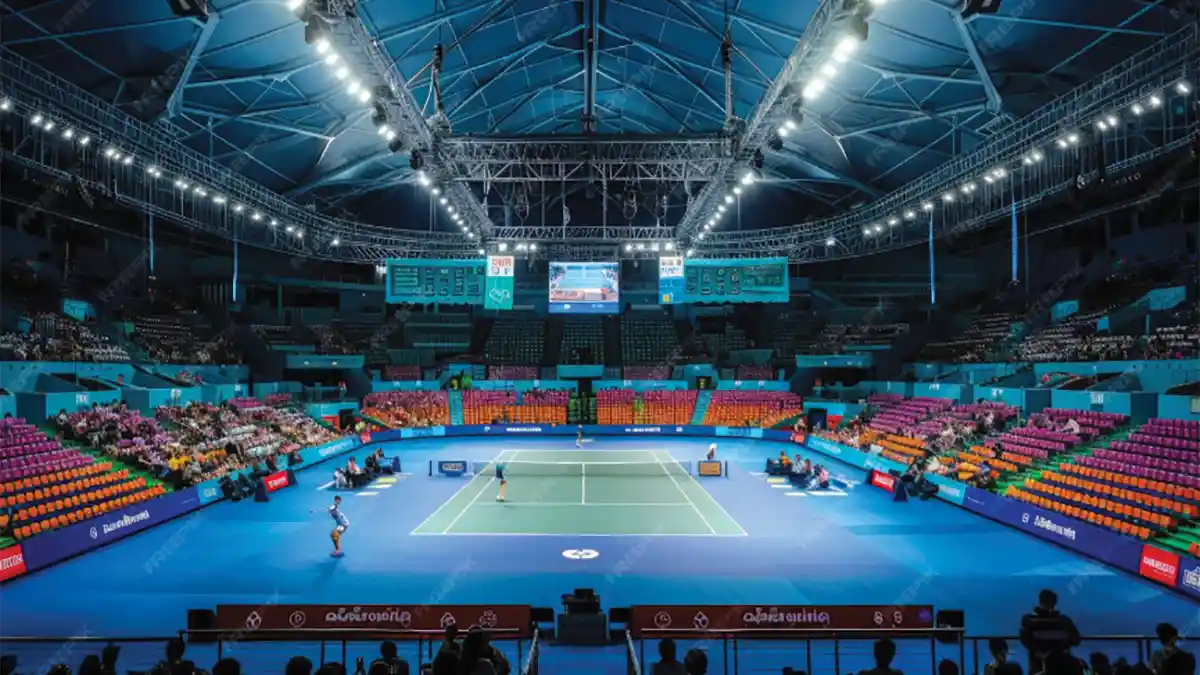
Flexible Surfaces are moderate shock absorbent, as these cushion-based synthetic acrylic systems help reduce stress on joints during play. Textured acrylic surfaces offer a strong grip and controlled movement, improving player safety.
There is an increasing demand for multi-use courts, especially in urban areas where space is at a premium. Such courts support multiple sporting activities and provide continuous usage to the community. This increased intensity of use leads to an increased rate of wear and tear, which amplifies the importance to consider performance, structural integrity, and sustainability. Hence, the design and construction are important for supporting sustainable and long usage.