Prasant Panigrahi, Managing Director, Gayatri Solar, and President, Odisha Cleantech Association envisages rising demand for rooftop solar installations across urban buildings in view of the economic viability and environment responsibility.
India’s urban energy ecosystem is witnessing a structural transformation, with rooftop solar installations rapidly becoming a preferred solution for sustainable and cost-effective power generation. Increasing urbanization, rising electricity tariffs, and a growing commitment toward climate responsibility are driving this momentum. In cities like Bhubaneswar, Odisha, the shift is clearly visible across residential apartments, commercial complexes, hospitals, and institutional buildings.
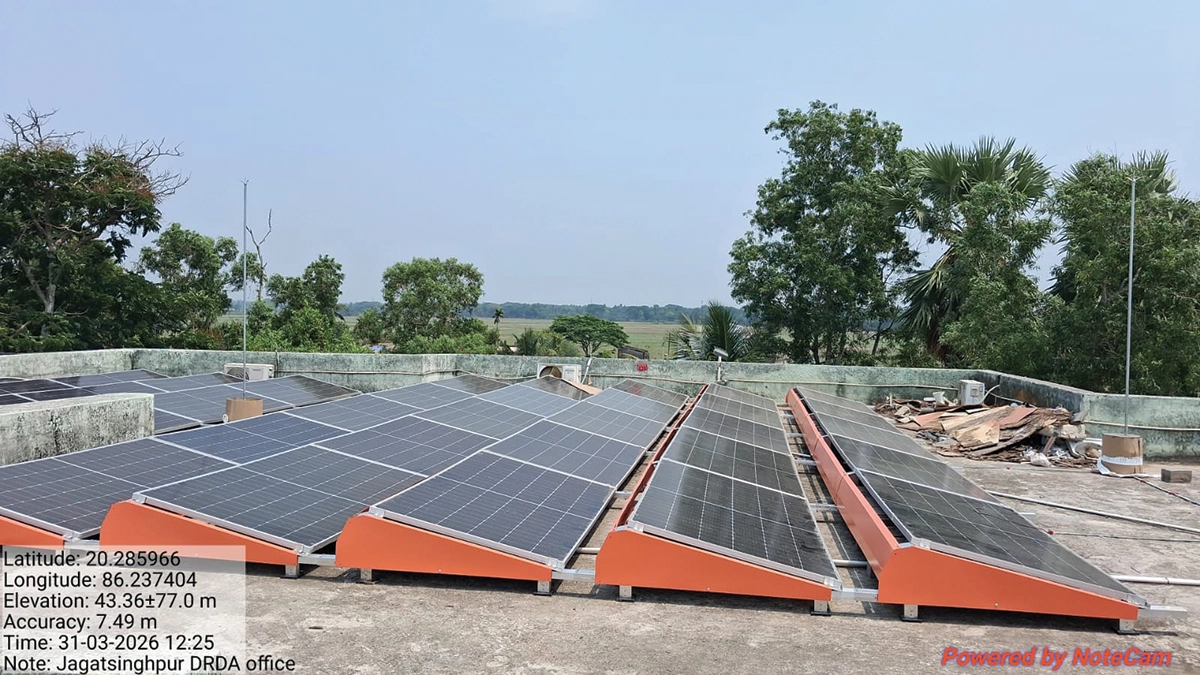
A key factor contributing to the rising demand for rooftop solar is its compelling economic viability. Urban consumers are increasingly aware of the long-term savings potential. With net metering policies in place, surplus energy generated during the day can be exported to the grid, significantly reducing electricity bills. The payback period for rooftop solar systems has now reduced to approximately 3–5 years, after which users benefit from nearly free electricity for the remaining system life of 20–25 years.
The rising demand for rooftop solar installations across urban buildings reflects a fundamental shift in energy consumption patterns. With strong policy support, advancing technology, and proactive industry leadership, rooftop solar is set to redefine urban sustainability in India.
Prasant Panigrahi

From an analytical perspective, urban rooftop solar adoption is growing at an estimated 15–20% annually in Tier-1 and Tier-2 cities. Commercial and industrial consumers account for a major share due to higher tariff slabs and daytime energy consumption patterns. Residential adoption is also gaining traction with increasing awareness and government subsidies. Load matching efficiency, where solar generation aligns with peak consumption, is a major advantage in urban environments.
Government policies have further catalyzed this growth. Central schemes such as the Rooftop Solar Programme Phase II and state-level initiatives by agencies like OREDA and DISCOMs have simplified approvals and provided financial incentives up to 1.38 lakhs for 3KW Solar Rooftop Systems under the PM Suryaghar Scheme. These measures have reduced entry barriers and encouraged wider participation among urban consumers.
Technological advancements have also played a critical role. Modern Solar photovoltaic (PV) modules now offer higher efficiency even under space constraints—a key factor in densely populated urban areas. Smart inverters, hybrid systems, and battery storage solutions are enhancing reliability and enabling energy independence. Integration with digital monitoring platforms allows real-time performance tracking, ensuring optimal system output.
Urban infrastructure presents a significant untapped opportunity. High-rise residential complexes, IT parks, malls, and educational institutions have large rooftop areas suitable for solar deployment. Additionally, green building certifications and ESG compliance norms are increasingly mandating renewable energy integration, making rooftop solar a strategic necessity rather than a discretionary investment.
However, certain challenges remain. Structural limitations in older buildings, lack of consumer awareness, and upfront capital costs can hinder adoption. In multi-tenant buildings, issues related to shared ownership and benefit distribution require innovative models such as RESCO (Renewable Energy Service Company) to ensure smooth implementation.
Looking ahead, rooftop solar will become a central pillar of urban energy systems. The integration of electric vehicles, battery storage, and smart grids will transform buildings from passive consumers into active energy producers. Decentralized energy generation will enhance grid resilience and contribute significantly toward India’s net-zero targets.