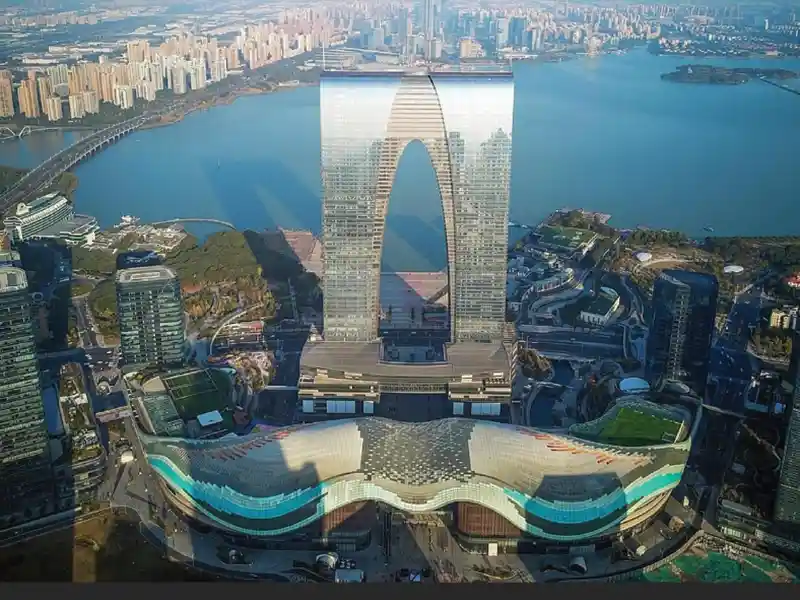
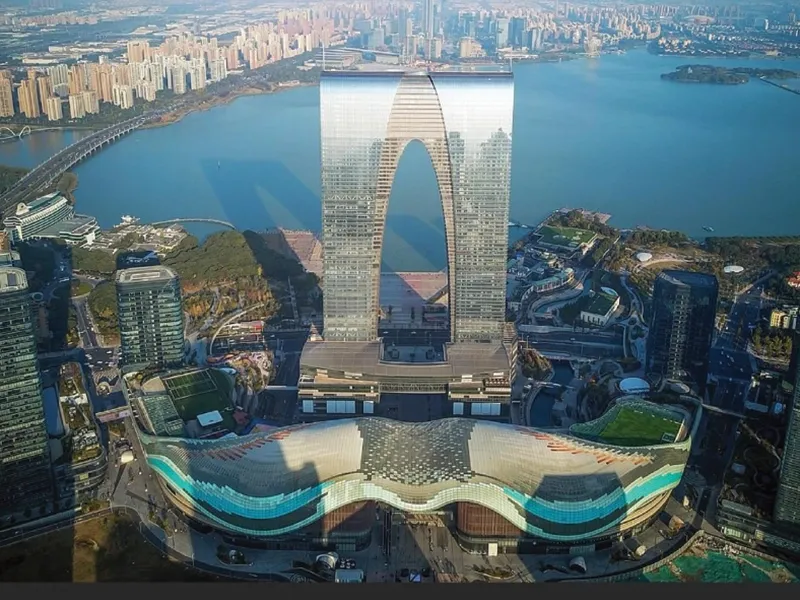
As super-tall developments become increasingly common, the successful deployment of high-speed elevators depends not only on speed and traffic handling capability but also on their ability to operate reliably under varying wind and environmental conditions.
Aman Moudgil, Founder & CEO, Gilco Global
One of the most important metrics in modern traffic engineering is Average Waiting Time (AWT)—the time between a passenger registering a hall call and an elevator arriving. Increasingly, elevator performance is evaluated through passenger-centric parameters such as waiting time and total journey time rather than traditional interval calculations. A widely referenced benchmark is the 30/60/90 principle: approximately 30 seconds waiting time, 60 seconds travel time, and 90 seconds total journey time.
As India’s skyline continues to rise, speed will remain important, but intelligent traffic engineering will ultimately define the quality, sustainability and value of high-rise developments.

The importance of waiting time extends beyond engineering and into human behaviour. Studies have shown that unoccupied waiting is perceived as significantly longer and more stressful than actual travel time. Consequently, reducing AWT often delivers a greater improvement in perceived service quality than increasing speed alone.
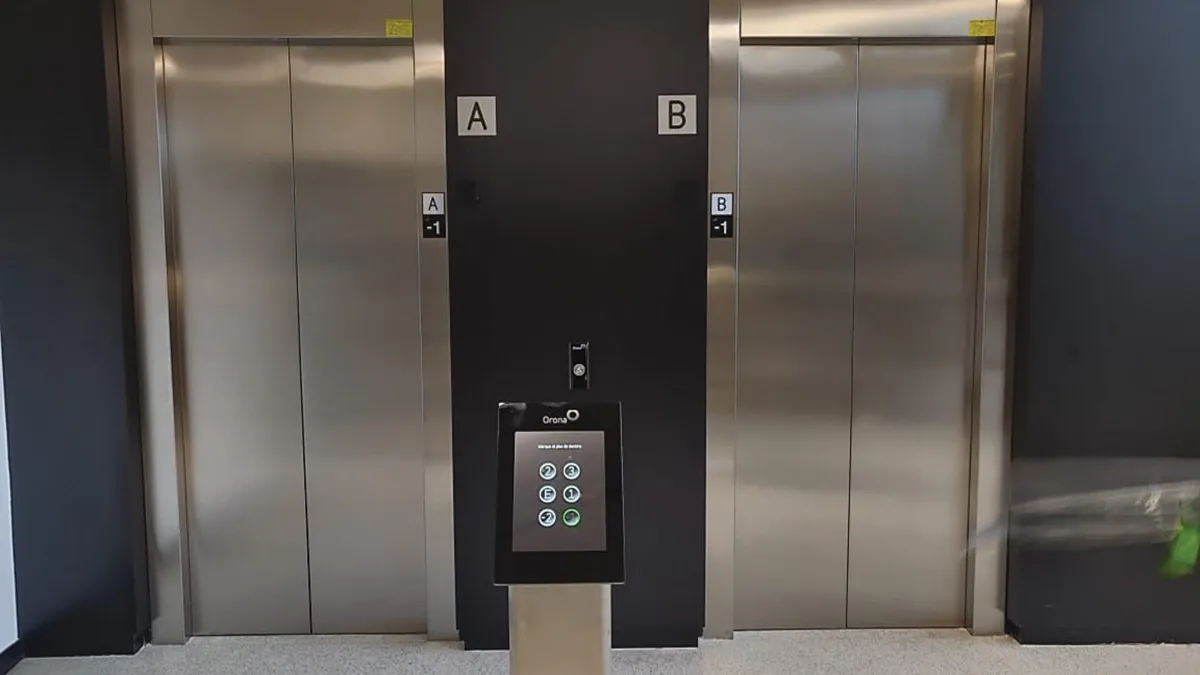
Along with speed, modern elevator systems increasingly rely on intelligent traffic optimization technologies such as Destination Control Systems (DCS), group supervisory control, dynamic zoning, up-peak and down-peak traffic management, anti-nuisance operation, door pre-opening, and adaptive home landing strategies. By grouping passengers travelling to similar floors, predicting demand patterns, and strategically positioning elevators before calls are registered, these systems reduce unnecessary stops, shorten waiting times, and improve elevator availability.
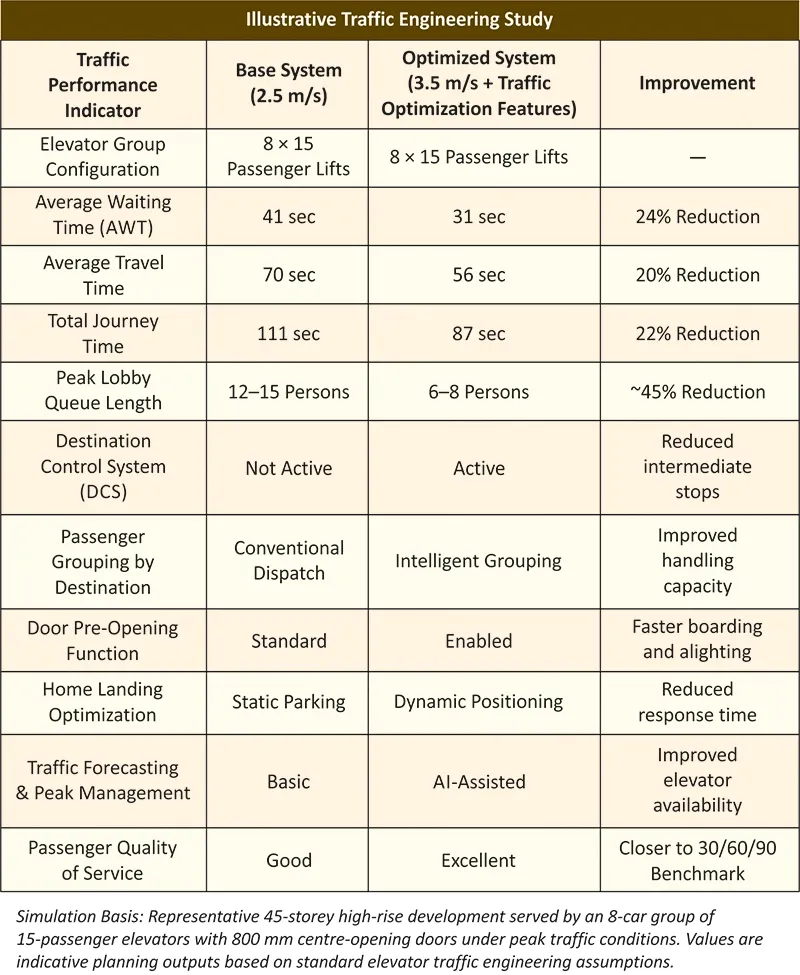
The accompanying traffic study demonstrates the importance of balancing speed with intelligent traffic engineering. Increasing elevator speed from 2.5 m/s to 3.5 m/s, combined with advanced traffic optimization features, reduced Average Waiting Time by approximately 25%, lowered total journey times by more than 20%, and significantly reduced peak-period queue formation.
Wind-induced building movement is another critical consideration in high-rise elevator design. As tower heights increase, structures naturally experience sway and vibration under wind loads. While modern buildings are engineered to remain within safe comfort limits, excessive lateral movement can affect elevator ride quality, increase guide rail forces, and in extreme conditions trigger protective operating modes or temporary service restrictions.
To ensure safe and efficient operation, high-speed elevator systems incorporate advanced technologies such as roller guide shoes, active vibration control, sway sensors, rope oscillation monitoring, aerodynamic car designs, and intelligent control algorithms that continuously adapt to building movement. Equally important is the integration of elevator design with structural engineering during the planning stage, allowing elevator systems to be tuned to the building’s dynamic characteristics.
Sustainability is also closely linked to traffic engineering. Elevators can account for 2 - 10% of a building’s energy consumption, while intelligent dispatch systems, regenerative drives, dynamic parking modes, and demand-based ventilation help reduce energy use and mechanical wear, while improving passenger service levels.
At Gilco Global, we believe successful vertical transportation begins long before equipment selection. Through detailed traffic analysis, simulation-based design and access to high-speed elevator technologies capable of speeds up to 10 m/s, we help developers optimize both passenger experience and building economics.