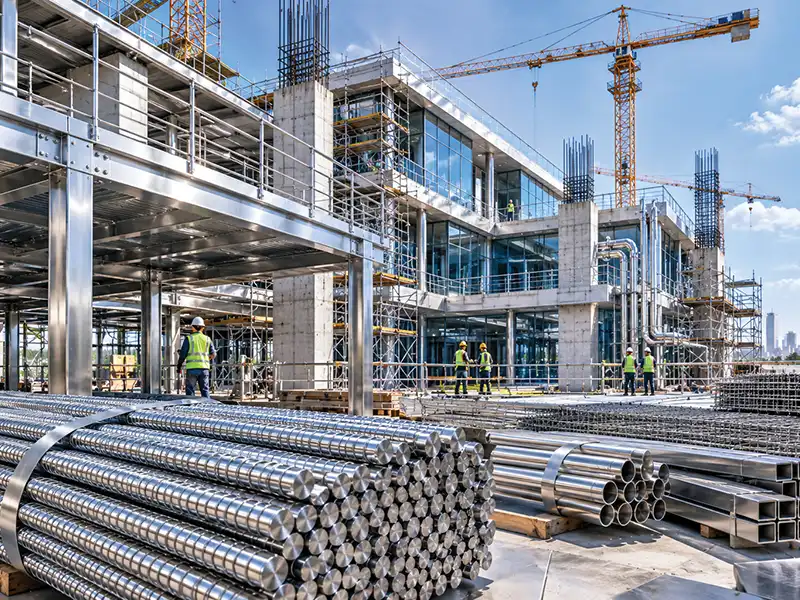
Durability, lifecycle performance, and sustainability are becoming key factors in material selection for future-ready developments. In such a scenario, stainless steel is emerging as a strategic material choice in India’s real estate sector.
A Policy Shift that Redefines the Approach
Amid rising premium housing demand, evolving regulations, and growing ESG expectations, the real estate sector is undergoing changes especially related to the life cycle costs for materials. 2024 marked a regulatory pivot when the Ministry of Road Transport and Highways mandated stainless steel rebar for all construction within 30 km of India’s coastline.The rationale is simple: conventional carbon steel corrodes rapidly in high chloride environments, shortening structural lifespans and inflating maintenance costs. Stainless steel, by contrast, enables a 75-year design life and cuts lifecycle costs by approximately 40% against the alternatives. For developers operating in coastal real estate markets, this is no longer a premium upgrade but a fundamental compliance requirement and a risk-mitigation tool.

Indian Stainless Steel Development Association
Rajamani Krishnamurti
Rajamani Krishnamurti

Whiteland Corporation
Sudeep Bhatt
Sudeep Bhatt
ESG Is No Longer Optional
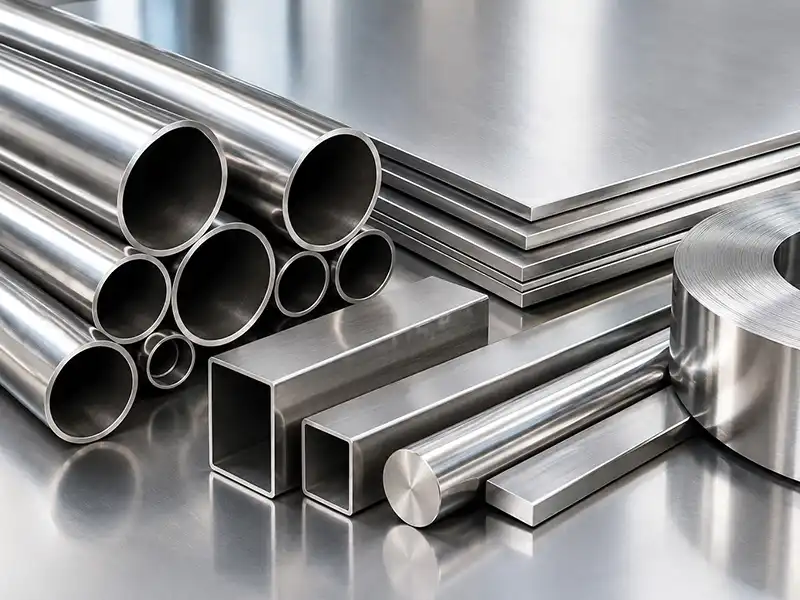
The green building movement reflects this shift. The Indian Green Building Council (IGBC), established by CII, reports over 10,200 registered projects covering 12.5 billion sq ft of green building footprint as of late 2025. India’s green building materials market is valued at USD 15.5 billion in 2025 and projected to reach USD 32.2 billion by 2032. Knight Frank reveals that over 65% of homebuyers under 40 are willing to pay a premium for green-certified homes.
At Whiteland Corporation, we believe longevity and quality are the ultimate comfort. For Westin Residences Gurugram, we have collaborated with Jindal Stainless, for our diaphragm wall construction, embedding high grade stainless steel rebars and ensuring durability and environmental resilience. This collaboration truly brings out the finest form of premium living with fine construction methodologies.
Stainless steel fits perfectly in this frame. With full recyclability and a lifespan that outlasts conventional alternatives it offers a credible embodied-carbon argument that satisfies LEED and GRIHA assessors.
New Typologies, Same Answer
India’s data centre boom presents the clearest emerging use case. JLL’s H1 2025 data center report shows 48% year-on-year growth, with Mumbai and Chennai accounting for over 70% of national capacity. Because these are coastal hubs, corrosion is a structural risk, not a cosmetic one. For mission-critical infrastructure where downtime is unacceptable, stainless steel is an operational necessity.The next stage of India’s real estate development will go beyond just the scale of the projects. The focus will be on the quality and durability of the structures. This is in the light of stricter regulations, increasing ESG standards, and the emphasis on asset lifecycles that have come into the picture. Stainless steel is not a choice meant for the future anymore, it is quickly turning into a standard for constructing things in a smarter way.

StoneCraft Group
Kirthi Chilukuri
Kirthi Chilukuri

Orbit Project Consultants India
Ishaan Ghai
Ishaan Ghai
At StoneCraft, we believe future developments in real estate will involve working with nature rather than against it. Stainless steel aligns with our belief that the future of urban construction requires long-lasting durability and efficient resource usage that supports modern infrastructure.
Ishaan Ghai, Managing Director & Co-Founder, Orbit Project Consultants India, shares his observations on the growing usage of stainless steel in both interiors and exteriors of buildings.
Are you seeing increasing usage of stainless steel (SS) in real estate projects?
Stainless steel has moved from a back-of-house material to a mainstream specification across premium real estate, chosen now for lifecycle performance, premium appearance and longevity. The market data mirrors what we see on site: India’s stainless steel consumption reached 4.8 million tonnes in FY25, up around 8% year-on-year and roughly 84% over five years, with building and construction now the single largest application segment. Airports, Grade-A offices, healthcare, hospitality and Global Capability Centres are driving this, because clients — especially international occupiers — increasingly evaluate materials on whole-of-life value. With per-capita consumption still around 3.4 kg against a world average above 6 kg, there’s significant headroom.What are the main application areas where SS is preferred?
Stainless steel is now a standard specification across aviation, corporate, healthcare, cultural and industrial fit-outs, valued above all for its reliability under continuous use. Across the industry, stainless steel is specified wherever hygiene, impact resistance and corrosion protection are decisive — high-traffic, high-touch zones that demand materials engineered to last.In commercial and public buildings, it means handrails, balustrades, lift architraves, kick plates, wall corner guards, skirting profiles, façade fins and cladding, canopies and expansion joint covers, wall-protection systems, junction-box cover plates, pantry counters, laboratory workstations and wayfinding signage — components that continue to perform under constant public use with minimal upkeep.
In cultural project, SS is used for display-case frames, plinths, directory and wayfinding signage, protective barriers and handrails, etc. It is chosen to withstand high public footfall and rigorous cleaning protocols while holding a gallery-grade finish.
In premium corporate workplaces stainless steel is used for reception detailing, pantry counters, laboratory furniture, signage, and architectural trims and hardware where long-term finish quality is a key requirement. And in technical and back-of-house environments, SS is highly effective in warehouse and logistics fixtures, repair and maintenance tables, and high-strength worktables engineered to carry load without deflection.
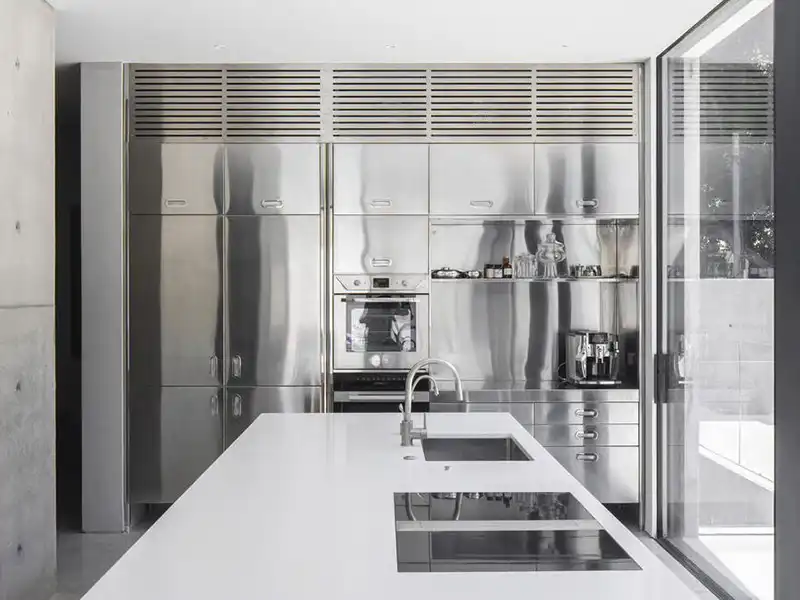
One of the bigger shifts we see is stainless steel steadily replacing painted mild steel in many of these applications, where corrosion and periodic repainting were historically recurring upkeep issues.
What makes SS popular in interior applications?
From an execution standpoint, what makes stainless steel interesting in interiors isn’t just how it looks — it’s what precision detailing allows us to achieve. SS lets us work in thinner profiles and sharper edges than most materials, so reveals, shadow gaps, inlays and trims read as crisp, permanent lines rather than bulky sections. That’s where fabrication matters most. In our experience, most of the quality is decided in the factory, not on site: CNC cutting, laser fabrication and BIM-coordinated detailing let us hold tolerances and repeatability, and with the same finish every time, which site work simply can’t match.SS also integrates cleanly with glass, timber, stone and engineered surfaces, which is why it’s increasingly used in reception counters, feature walls, lift-lobby detailing and premium joinery — and why PVD finishes like champagne gold, bronze and black have expanded the design palette while retaining durability. In fact, premium SS hardware is now effectively standard across mid-to-high-end furniture for that finish retention. Getting the grade, finish and fabrication right is an execution discipline,— and it’s what lets SS hold crisp detailing for the life of the interior.
Today, stainless steel is no longer specified solely for performance. It has become a design material that combines elegance with engineering, allowing architects and developers to deliver spaces that are visually timeless, operationally efficient, and built to last.
Ishaan Ghai
What value does SS bring to buildings in terms of cost, aesthetics, durability, lifespan and maintenance?
Our recommendation to clients is to judge stainless steel on lifecycle economics and ease of maintenance, not procurement cost. While stainless steel represents a higher initial investment than mild steel or laminates, it consistently delivers lower lifecycle costs through reduced upkeep, extended service life and fewer replacements. Its corrosion resistance, impact strength and ability to retain its appearance with minimal upkeep — lower operational expenditure. Stainless steel is also fully recyclable and supports increasingly important ESG and green-building objectives through its long service life and circularity.How does one select the right grade of SS?
A recurring lesson from our execution experience is that the performance of stainless steel comes down to correct grade selection, precision fabrication and quality finishing. But one mistake we often see is treating all stainless steel as interchangeable. Grade selection is as important as the application itself. In our experience, SS 304 suits general interior use, while SS 316 is essential for coastal, healthcare, airport and chemically demanding environments. It is being increasingly mandated with recent coastal-infrastructure norms specifying stainless rebars within 30 km of a coast under a 75-year design life.Ultimately, the value of stainless steel is determined not just by the material itself, but by how well it is designed, fabricated and installed. That’s where design coordination, fabrication, and installation become invaluable.

PS Raj Steels
Deepak Kumar
Deepak Kumar

Kanchan Joshi
Deepak Kumar, Managing Director, PS Raj Steels, shares why the demand for stainless steel by real estate developers is increasing.
Construction has traditionally been driven by upfront costs. But industry experts now recognise that the real expense of a building extends far beyond the day it is completed. Since repairs and replacements add up over the years, it becomes expensive to maintain buildings.
Stainless steel provides resistance to corrosion, moisture and harsh weather conditions. It also stays strong for a long time and requires minimal maintenance, making it a cost-effective choice in the long run. Stainless steel’s popularity is also due to its sustainability: this stems from the fact that more and more developers are focusing on projects that are eco-friendly and sustainable, and which can earn them IGBC and LEED certifications. Stainless steel can last for many years as it can be recycled time and again without losing its quality; this also reduces construction waste due to reduced need for repairs or replacements.
Stainless steel is finding wider acceptance in modern buildings which are increasingly focussing on clean lines, premium finish, and design flexibility.
The material is also finding wider acceptance because of the way modern buildings are designed today, with focus on aspects like clean lines, premium finish and design flexibility. Stainless steel can be used across façades, cladding, railings, elevators, roofing, kitchens, sanitary systems, and interior applications, enhancing the overall aesthetic appeal. From residential developments and office complexes to airports, hospitals, hotels and educational institutions, it fits comfortably into a wide range of building types.
Stainless Steel is also easy to clean and maintain. Its smooth non-porous surface does not easily allow bacteria to grow, making it a preferred choice for hospitals, pharmaceutical units, food processing facilities, commercial kitchens and other places where high standards of hygiene are essential.
Stainless Steel has become an integral part of India’s growth story, with the ongoing infrastructure projects creating new opportunities for its application. Be it smart cities development, airports, logistics parks, industrial corridors and high-speed rail projects, they all need materials that are strong, durable and reliable. All these requirements are met by Stainless Steel which also offers good fire resistance and a long-lasting performance.
Stainless Steel is no longer seen as a material meant only for premium projects. It is becoming a practical choice because it offers long-term value, lower maintenance, and better durability. As India continues to build new cities and modern infrastructure, Stainless steel is expected to play an even bigger role in creating strong, sustainable and long-lasting developments.
Ar. Kanchan Joshi discusses the growing relevance of stainless steel in real estate projects, given its numerous benefits like durability, low maintenance, and aesthetic value.
Have you observed an increasing usage of stainless steel in real estate projects and in which areas particularly?
Across many real estate segments there is a noticeable increase in the use of stainless steel, particularly in premium residential, commercial, mixed use, hospitality, healthcare, and infrastructure developments.Stainless steel usage is also increasing in exterior applications like facades, cladding panels, curtain walls, roofing systems, canopies and architectural features. It is being used in commercial real estate including Grade A office buildings, airports, metro stations, hospitals, malls etc.
Residential interiors are one of the largest consumption areas for stainless steel. Typical applications include hand railings, balustrades, lift interiors, terrace barriers, lobbies, staircase handrails, kitchen sinks, partitions and screens, water tanks, hardware, and other utility areas.
Stainless steel producers and fabricators of facades, railings, elevators, and premium interior finishes currently represent the largest and fastest-growing opportunities in mainstream real estate projects. There is a growing demand for decorative PVD-coated stainless steel sheets, luxury lobby and reception finishes, elevator interiors, architectural partitions and screens, modular kitchen applications, high-end hotel and retail fit-outs.
These applications are growing because developers increasingly want materials that combine luxury aesthetics with long-term durability, and stainless steel performs well on both dimensions.
What qualities of stainless steel make it attractive to architects, interior designers and real estate developers?
The increasing usage is not because stainless steel has become cheaper than conventional materials, but due to architects, interior designers and real estate developers becoming increasingly focused on materials like steel that has corrosion resistance, is aesthetic, sustainable, and recyclable. Stainless steel maintains its appearance over time and performs well in coastal and polluted urban environments.Stainless steel is also favoured because it meets the durability and lower maintenance requirements in high-traffic environments.
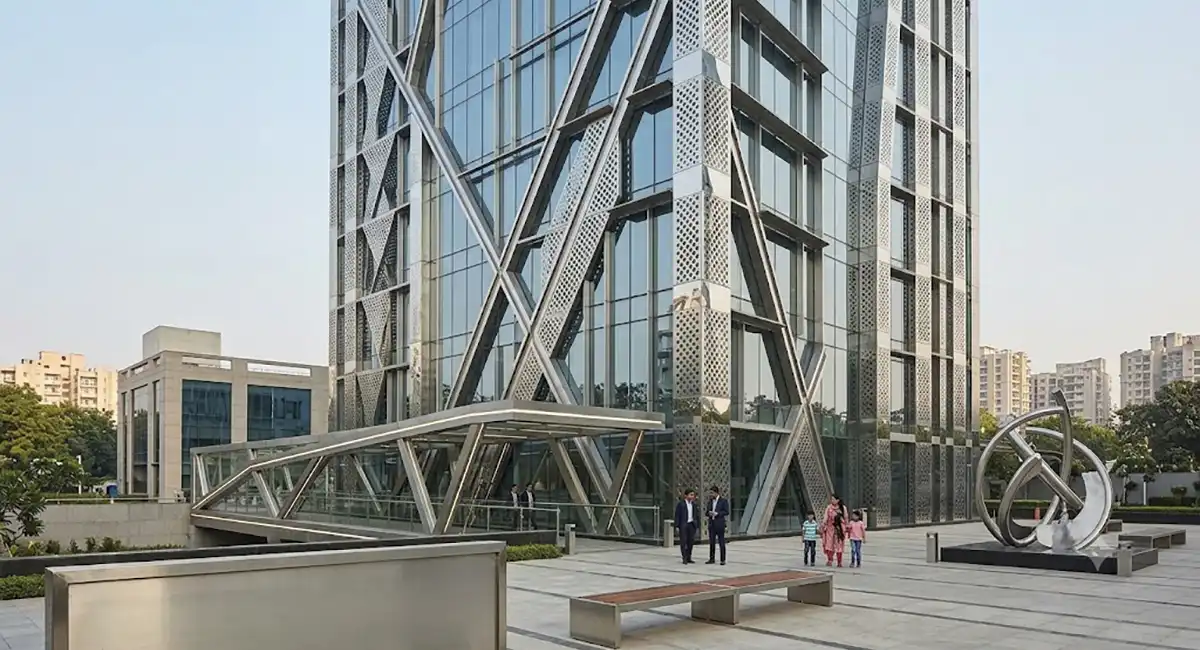
Architects and interior designers value the material’s sleek and clean appearance, reflective surface, textures and finishes such as satin, matte, PVD gold, brushed, mirrored, hairline finish, bronze, rose gold, coloured surfaces like black titanium, and ability to achieve a luxurious metallic look. It complements glass, stone, marble, and wood interiors, and in offices, it helps create a more premium perception and stronger project positioning.
What is the performance of stainless steel in structural usage?
In selected premium and industrial applications such as roofing systems, structural supports, beams and columns, and space-frame structures, stainless steel’s high strength-to weight ratio and corrosion resistance make it attractive, particularly in aggressive environments.A growing application area in townships and commercial developments includes water storage systems, water supply pipelines, drainage systems, wastewater facilities. This is because of stainless steel’s characteristics like hygiene, durability, and corrosion resistance.
There is increasing usage of stainless steel in street furniture like benches, signages, lighting poles, bus shelters, landscape elements, and public sculptures, since the material offers long-life with limited maintenance.
Stainless steel often delivers a lower total lifecycle cost despite a higher initial investment, thanks to its long service life and reduced maintenance requirements.
What value does stainless steel bring to buildings in terms of cost, aesthetics, durability, lifespan and maintenance?
From a real estate developer’s perspective, stainless steel is chosen because it improves the total value of a building across five dimensions: cost, aesthetics, durability, lifespan, and maintenance. Stainless steel is generally more expensive than painted mild steel, aluminium in some applications, or conventional finishes, which can increase the upfront construction budget.It requires less repainting and refurbishment, has a lower risk of corrosion-related replacement, requires less maintenance labor and material costs, and has longer replacement cycles. For example, a painted mild steel railing may require repainting every few years, whereas a stainless-steel railing may only require periodic cleaning while maintaining its appearance for decades.
Durability is one of its strongest advantages. It resists rust, moisture, air pollution, UV exposure, temperature fluctuations, daily wear and tear, and is easy to clean in frequent human contact.
One key reason developers use stainless steel is longevity. Properly specified stainless steel can remain functional and attractive for several decades without major replacement. Its corrosion resistance helps it maintain structural and aesthetic performance much longer than many alternative materials.
Building owners experience fewer refurbishment cycles, lower replacement expenditure, better preservation of asset value, and improved return on investment over the building’s life cycle. What’s more, stainless steel is 100% recyclable, making it an environmentally friendly material.
The author holds an M. Arch environmental, and is certified as an IGBC AP, LEED GA, GRIHA trainer, GEM CP, MESG Net Zero buildings. She has over 16+ years of experience in the field of Sustainability and Architecture.

Lohia Worldspace
Piyush Lohia
Piyush Lohia
As the real estate sector shifts towards lifecycle value rather than just upfront costs, stainless steel is becoming an increasingly important material in building durable, sustainable, and future-ready developments, observes Pyush Lohia, Managing Director, Lohia Worldspace.
Do you think stainless steel is becoming a material of choice in real estate projects?
Absolutely. Stainless steel has moved beyond being just a premium material to becoming a practical choice in modern real estate. Over the last few years, we have seen developers use it more extensively, particularly in projects where long-term performance is a priority. Homebuyers today are paying closer attention to construction quality, not just finishes, and developers are responding by investing in materials that reduce maintenance and improve the lifespan of buildings.This trend is also being driven by rapid urbanisation, stricter building standards, and growing awareness around sustainability. Stainless steel is 100% recyclable and can be reused without losing its properties, making it well aligned with green building practices.
What are the main application areas where SS is being used?
In residential and commercial developments, stainless steel is widely used in areas exposed to weather, moisture, and frequent human use. Railings, staircases, balconies, entrance gates, lifts, handrails, water storage systems, plumbing components, façades, and structural connectors are some of the most common applications.For projects located in regions with heavy rainfall or high humidity, stainless steel performs exceptionally well because it resists corrosion far better than conventional materials. It also offers high strength with relatively low maintenance requirements, making it suitable for high-rise developments where repair and replacement costs can become significant over time.
In premium projects, developers are also using stainless steel in architectural features and external cladding because it retains its appearance for decades without frequent repainting or surface treatment.
With developers increasingly pursuing IGBC and GRIHA-certified projects, the preference for durable and sustainable materials like stainless steel has increased.
What trends do you see in the application of stainless steel in interior spaces?
The use of stainless steel in interiors has grown considerably. Earlier, stainless steel was mostly associated with kitchens or utility spaces. Today, it is being used in lift lobbies, decorative partitions, wall panels, modular kitchens, wardrobes, bathroom fittings, lighting fixtures, and designer furniture.The material offers flexibility in design through different finishes such as brushed, mirror, matte, or textured surfaces. It complements contemporary interiors while providing excellent durability. Unlike several decorative materials that lose their finish overtime, stainless steel maintains its appearance even with regular use, making it particularly suitable for common areas with high footfall.
What value does SS bring to buildings in terms of cost, aesthetics, durability, lifespan, and maintenance?
While stainless steel may involve a slightly higher initial investment compared to conventional materials, the long-term economics strongly favour its use. Lower maintenance costs, minimal repairs, and a significantly longer service life make it a cost-effective choice over the building’s lifecycle.From an aesthetic perspective, it offers a clean, modern, and timeless appearance that continues to appeal to homebuyers. More importantly, it delivers consistent performance. Stainless steel can last 50 years or more in many building applications with minimal deterioration, provided the appropriate grade is selected for the environment.
For developers, this translates into fewer maintenance issues after project handover and stronger customer satisfaction. For homeowners, it means lower upkeep costs and greater confidence in the quality of construction.