The close link between well-designed sustainable spaces and employee retention is becoming a critical factor for organisations, observes, Nikhil Khadilkar, Studio Head, Eleganz Interiors.
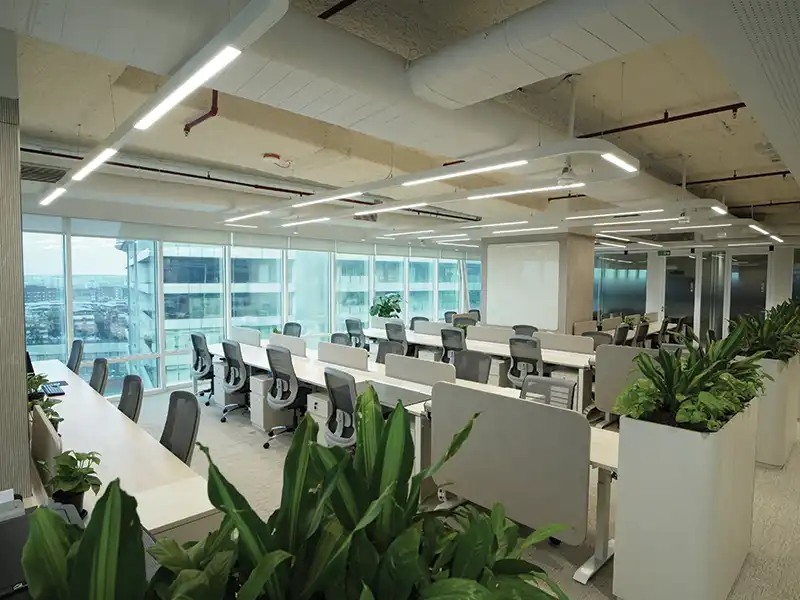
ESG influencing workplace design: There is a clear shift over the last few years where sustainability is no longer treated as an optional layer, but as a core requirement in project briefs. Clients today are far more aware of ESG expectations and are actively looking to integrate sustainability into their workplace environments.
This demand is particularly strong among large corporates and global occupiers, where workplace design is closely linked to brand positioning and long-term operational efficiency. The expectation now is not just to deliver a functional space, but one that aligns with sustainability goals from the outset.
ESG is increasingly influencing how design decisions are made at every stage. I see this reflected in the way clients approach planning - from material selection to energy efficiency and overall space utilisation.
From energy-efficient layouts to material-conscious execution, workplace interiors today are playing a pivotal role in reducing environmental impact while enhancing employee well-being.
Nikhil Khadilkar
Studio Head
Eleganz Interiors

What is changing is that ESG is no longer discussed separately; it is becoming embedded into the design brief itself. This means that aspects like environmental impact, employee well-being, and long-term performance are considered together, rather than in isolation. As designers, our role is to translate these broader commitments into practical, implementable design solutions.
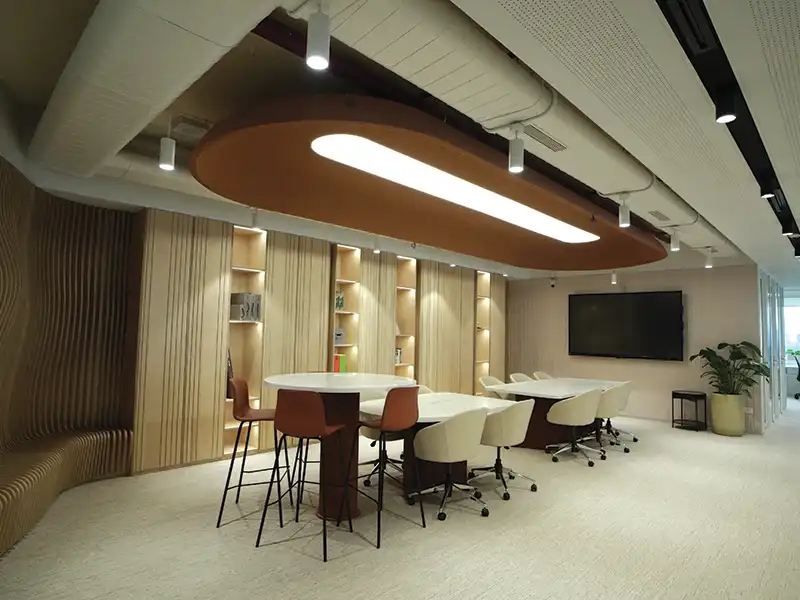
Improving energy efficiency: From a design perspective, energy efficiency starts with planning. This includes optimising layouts to make better use of natural light and reduce unnecessary energy consumption. Integrating energy-efficient lighting systems, optimised HVAC design, and smart controls also play an important role. These are not standalone features but need to be aligned with how the space is actually used. The key is to ensure that design and engineering work together, so that efficiency is built into the space rather than added later.
Clients are prioritising better air quality, access to natural light, and more flexible work environments. These factors contribute to a more comfortable and engaging workplace, which in turn impacts productivity and overall satisfaction. Designing with people in mind is becoming just as important as designing for performance.
Transitioning to greener workplaces: The key learning from my projects is that sustainability needs to be integrated early in the process. It cannot be treated as an add-on once the design is finalised. It requires alignment between all stakeholders, including design, engineering, procurement, and execution teams. At the same time, it is important to balance sustainability goals with practical considerations such as cost, timelines, and performance. A well-planned approach ensures that sustainability is both achievable and effective.
Future of sustainable workplace design in India: Sustainability will continue to become more deeply embedded in workplace design. Clients are becoming more informed, and expectations are evolving accordingly. We are likely to see greater integration of technology, more emphasis on adaptability, and a stronger focus on long-term performance of spaces. Ultimately, the focus will be on creating workplaces that are efficient, responsible, and aligned with both business and user needs. From a design perspective, the key is to ensure that design and engineering work together, so that efficiency and sustainability are built into the space rather than added later.