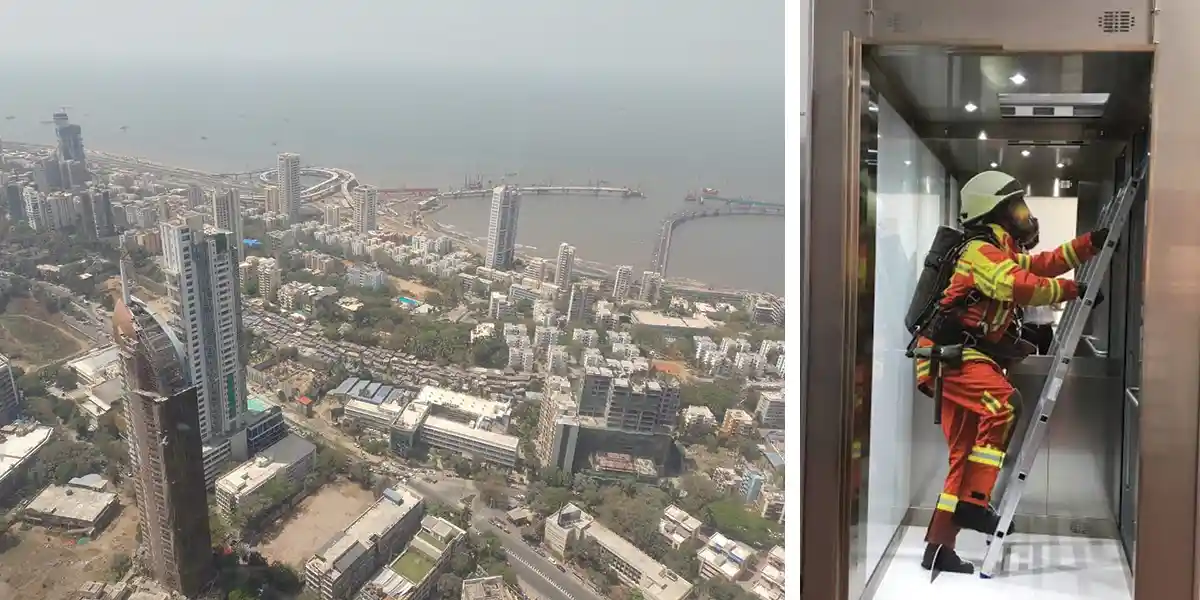
As buildings grow taller, elevator systems become more complex and must respond not only to transportation demands but also to environmental and structural challenges. Modern elevators in high-rise buildings must now be capable of adapting to wind pressure, seismic activity, and passenger comfort requirements.
Rajnikant Lad, Elevator Auditor
Wind Pressure Challenges in High-Rise Elevators
One of the major challenges in tall buildings is the effect of high wind pressure, especially at upper floors. Wind can directly influence elevator performance and passenger comfort. Common wind-related issues include:- Difficulty in elevator door closing due to pressure differences between lobby and shaft.
- Failure of door interlocks to transmit proper electrical signals, preventing elevator movement.
- Cabin sway caused by building movement and aerodynamic effects.
- Hoist rope and travelling cable sway, particularly in super-tall buildings.
- Air-cutting noise and whistling sounds during high-speed travel.
As buildings rise higher and environmental challenges intensify, elevator systems must evolve to become safer, smarter, and more resilient. The future lies not only in technological innovation but also in effective implementation, regular audits, and proactive maintenance to ensure reliable and safe vertical transportation for all.
Rajnikant Lad, Founder - Elevator Auditor & Elevator Safety Awareness Forum and Chairman - Building Transportation Safety (FSAI)

Engineering Solutions
To mitigate wind effects, architects and elevator engineers must work together to implement the following features:- Pressure-balanced lobby design
- Wind barriers or enclosed entrance areas
- Improved shaft pressurization control
- Rope stabilizing devices
- Active sway control systems
- Aerodynamic cabin design
Earthquake Protection and Seismic Elevator Design
Earthquake safety is a critical concern in high-rise elevator systems. Common elevator failures during seismic activity include:- Excessive cabin movement
- Counterweight blocks dislodging from frame
- Counterweight frame derailment
- Travelling cables entangling in shaft brackets
- Hoist ropes jumping out of pulley grooves
- Guide rail misalignment
Seismic Elevator Technology
Modern elevators use seismic sensors (accelerometers) to detect primary (P) waves, which arrive before destructive secondary waves. Upon detection, the elevator system automatically:- Stops at the nearest floor
- Opens doors for passenger evacuation
- Suspends new call registrations
- Moves elevators to safe mode
- Structural Safety Measures
- Earthquake-resistant RCC or
- Steel structural systems
- Seismic joints
- Base isolation systems and
- Structural damping devices.