UNStudio, along with local partner HYP Architects, announced winners by Atenor, Arhs Group in the competition for design of the Kyklos building in Belval.

For the Kyklos building proposal, using the early prototype of the Carbon Builder enabled the team to make the correct decisions early in the concept design process. By assessing the embodied carbon, it was possible to reduce the carbon footprint of the building by around 80% compared to a traditional office building in Luxembourg.

The possibility of using steel with 100% recycled content and working with best practice concrete mixtures, improved the carbon performance of the project. Set against the function-use demands, this resulted in the choice of a hybrid steel-concrete structure over other construction methods. It was determined that this hybrid solution offered a better carbon performance in the long run. The Kyklos building has the ambition to achieve a minimum of BREEAM Excellent and Well Gold.
Fact File
Client: Atenor, Ahrs GroupLocation: Belval,Luxembourg
Building surface: 7,600 m2 GFA _3600m2 below ground
Building site: 1200 m2
Programme: Office with mixed-use plinth
Local Architect: HYP Architects
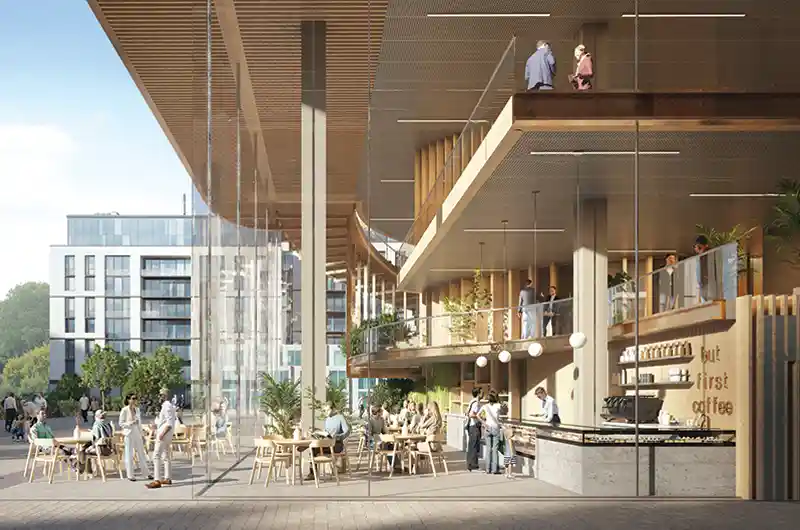
Advisors: renderings by Play-Time Barcelona
Urban integration and a holistic sustainable approach are the two main drivers of the design of all elements of the building, from its functional organisation to its construction techniques and its materiality. With a total surface area of 7,600m2 above ground and a basement of 2,250m2, the building offers 8 floors of office space above a mixed-use lower level. Numerous strategies are incorporated into the design to ensure high levels of transparency and daylight. One corner of the building is setback on the lower levels, creating an overhang that further serves to protect from overheating. The lobby is designed as a unified space comprising both the main reception and commercial functions that are directly accessible from inside and outside.
The floor plates of the Kyklos building branch from the circular core and are suspended from steel cables. This eliminates the need for load bearing columns as much as possible and frees up the floors for a variety of possible interior layouts. The design of the building also ensures flexibility for possible use changes in the future.