Completed in March 2024, this residence was designed for a family with a single child. The brief called for spatial openness, clear circulation, and environments that could adapt over time. Rather than approaching the home as a static object, the design was envisioned as a living framework, one that could respond to daily routines, moments of gathering, and the evolving needs of its occupants. From the earliest stages, functionality shaped every decision, not as an afterthought, but as the primary design driver.
The architectural character of the house is established through a composed and confident facade. Set within a dense urban neighborhood, the elevation asserts its presence without excess. A palette of dark and neutral tones allows form and proportion to take precedence. Vertical elements articulate the facade, creating depth and rhythm while visually breaking down the mass of the structure.
Subtle curves soften the overall geometry, ensuring the building feels grounded and approachable rather than rigid. Carefully designed openings allow daylight to enter while maintaining privacy and thermal comfort. The facade is not treated as a visual statement alone. Its design responds directly to environmental conditions, addressing light control, ventilation, and privacy. Material choices emphasize longevity and low maintenance, ensuring the home continues to perform over time while retaining its architectural clarity.
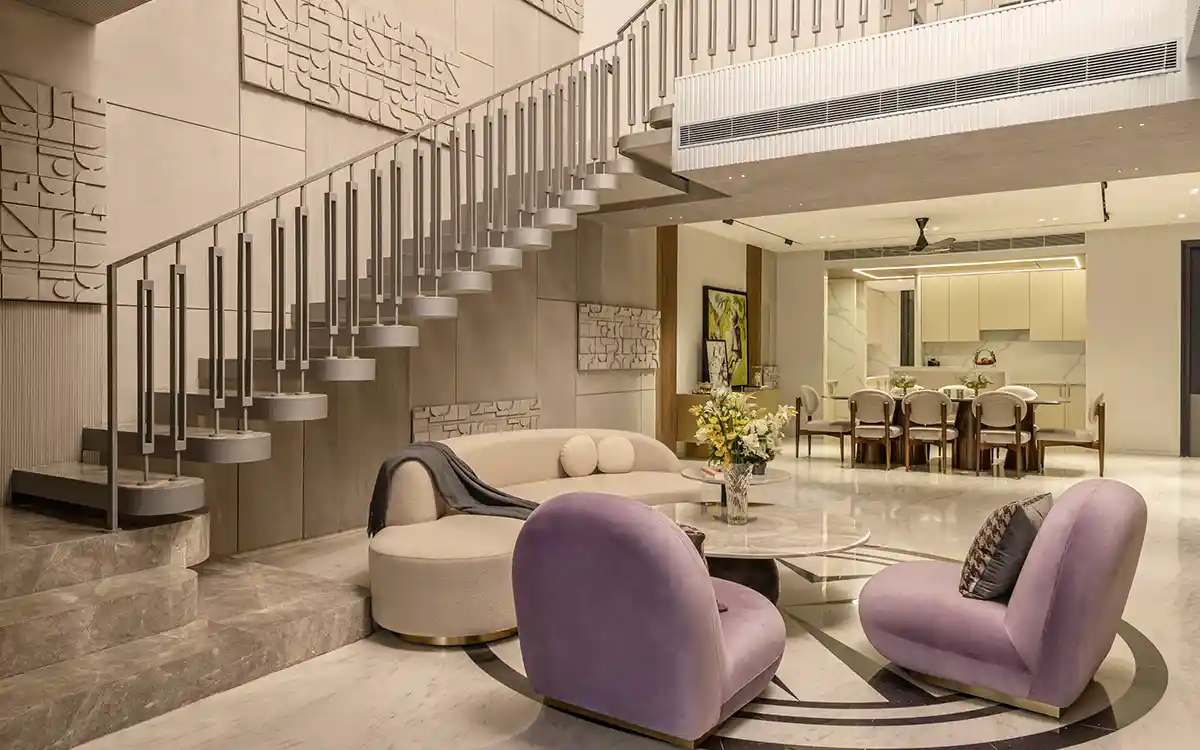
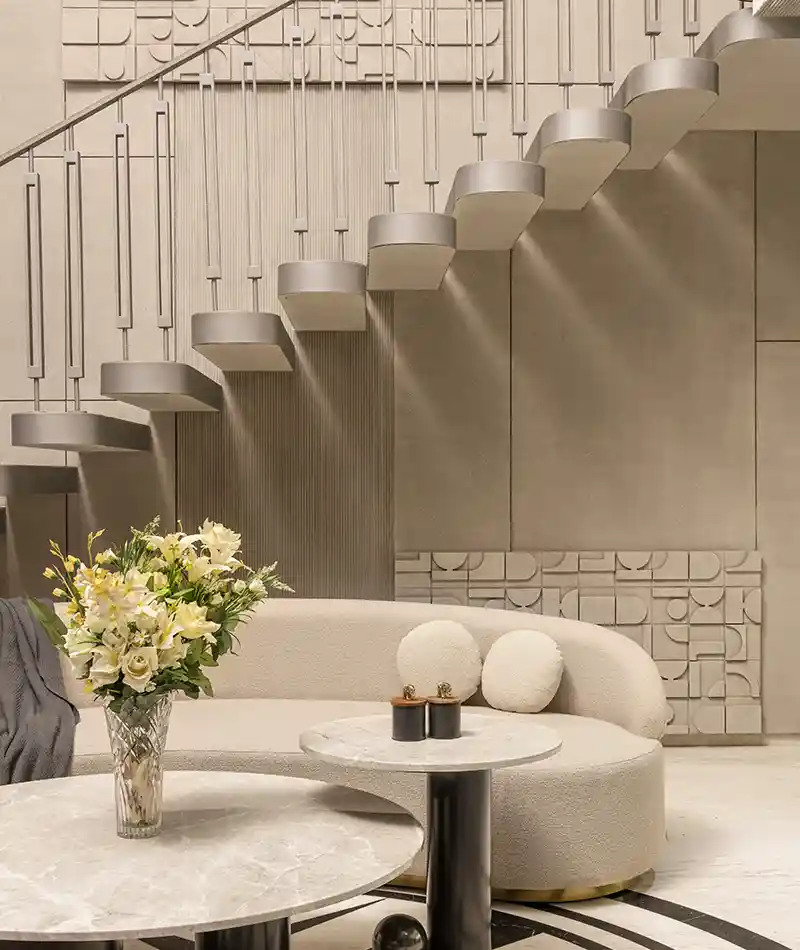
Inside, the planning unfolds through a clear and logical spatial hierarchy. Public, semi-private, and private zones are distinctly defined, yet seamlessly connected. The ground floor accommodates the shared spaces of the home, including the living area, dining zone, and staircase. These spaces are arranged to promote interaction and fluid movement, allowing the home to function effortlessly during both everyday use and social gatherings. Circulation paths are intuitive, reducing unnecessary transitions and visual clutter.The living room anchors the interior experience.
Designed as both a social setting and a place of pause, it relies on materiality rather than ornamentation to establish character. Neutral surfaces form a calm backdrop, allowing textures and proportions to shape the space. Warm wood elements introduce a sense of comfort, while gentle curves guide movement and soften visual transitions. Furniture placement is deliberate, prioritising usability, comfort, and adaptability over rigid symmetry. Adjoining the living area, the family lounge offers a more informal setting. This space is conceived as a place for relaxation, reflection, and everyday moments. Organic forms and curved surfaces are used to enhance comfort and improve acoustic quality, creating an atmosphere that feels intimate without being enclosed. The continuity between spaces ensures openness, while subtle shifts in form and material help define each zone.
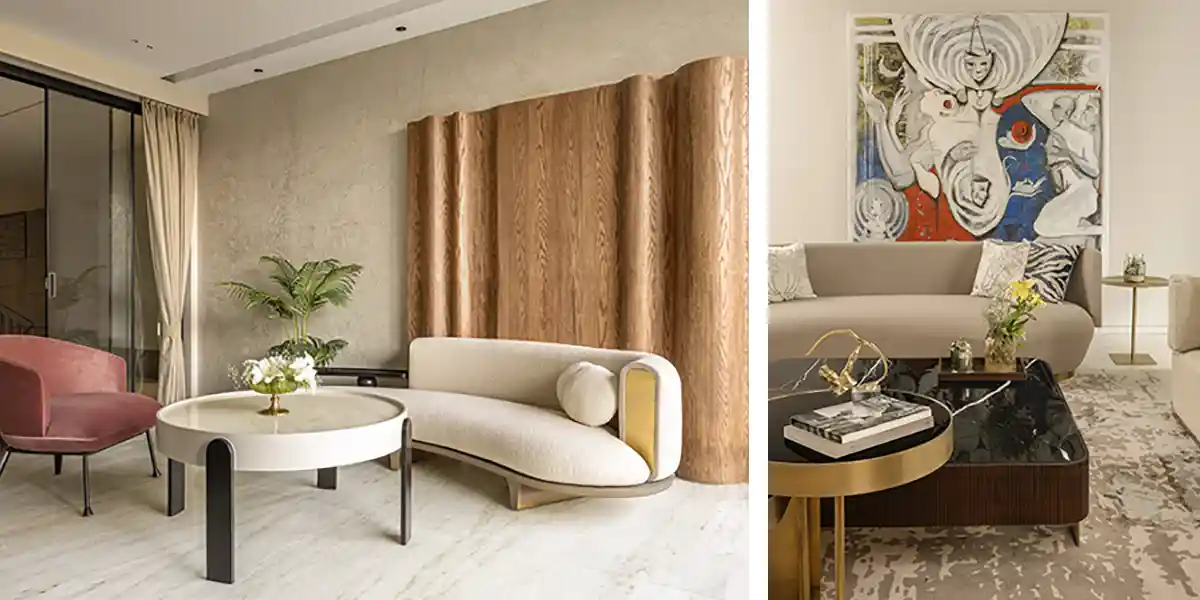
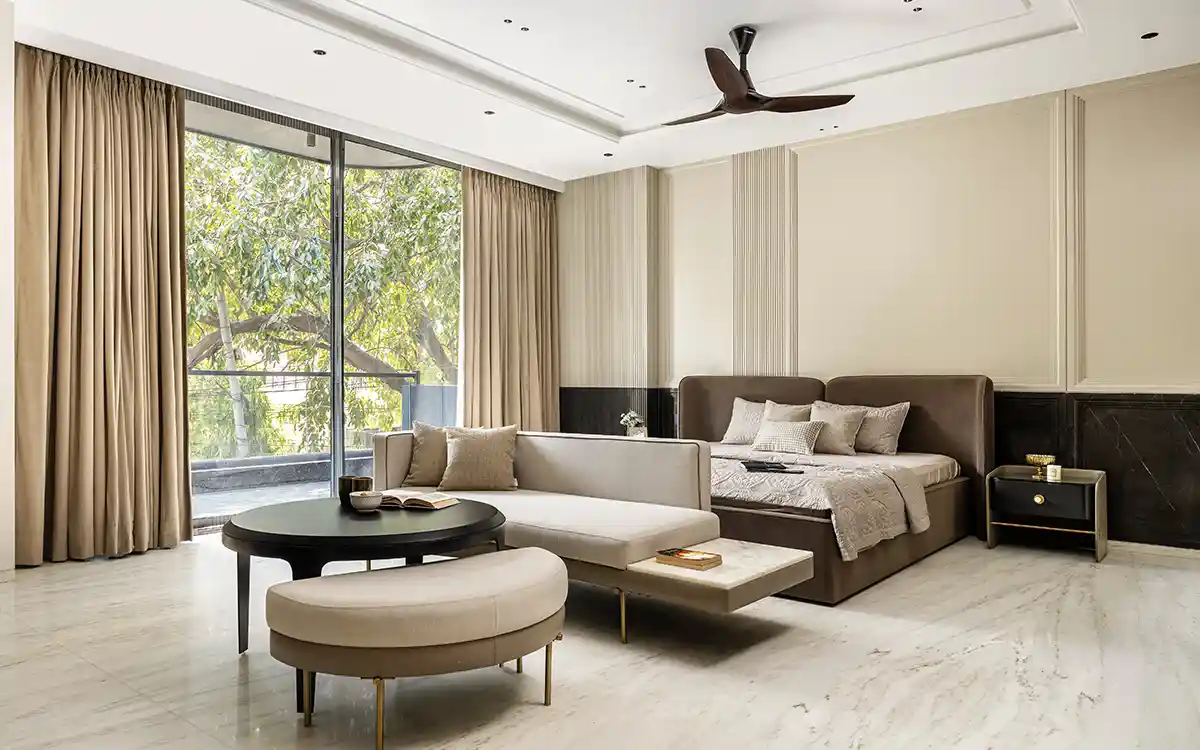
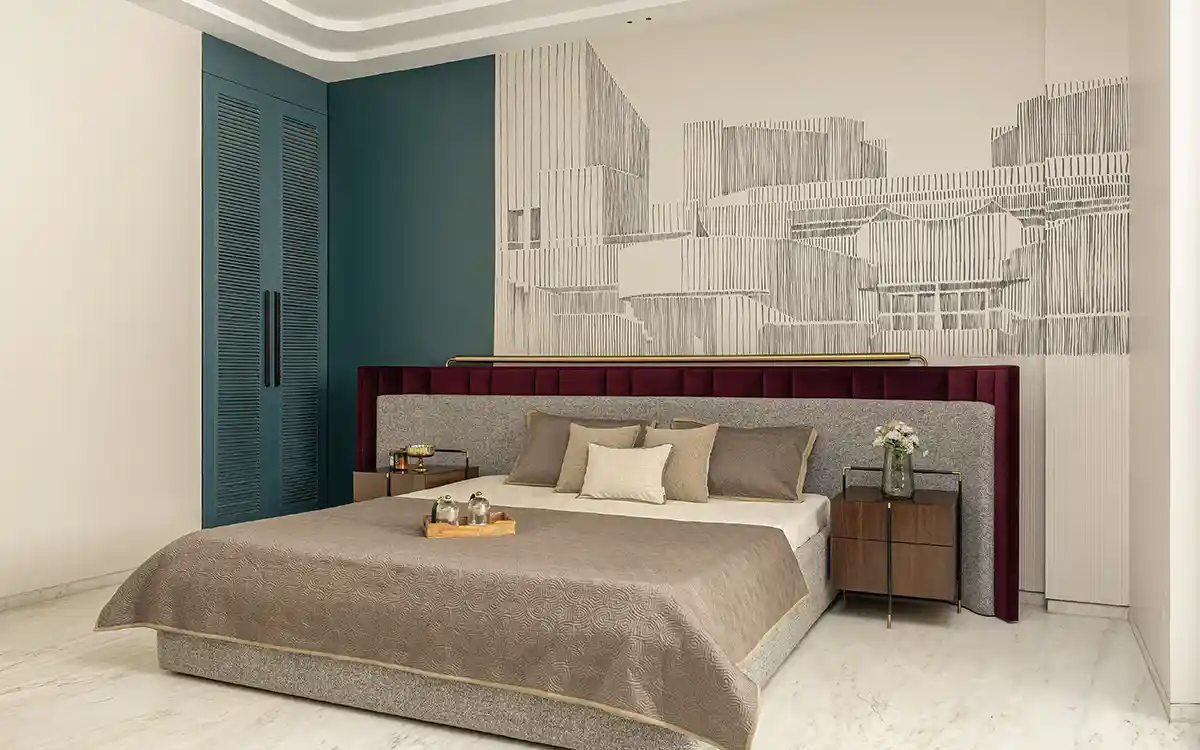
Private areas of the home are designed with restraint and purpose. Bedrooms prioritize rest, storage, and flexibility, allowing occupants to personalize their spaces without compromising functionality. Built in storage solutions reduce visual noise and improve circulation, while material choices emphasize warmth and durability. The design language remains consistent, ensuring that private spaces feel connected to the overall architectural narrative.
Bathrooms and utility spaces follow the same principles of clarity and efficiency. The overall layout is optimized for daily routine with clean detailing and layered lighting enhancing both function and comfort. Finishes are chosen for their tactile quality and durability, reinforcing the home’s emphasis on long term use. Across the residence, restraint defines the design approach. Every element is intentional, and nothing exists without purpose. Art and artefacts are curated sparingly, allowing architecture, light and material to remain the primary focus. The result is an environment free from visual excess where spaces feel composed and intuitive.
“Concrete Heaven” reflects Sculpt Design Studio’s reference of an exemplary residential design. It derives its strength from thoughtful planning, material honesty and a deep understanding of how architecture supports daily life. The result is a residence that feels calm, enduring and intrinsically connected to those who inhabit it.
Ar. Vardha Aggarwal, Founder

Link to website :https://sculptdesignstudio.com/
FACT FILE
Name of Project: Concrete HeavenLocation: Saraswati Vihar, New Delhi
Designer: Ar. Vardha Aggarwal
Firm Name: Sculpt Design Studio
Date of Commencement: November 2021
Date of Completion: March 2024
Built-up Area: 3024 sq. ft.
Photography: TakenIn Studios