
Across our residential and hospitality projects, there has been a clear transformation in how spaces are occupied. Homes today are expected to perform multiple roles within the same footprint. A living room may function as a workspace during the day, a social space in the evening, and a quiet retreat at night. In several of our private residences in Delhi NCR and Mumbai, this shift has led us to rethink traditional room hierarchies. Rather than designing single-use spaces, we now prioritise clear zoning, adaptable layouts, and lighting strategies that respond to different times of day and patterns of use.
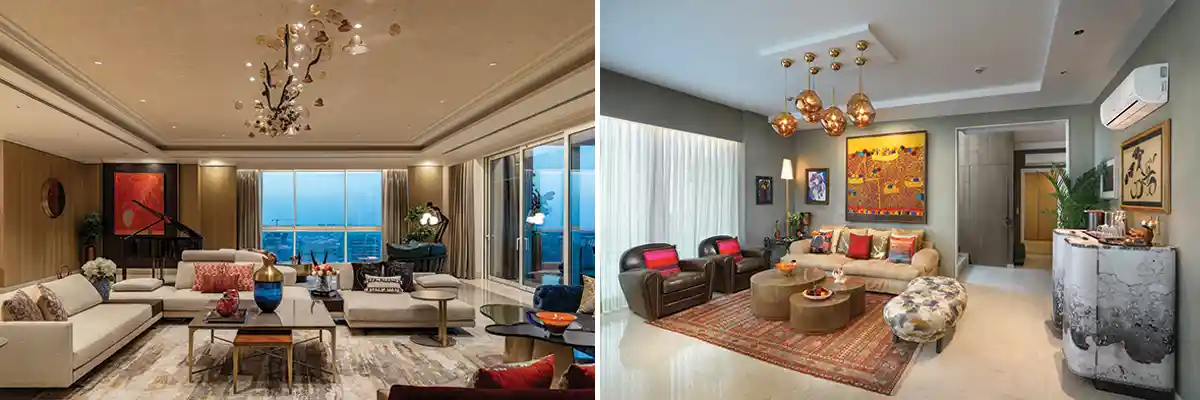
Flexibility, however, is often misunderstood. For us, it is not about ambiguity or loosely defined spaces. It is about clarity, designing with enough structure and intent that spaces can evolve naturally. In projects such as our large-format apartments in Gurgaon, this has translated into sliding partitions that allow rooms to expand or contract, layered lighting that shifts mood without altering layout, and furniture-integrated storage systems that quietly absorb the realities of everyday life.
This approach requires foresight. Interiors that are overly prescriptive tend to age quickly. Over time, we have learned that longevity comes from focusing on fundamentals: proportion, adjacency, and spatial hierarchy. These are the elements that allow rooms to change function without the need for structural intervention. Storage, in particular, is one of the most underestimated aspects of interior design, yet it plays a decisive role in how well a space functions over decades.
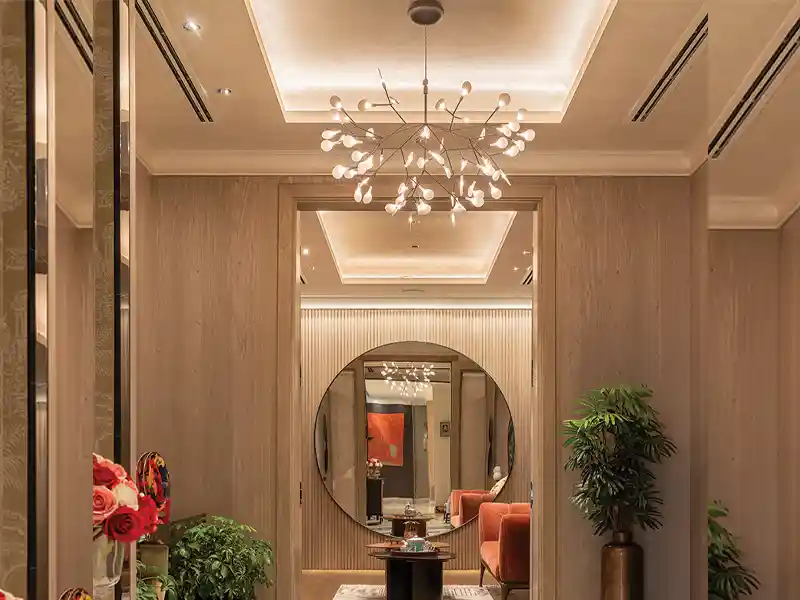
Another shift is the need for sensory balance. Many of our recent interiors consciously move away from excess toward restraint. Natural light is treated as a primary design element. Tactile materials, stone, wood, and textured surfaces bring warmth and grounding. Controlled colour palettes create calm without monotony. This is not about minimalism as an aesthetic, but about designing interiors that support clarity, comfort, and everyday living.
Ultimately, interiors that respond meaningfully to changing lifestyles and environmental realities are those designed to last. When adaptability, material intelligence, and human comfort guide design decisions, interiors remain relevant well beyond the moment they are completed, continuing to support life as it unfolds, rather than resisting it.