Subscribe

The Four Pillar of Sustainability: Keshav Agarwal, Srijan Realty

How Design is Shifting from Opulence to Experience Through the Four Pillars of Sustainability.
Keshav Agarwal, Director, Srijan Realty

Srijan-Realty
The luxury home of the previous decade was a static object, appraised by the weight of its marble and the provenance of its chandeliers. Today, the true luxury home is being engineered as a dynamic, high-performance living system—judged by how intelligently it organizes light, air, time, community, and well-being around the people inside it.

According to CBRE’s India Market Monitor Q4 2025, high-end housing became the largest residential category by sales for the first time in 2025, accounting for nearly 27% of transactions across top cities—up from roughly 12% in 2022. Simultaneously, the luxury segment grew by an astounding 70% year-on-year.

Accelerated wealth creation is deepening this trend. India now ranks fourth globally with 85,698 individuals holding assets above $10 million, projected to approach 94,000 by 2028. Affluent buyers are not first-generation luxury consumers. They benchmark globally, prioritizing longevity, asset quality, and lifestyle over sheer spectacle. To answer this demand, modern architecture must be anchored in four core strategic pillars.

Pillar 1: The Economic Argument (IGBC Platinum Efficiency)

True sustainable luxury protects wealth by shifting the conversation from square footage to structural durability and operational efficiency. By achieving benchmarks such as IGBC Platinum efficiency, modern homes deliver 30% to 40% energy savings and a 40% to 50% reduction in water usage. This translates into permanently lowered utility bills, insulating homeowners from rising resource tariffs and cementing the property as a stable store of value in a volatile world.
Keshav-Agarwal
Across India’s residential market, there is a growing preference for homes that promise a sustainable way of living rather than a mere display of having.

Keshav Agarwal

Pillar 2: The Wellness Argument (Micro-Climate & AQI)

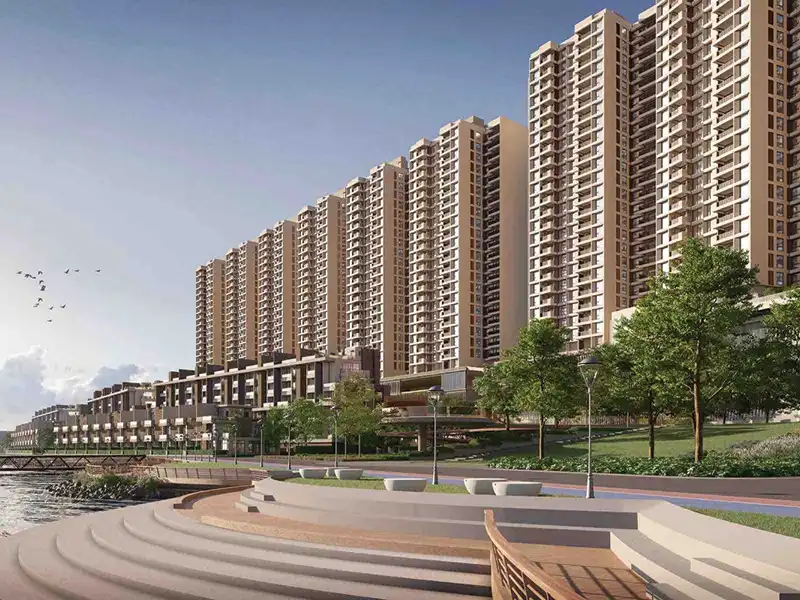
Rather than relying solely on interior mechanics or lobby aesthetics to impress a visitor, future-ready developments utilize climate-responsive site planning to actively manage the environment. By incorporating natural air filtration systems, dense botanical zones, and cross-ventilated homes, the architecture traps particulate matter and optimizes the local Air Quality Index (AQI). The measure of good design is shifting from what a home shows to what it removes—providing a tangible, everyday wellness benefit to residents.

Pillar 3: The Longevity Argument (Active Mobility)

Experience-driven luxury recognizes that physical movement should be built into daily life. The longevity argument emphasizes low-density master plans and the creation of walkable communities where daily needs sit within the project itself. By dedicating 71% to 87% of the master plan to open spaces, developers foster environments that naturally encourage active mobility, effectively treating the landscape and programmed clubhouses as genuine preventive health infrastructure.

Pillar 4: The Generational Argument (Universal Inclusive Design)

Square footage once reserved for double-height drama is migrating toward senior-friendly design and wellness zones that residents use daily. The final pillar integrates “Blue Zone” co-design principles to ensure the built environment serves every generation with dignity. By establishing continuous step-free access, balanced ramp gradients, and wide movement corridors as baseline design mandates, developments become universally inclusive—perfectly accommodating an active professional, a child in a stroller, or an elderly parent.

Delivery Is the New Definition of Premium

Ultimately, sustainability and execution certainty have become a form of design integrity in their own right. The affluent buyer of 2026 reads a developer’s delivery record the way an investor reads an audited statement. Markets such as Kolkata, Pune, and Chennai are seeing premium demand consolidate around developers who pair thoughtful master planning with disciplined handover. Luxury in India is no longer about building monuments to today; it is about keeping a promise for tomorrow, on time.

Stay ahead of the curve.

Architecture, design, materials, products, news and industry updates — delivered to your inbox.