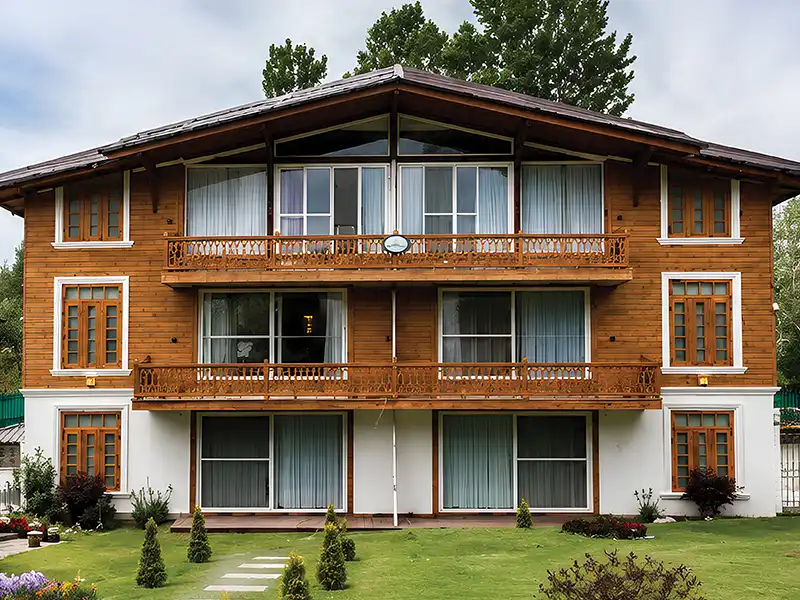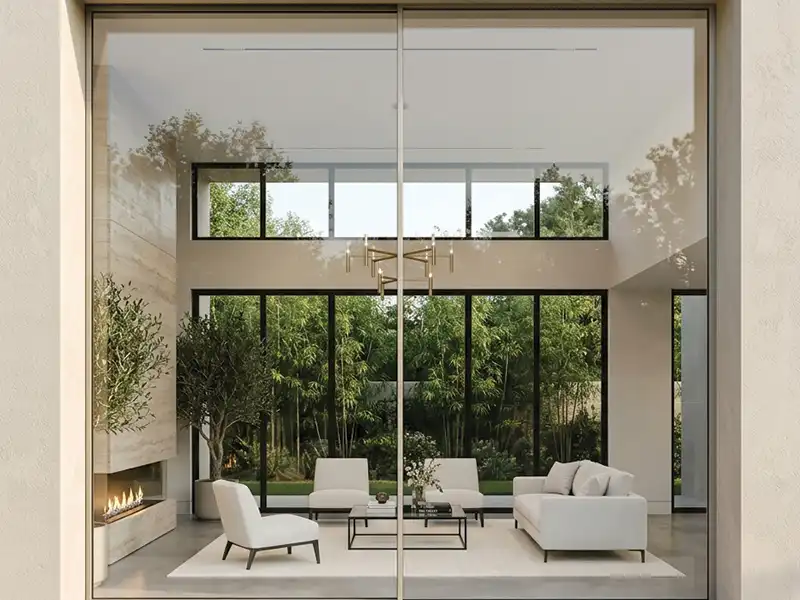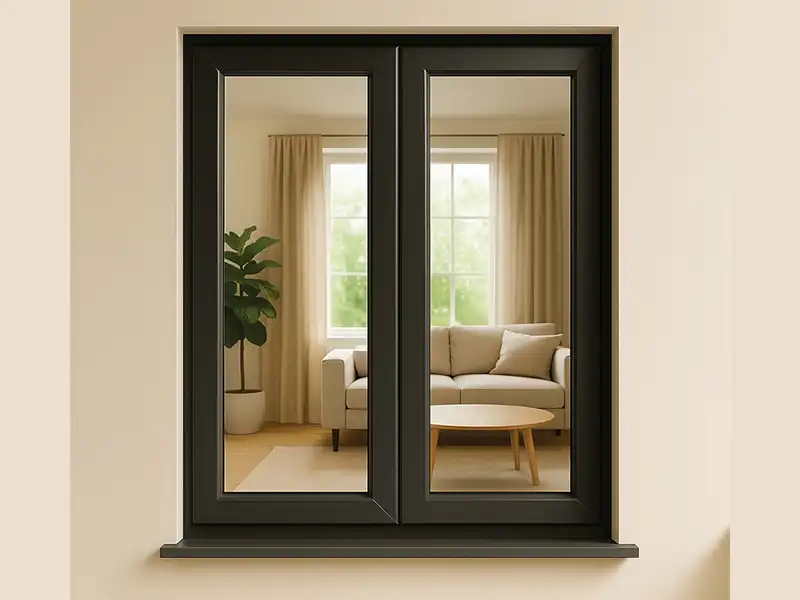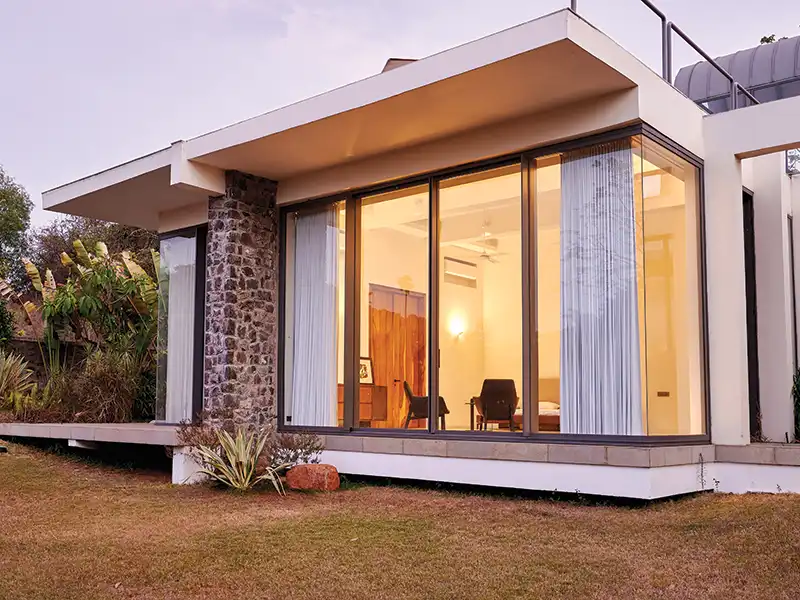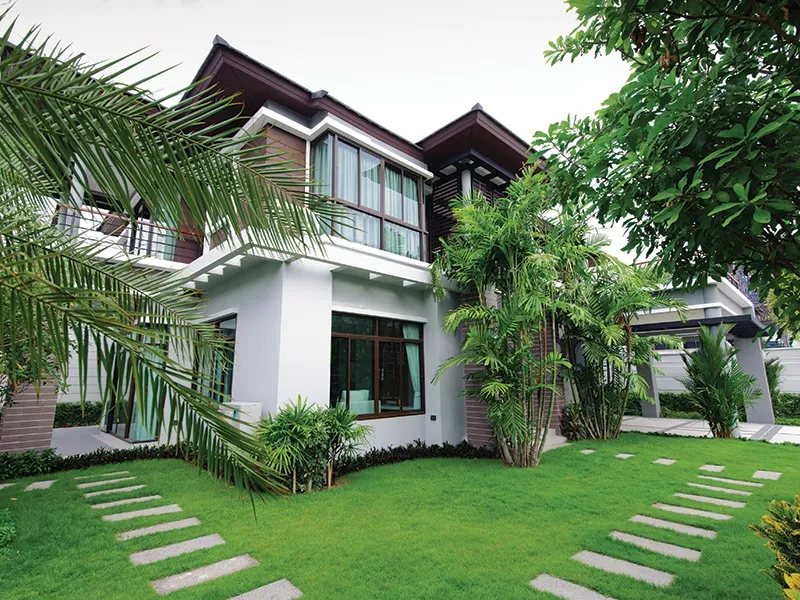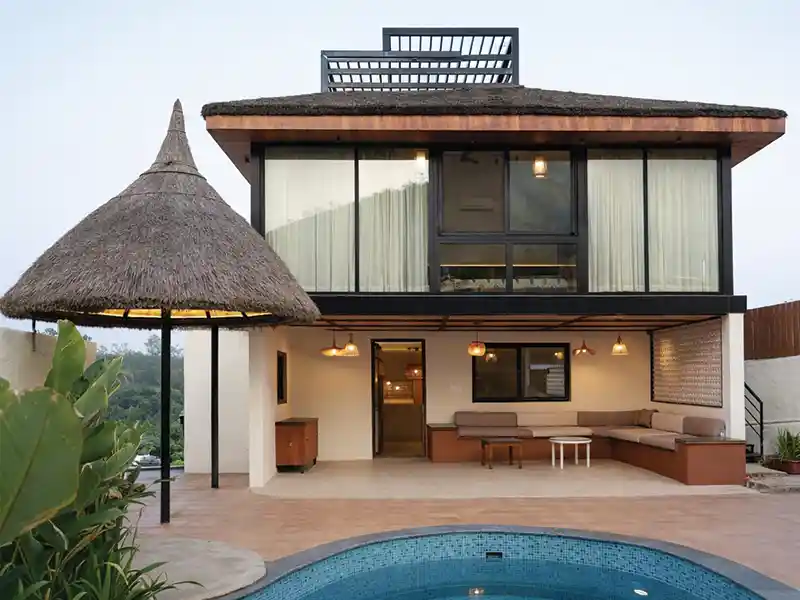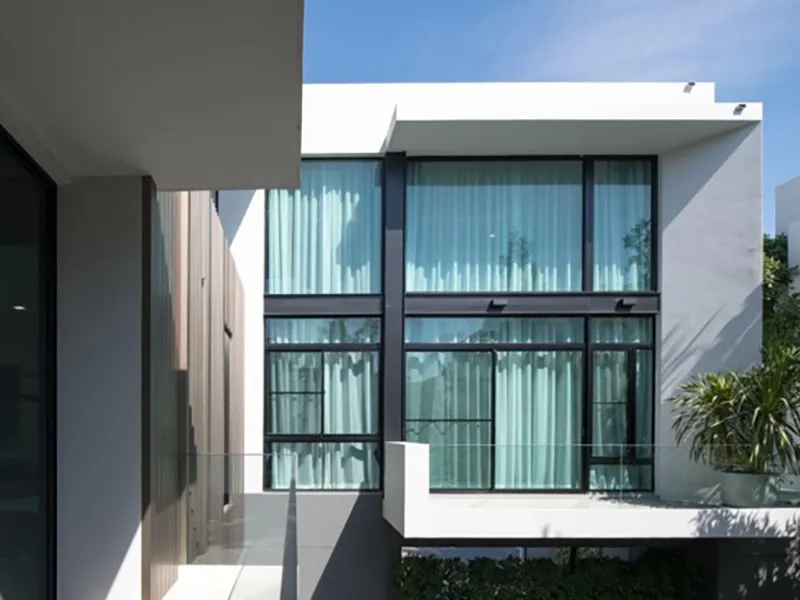
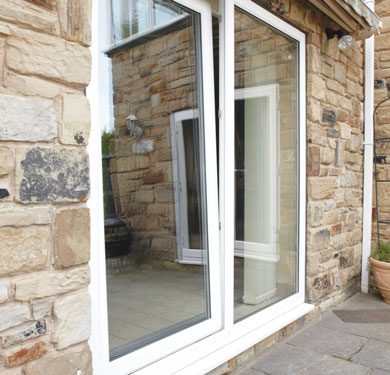
"Windows are just windows, and need no attention." We must have to do away with this thinking because, of late, this part of the building has started gaining importance, if not the attention of the modern day homeowners. And the reason is simple; the space constraint and voracity for wider horizon has made it look like that. New-age residences are forcing the modern day interiors to produce illusion of space to an extent that it does make the small space look expanded one, just by allowing the outside view and natural light connect with the interiors, keeping other things like weather, dust, and noise, quietly out. All thanks to the thinking core of interior designers and architects which made it possible with their imagination. Nonetheless, it's pretty obvious that people have started embracing wider glass panes and extended windows & doors in their premises.
With big openings becoming a common practice, the material-trend is also taking a shift from wooden/aluminium/steel to one that is strong and durable i.e. uPVC, which is creeping in slowly but steadily as the frames-holding large pieces of glass should not only be sturdy but also match the aesthetics. Practically being non-conductive, this waterproof material is one of the best solutions for effective insulation, and hence, are the absolute choice for shutting out the rising nuisances of heat, dust, and sound when compared to its competitors. Adding to that is the freebie of reduced power bills in this era of rapidly escalating energy cost thereby providing a great bargain, not to lose. But the question remains the same that after such a gestation period longing to over a decade, why is this material not picking up? Why are specifiers showing disinclination to using uPVC in their respective projects?

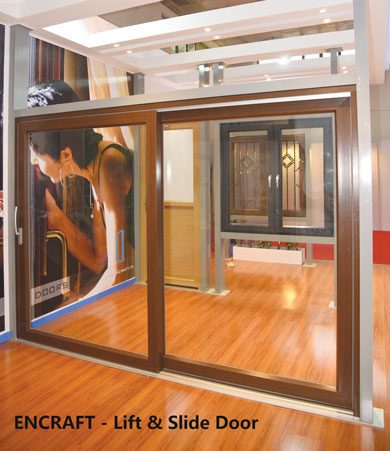
These apart, there are many other tangible attributes of uPVC, which are grabbing attention of the specifiers to bring in new, seamless feel to their architecture. Unlike its ancestors, uPVC window systems remain unaffected under the changing weather conditions thus doesn't deteriorate the aesthetics of the premises. Simple soap solution and sponge can easily clean out the dirt, keeping maintenance hassle-free and almost effortless, eventually making it an important part of the building envelope. Today, doors & windows are not just the substance to develop connection with outside world or create illusion of an expanded space; but has given people ample reasons to flaunt their doors and windows the same way, they use to do with their furniture, bath fittings, wall coverings, flooring, etc. But how desperate are the transponders to convey these attributes down to the mediators and then to the end-customers?
Amidst all this, how is the manufacturing fraternity enjoying these developments? What contribution is coming from their side to boost the demand of uPVC? Are they still selling it like an unaffordable dream targeting premium bracket or have they brought it somehow within the reach of new age homeowners? Whether do they succeed in convincing the industry stakeholders/specifiers or are still feeling agonized with their ruthless approach? With all these and many other queries MGS Architecture met with a host of manufacturers, both new and old, to have a nick on how is this material fairing and what are the latest in the industry.
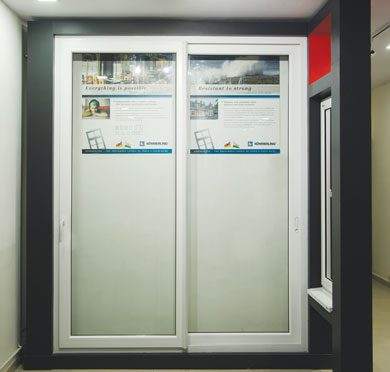
Going a little elaborative, Mr. Khan shares that for any door or window, there are four major components - uPVC Profile, steel reinforcement, hardware/fittings, and glass. "Each component has its own value, which if changes price changes. However, for the same insulation requirements a comparable wooden/aluminium profile may actually be more expensive, yet customer needs to be convinced that using uPVC profiles will be the better option. Always, there is an effort required to explain the benefits of uPVC over aluminium or wood," he observes indicating that there is a joint effort going on by all uPVC players to increase awareness on these issues in the market.
Interestingly, most of the manufacturers seem committed to their responsibility to offer eco-friendly products to their customers. Except for a couple, majority showed extreme seriousness about the sustainability issue indicating that it is not just environmental protection by paying attention to ecology, but also to the economic aspects and issues of social relevance. With green building movement picking up across the country, quite a few uPVC-profile manufacturers have literally gone lead-free in their products. However, most of them seen lamenting on the not so good response in the absence of proper awareness about the attributes of uPVC.

The Global Panorama
The slow pace is also credited to the substandard stuff being installed by unskilled labour. No wonder, being one of the rapidly developing countries in the world, India is always targeted for testing any new product, gets flooded with cheap stuff irrespective of product categories, which in turn spoil the reputation of that particular product in the market. Contrary to this, the quality of the profile decides the extent of the benefits gained from these installations. Accordingly, to put a cap on those below par products in uPVC category, which are often being dumped from countries like China and Turkey, industry bodies like UWDMA are taking a lead in helping to establish standards as there is a need to define profile width, composition/formulation, and environmental safety. Additionally, environmental bodies like IGBC, erstwhile associated with LEED ratings, now with Indian Green Building Ratings and GRIHA are also assisting promoting uPVC for energy-saving concerns.
A Prospering Arena
Amidst a relatively gloomy scene, Mr. Sudhir Kumar Sharma, General Manager with PS Polyplast (PSP) Pvt Ltd, lights the ray of hope being optimistic of the growth and popularity of uPVC, which according to him is going up with each passing day though it will take some more time to become the first choice. "Nowadays, we can clearly feel that the market is expanding as the product has been creeping in and people are accepting it as an alternate material in place of wood, aluminium, or steel," he avers sharing that the case three years back was a bit different when people were not ready to accept it as the building product, and then convincing them was a bit tough job. "Nowadays, not only end-customers show their eagerness, but also builders and project owners are asking for uPVC for their respective projects," says Mr. Sharma adding that the inquisitiveness of customers can be clearly understood by the recent development that they approach companies directly to understand specifications for profiles, reinforcement type, fittings, glass, and warranty on the product.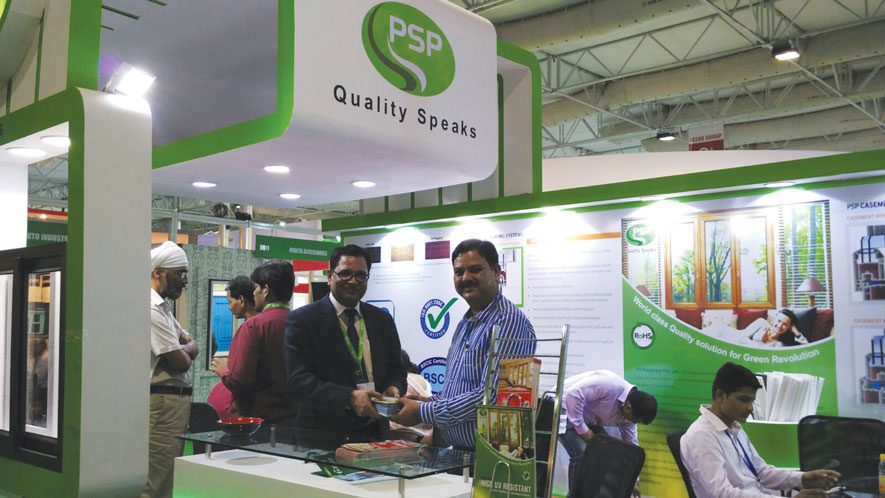
PSP is a new kid on the block, just a year old. Mr. Sharma informs that PSP's state-of-the-art plant, which has installed three lines to manufacture 400 tones a month and slated to be doubled by March this year, boasts of imported high speed extrusion lines and ultra precision tooling of latest technology to produce India's best extra-high UV-resistant uPVC door and window profiles under the brand name PSP, completely meeting the British Standard BS EN 12608 with Class-B wall thickness (2.5 mm for outer wall). "The profiles are lead-free, RoHS-compliant, supported by German technology, and extruded out of specially formulated compound to meet the tropical Indian climatic conditions, which are severe compared to climatic conditions of European countries, China, etc, and hence needs a fail-proof sturdy substance to withstand all these odds," he says.
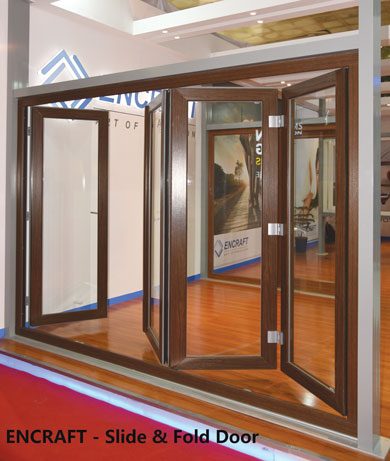
Notably, last couple of years witnessed the entry of quite a few new players including PS Polyplast, Simta Clear Coats, Yujing India, Ventilia, etc-all claiming to match the international standards thus making the arena a bit crowded, and at the same time, competitive. On the other hand, existing players like Fenesta, NCL Wintech, Dimex, Veka, etc have gone far to introduce mid-level profiles, whereas companies like Kommerling (profine), Encraft, Aluplast, etc have such plans ready on their cards in order to tap the untapped by targeting the masses instead of being concentrated at the top of the pyramid catering only to the premium bracket. All this strengthen the belief that uPVC in India has a bright future ahead.
Nevertheless, the competition is seemingly going more intense as the number of brands entering the market is making things visibly tough. NCL Wintech, a joint venture, was set up in Hyderabad in 2008 to manufacture and market Adopen's world-fame Wintech brand of uPVC window & door profiles in India. While Adopen is one of the world's leading players in the uPVC extrusion industry, NCL is a diversified building materials manufacturer. Recently, the JV has introduced PlastOne, a quality range of solutions for uPVC windows & doors that are created with state-of-the-art technology for utmost reliability as its design and manufacturing is similar to international standards and the profiles undergo a stringent testing process on critical performance parameters.




"Our uPVC Profiles are made out of special compound with the chemicals and additives manufactured by reputed brands like Dupont, Baerlocher, Arkema, and Rhom & Hass. Suitable for applications like sliding windows, casement windows, doors, and partitions, these profiles are tested at NABL accredited internationally approved test lab. These are specially designed profiles for friction-free movement of hinges, while new technology accommodates more to learners on glass cutting sizes in casement windows. Our elegant designed profiles attract everyone for its curves and finish on the fabricated windows. Specially designed door sash accommodates the general door lock available in the Indian market; and hence, cost reduction is assured in fabricating the door with Simta/Astrix uPVC profiles, allowing end users to have a selection of lock designs according to their requirements," elaborates Mr. Roshan.