Solum, a residential project by Thomas Parambil Architects is a quiet manifesto for living simply and sustainably, where agrarian wisdom meets design with intent.
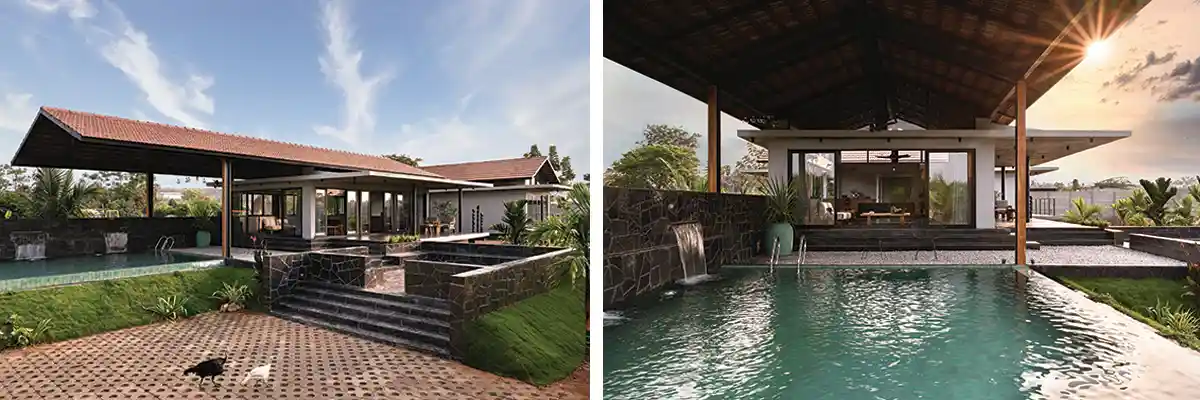
Conceived as a self-sufficient ecosystem, the farm retreat in Mysuru, is set on a two-acre land with 4034 sqft built. Its light, porous architecture blurs boundaries with nature. The endeavour, right from the outset, was to create an architectural presence that seemed to have taken root naturally in the coconut and Areca palm studded lushness rather than being something artificially placed or planted.
Within the overall topography, the plot is sited on the lowermost point which becomes a natural catchment area for rainwater. This challenging site constraint was turned into an advantage by channeling water inlets from different parts of the plot into a canal which then flowed into a large tank.
The desire for a connection to the place and an earth-sensitive lifestyle has shaped the built-form, the programme, as well as the materiality.
Thomas Parambil

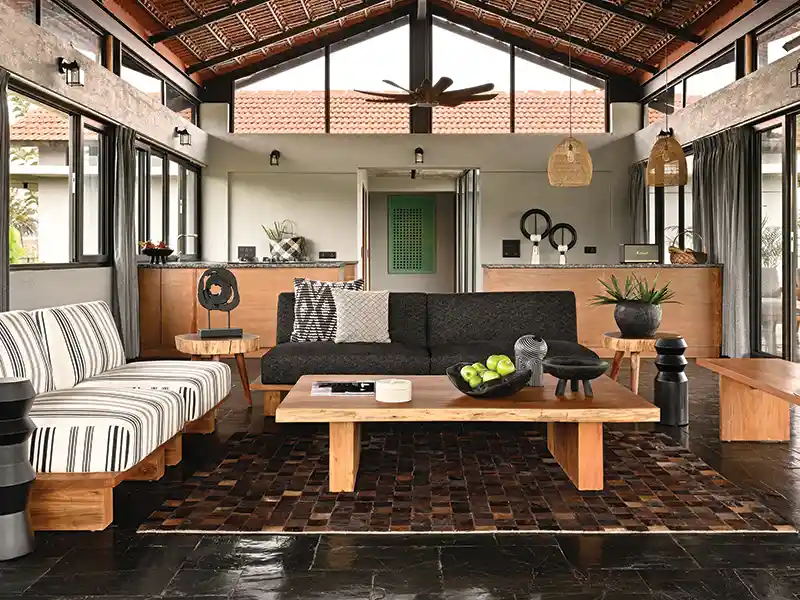
The envelope is imagined as a light, porous structure that would soften the distinction between a manmade object and its picturesque natural environs. The configuration lays emphasis on common areas. The east facing public zone comprising the pool deck, living area and kitchen is replete with light and air, due to the extensive glazing.
Deep overhangs and canopies, supported on slim columns, create cool, shaded spaces that are also sheltered from tropical downpours. The farmhouse generates its own power using solar panels, and water through rainwater harvesting. While these functionalities are bound by singularity of volume, they also enjoy distinct personalities owing to a tasteful deployment of furniture, art and other accessories. The bedrooms are tucked away to the west, and protected from the harsh west sun by a blank wall.
Fact file
Project Location: Mysuru, Karnataka, India
Area: 4034 sqft
Architects: Thomas Parambil Architects
Photographer: Justin Sebastian
Locally sourced materials like concrete blocks and terracotta roof tiles procured from manufacturing units located close to the site, celebrate rootedness and imperfection. The concrete blocks are topped with rough plaster and painted over to maintain a natural texture, while black natural stone sets a gleaming stage for the visual narrative.