You know it: dozens of ideas floating in your head, half-written hooks in your Notes app, visual moments you can almost see-but the moment you try to write a script, everything freezes. The pressure to be linear shuts down creativity that was never meant to move in straight lines.
This is where Pippit quietly breaks the rules: it forces creators out of having to think in paragraphs and voice-overs, into thinking visual scene by scene, moment by moment. Fueled by an AI storyboard generator, Pippit enables creators to move from abstract ideas to a clear visual structure without the need to "write" their way there.
And once creators stop thinking like writers and start thinking like directors, clarity follows.
Why linear scripting fails the visual thinker
Traditional scripting assumes one thing: stories are built with words first, visuals later. That's no longer how short-form video, narrative reels, and creator-led content work.Creators often picture moments before they can explain them. A reaction shot. A quiet pause. A dramatic background shift. A visual metaphor that lands emotionally before it makes sense logically.
When pushed into scripts too soon, they may find themselves experiencing:
- Overthinking simple concepts
- Loss of visual spontane
- Abandoning the ideas which seemed thrilling five minutes prior
- Organisations burnout before productions start
Scenes are decisions, not decorations
A storyboard is not a polished thing. Each frame poses a question:- What does the viewer see here?
- Where is their attention drawn?
- What emotional transition is occurring within this moment?
- Pre-shoot threats and vulnerable moments tracking
- Identify pace problems early
- Improve emotional moments
Short-form storytelling relies heavily on visual sequencing
When it comes to short-form content, simplicity will always trump complexity. A great concept won't cut it if the sequence of storytelling is confusing and draggy.Visual-first planning benefits creators in the following:
- Position hooks, not verbal cues.
- Create showstopping content
- Control rhythm without over-editing
- Create a plot tension without lengthy explanations
How AI reduces friction in visual planning
Conventional storyboarding tools either require design skills or time or both. That single aspect prevents many people from even starting the process.The AI system eliminates this problem by taking away 'blank page' anxiety. Rather than having to sketch boxes and construct layouts in their minds, authors begin with preformatted graphic templates.
Pippit makes storyboarding an exploratory process, not a scary thing. For example, you’re not finalizing decisions, you’re experimenting with visual logic without risk.
Pippit: It's not just a tool for creating; it's a thinking space
Instead of nudging authors to finalize, it encourages them to explore. Scenes might be reordered, graphic ideas explored, and story flows improved upon without anything being set in stone. This is what makes visual planning sustainable.Once the creators recognize that clarity comes from observing, not dictating, the next step involves creating a storyboard in a way that reflects how their brain processes. This is where Pippit’s process shines.
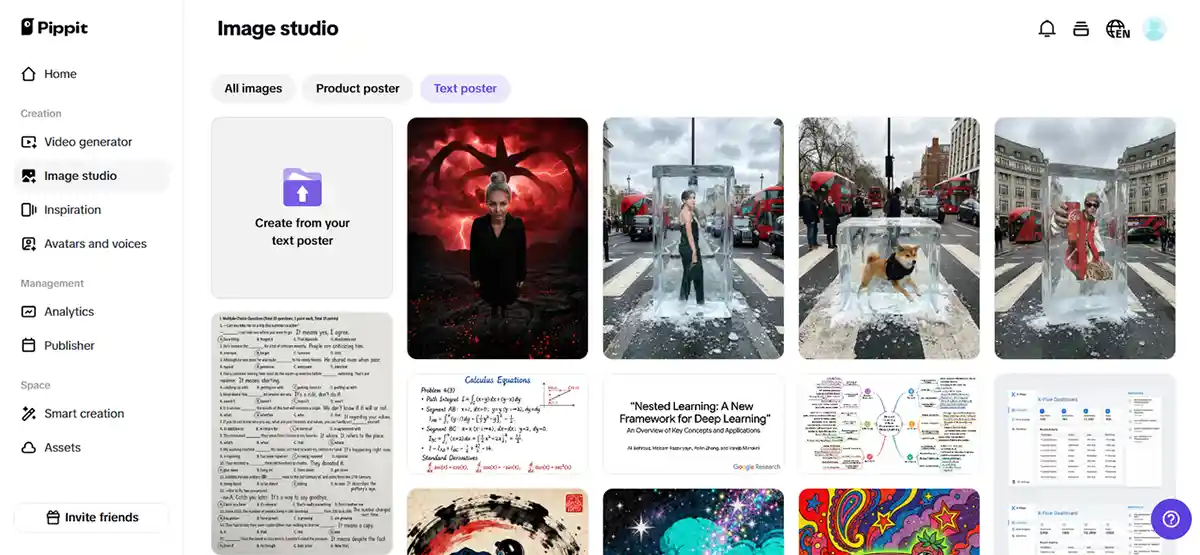
Step 1: Get started with your canvas
Start with the selection of the Image Studio option from the left panel. Then select the Image Editor option. It opens a window for image modification. A dialog box opens from where you choose the size of the image according to preference or accept the default size with the option of "Create." This is a clean slate where you will work on assembling your storyboard.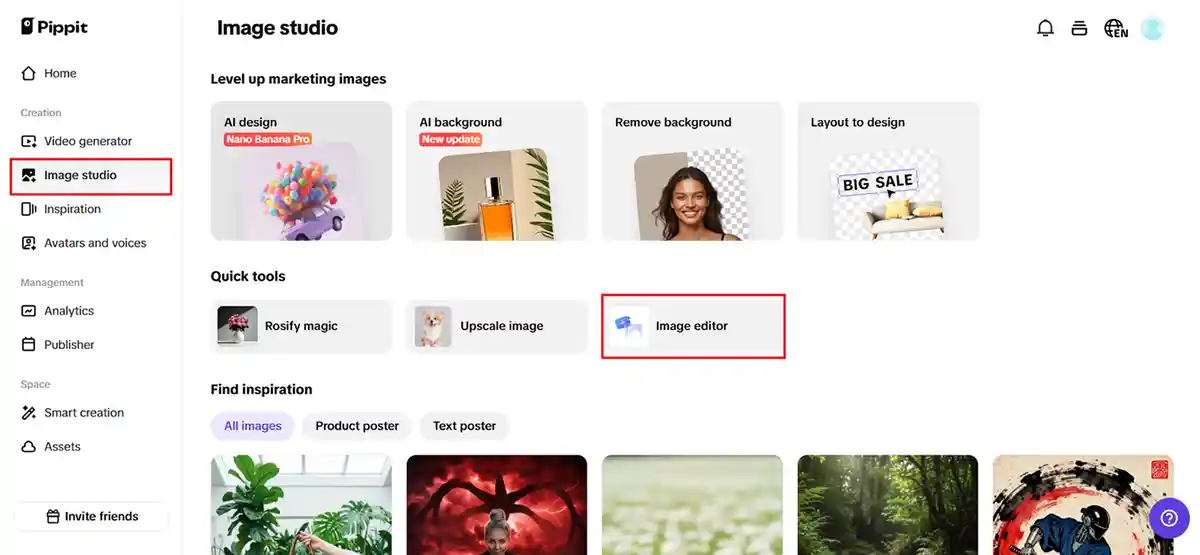
Step 2: Select and personalize your collage template
Now, click on Collage in the left pane to view the pre-designed templates offered to structure your storyboard effectively. Select a template as per your requirement, whether it’s a split scene, linear perspective, or a grid layout to accommodate more shots. You can adjust the template size, transparency, and padding from the right panel.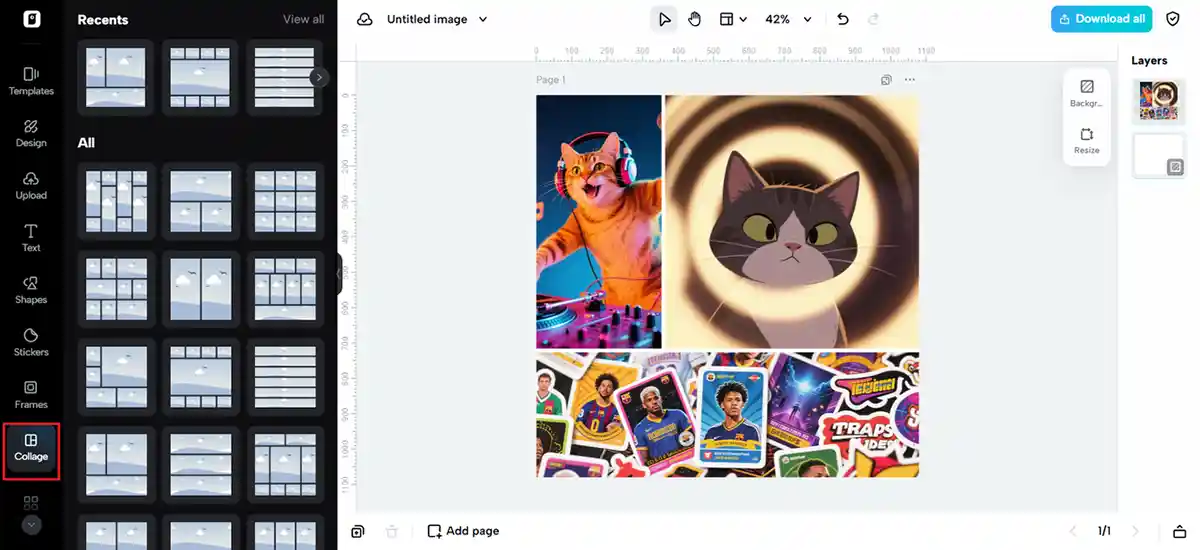
Step 3: Enhance and finalize your storyboard
It's now the time to refine your storyboard. The left-hand column contains objects such as adding a theme, shapes, stickers, frames, and text boxes to emphasize important points of your storyline.You can also add effects, transitions, and backgrounds to make the story clearer. You should use the correct panel to refine the color correction, AI corrections, background extraction, and filters to make the scene look refined.
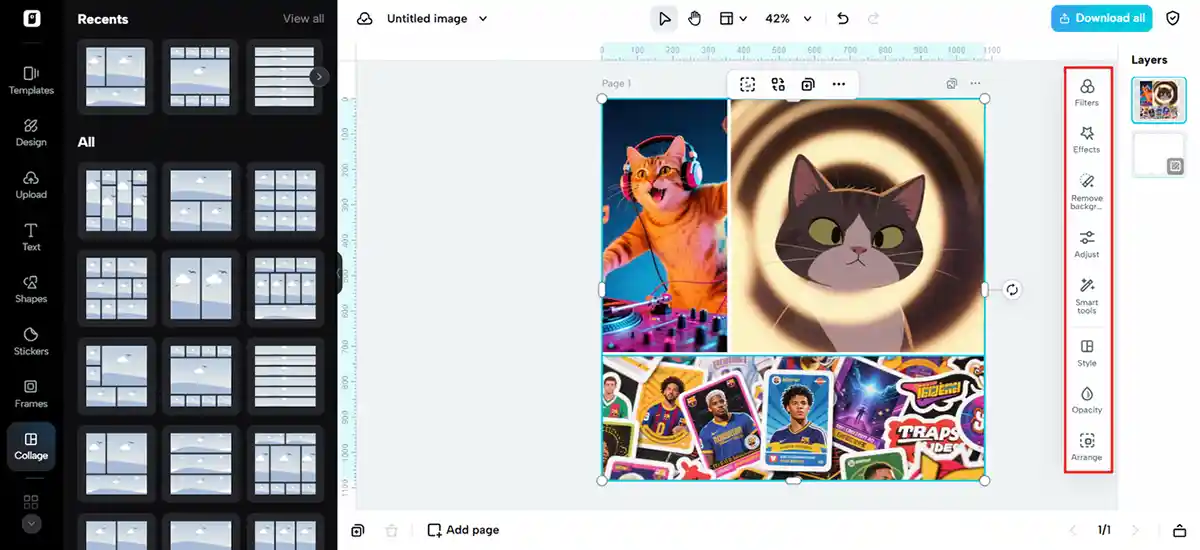
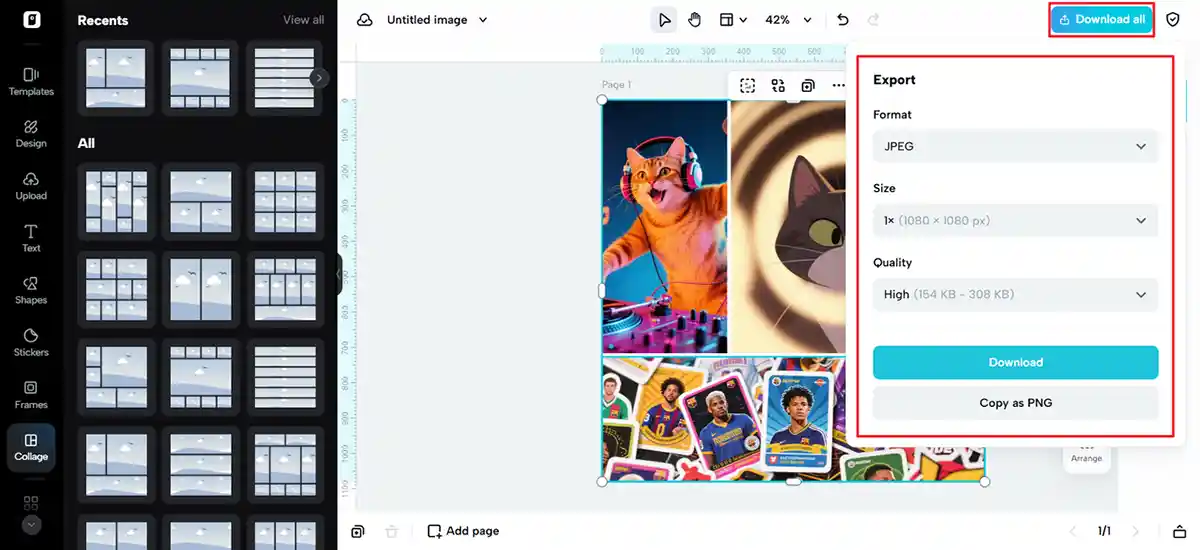
After you're satisfied with the final layout, click Download All from the top right corner. You can then choose the file format for downloading your AI-made storyboard from the three options available - PNG, JPG, or PDF.
Where storyboards are simply making editing and production better in the background
A good storyboard not only assists before shooting. All that comes afterwards is transformed. Storyboard artists literally live the process of creating visuals:- Shorter shooting times
- Fewer reshoot
- More polished edits
- Better narrative flow
The invisible power of backgrounds and spacing
Storyboards will also show visually what a script cannot convey: weight. Spacing, background mood, or framing convey meaning instantaneously. A busy frame looks like chaos. An empty frame looks like design. A change in background conveys meaning without a word being spoken.Background planning can be employed as a technique for telling a story long before actual movie production—scenes being at times accompanied by assets that have been created using a transparent background maker with a view to being relocated across different frames.
Such decisions precede filming. They occur before anyone turns a camera on.
Clarity isn’t written. It's seen.
The greatest creators aren’t people with great screenplays. It is people who have a vision for what their story is before it is written.Through linear writing to visual sequencing, writers eliminate pressure and friction. Storyboards do not substitute for scriptwriting; storyboards substitute for confusion.
If you’re fed up with watching flashing cursors and unfinished outlines, it’s time to stop writing and start seeing instead.
Learn about visual first planning with Pippit, and turn random ideas into clear and interesting storytelling.