When we discuss sustainable building design, the conversation typically canters on insulation, glazing, renewable energy systems, and efficient HVAC equipment. Rarely do acoustics enter the frame. Yet, proper acoustic design can meaningfully reduce a building’s operational energy consumption, a connection that remains largely unexplored in mainstream green building practice.
The Hidden Energy Cost of Noise
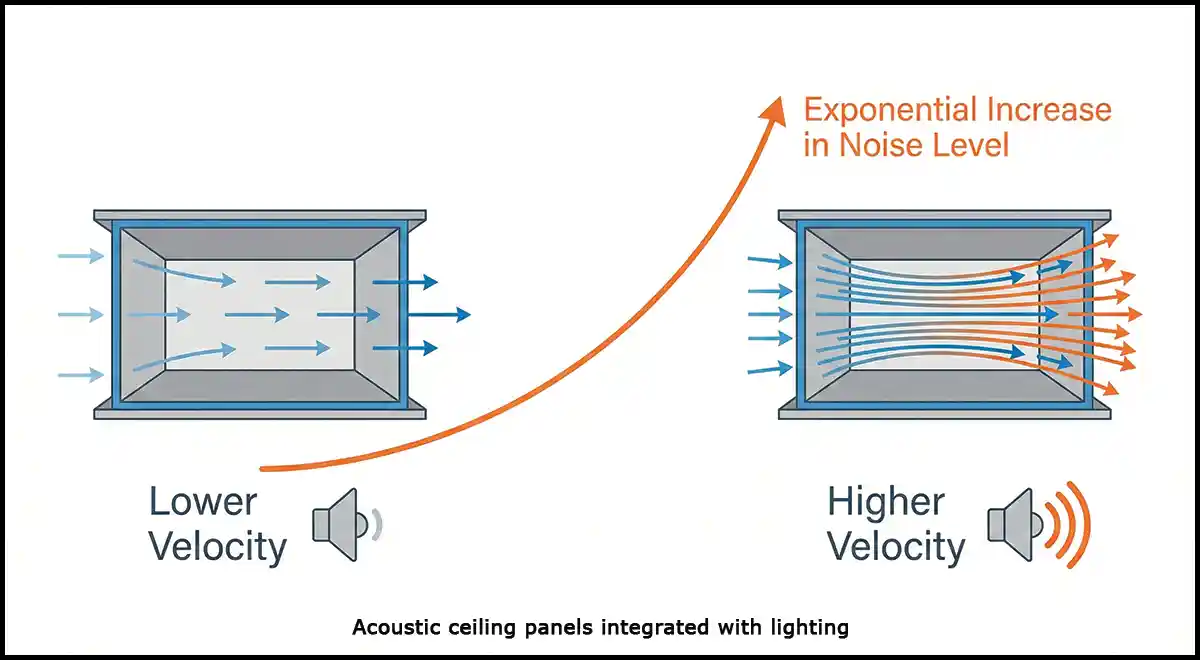
Most architects understand that mechanical systems generate noise. Fewer realise how dramatically design decisions affect both the noise produced and the energy required to control it.The relationship between air velocity and noise is striking. If air moves faster through a duct, the noise increases dramatically. Not proportionally, but exponentially. The practical implication? Buildings designed with acoustic consideration from the outset can use lower air velocities, larger ducts, and appropriately sized fans. The result is a quieter building that also consumes less energy.
This is not about adding acoustic treatment as an afterthought. It is about making spatial and system decisions early that serve both acoustic comfort and operational efficiency simultaneously.
The quietest buildings are not always the ones with the most acoustic treatment. Often, they are simply the ones that were designed thoughtfully from the start.
Kevin Mario DSouza
Principal Consultant Sound And About

Where Acoustic Design Meets Energy Efficiency
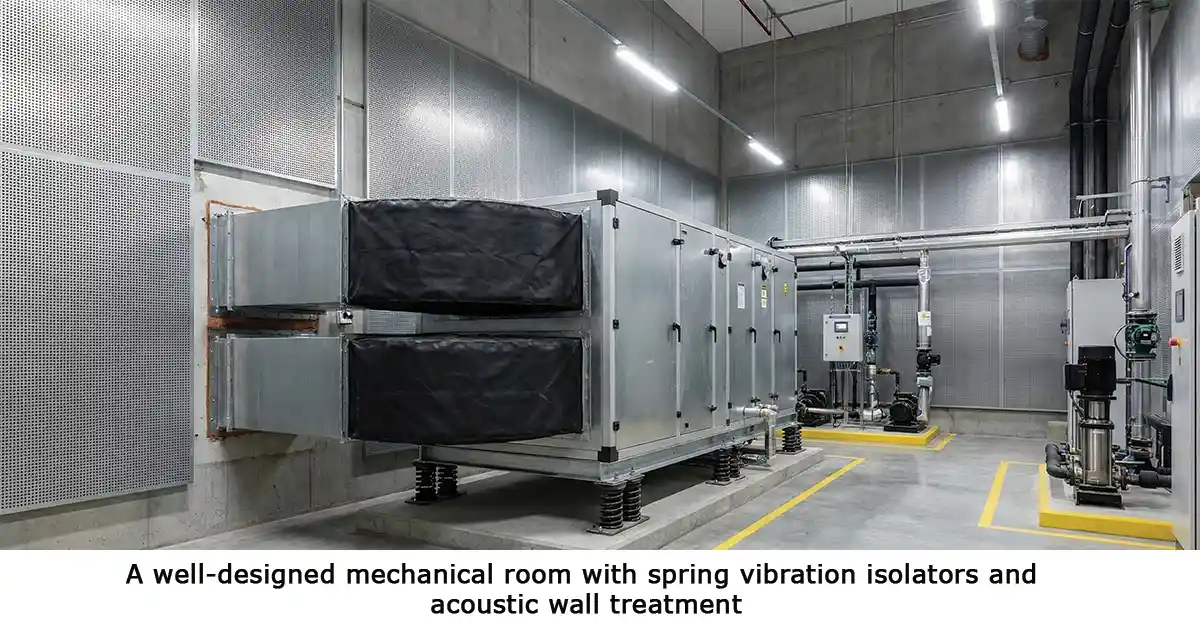
The intersection of acoustics and energy efficiency shows up in three primary areas:Strategic Plant Room Location: Where you place mechanical equipment is not merely an acoustic consideration; it determines how much additional work the building must do to achieve acceptable noise levels. When plant rooms sit adjacent to sensitive spaces, the building requires additional insulation, silencers, and vibration isolation. Each of these adds construction cost. More importantly, silencers create backpressure that fans must work harder to overcome, increasing energy consumption for the life of the building. Locate equipment thoughtfully from the start, and much of this disappears.
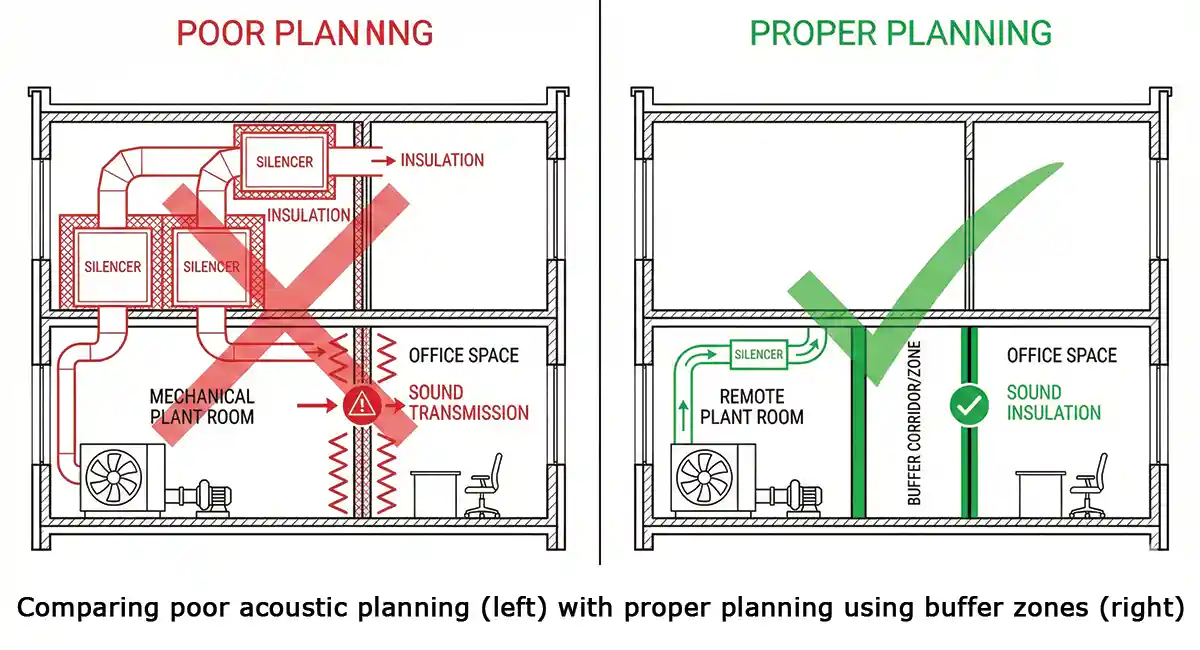
Duct Sizing and Routing: Undersized ductwork forces air through at higher velocities, generating more noise at every turn, damper, and diffuser. The conventional response is to add silencers, which again create resistance and increase fan energy. Alternatively, specify adequately sized ducts from the beginning. The initial material cost is higher. The operational savings over a 20-year building life are substantially greater.
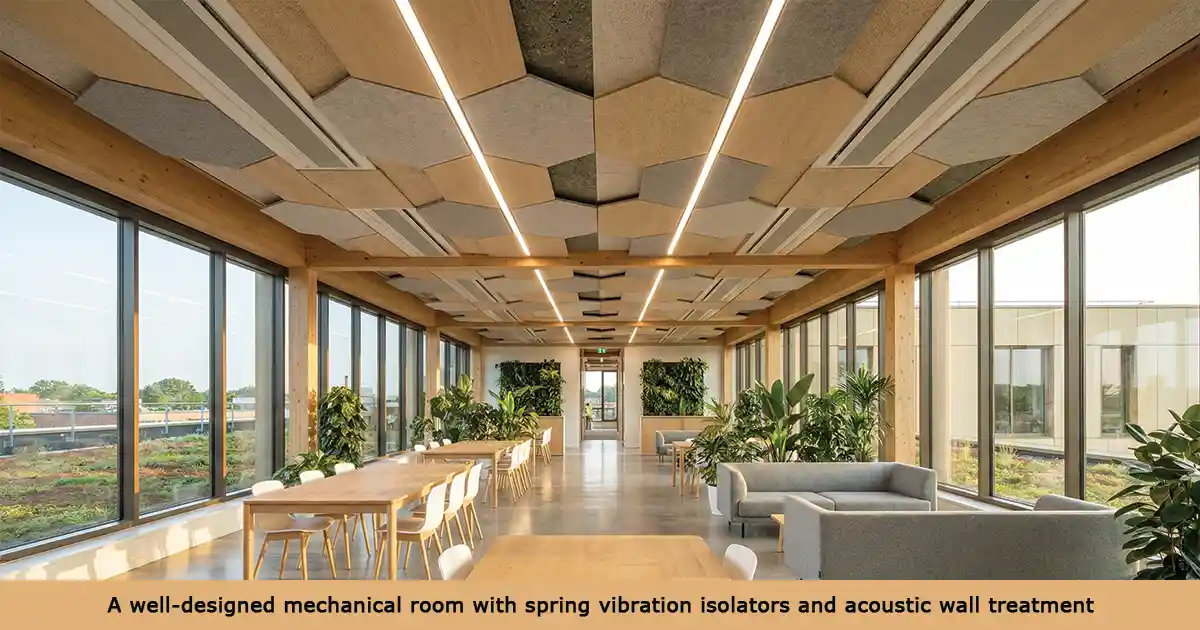
Ceiling and Wall Decisions: The acoustic properties of interior finishes affect both room acoustics and the perception of mechanical noise. A reverberant space with hard surfaces makes moderate HVAC noise seem louder and more intrusive. The same mechanical system in a space with appropriate absorption feels quieter, without any change to the HVAC system itself. This is not about covering problems: it is about designing spaces where reasonable mechanical systems perform acceptably.
The HVAC Sizing Opportunity
Perhaps the most significant energy implication lies in HVAC system sizing. Buildings with poor acoustic separation between mechanical areas and occupied spaces require either quieter equipment (typically more expensive and sometimes less efficient) or additional silencing that reduces system efficiency.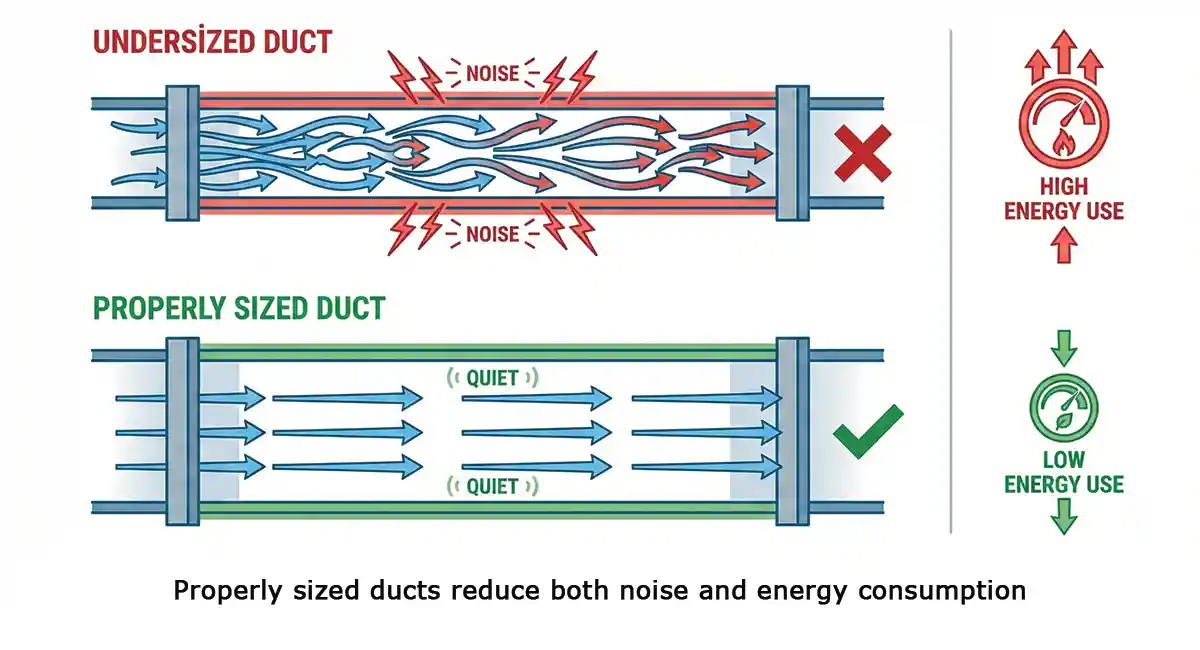
The ASHRAE Handbook makes a useful point in their guidance on sound and vibration control. The objective should be achieving appropriate noise levels for the space function, not the lowest possible level. Overdesign wastes money and energy. Under-design creates problems that are expensive to fix later.(ref ASHRAE Handbook: HVAC Systems and Equipment).
Buildings designed with acoustic separation from the outset can use appropriately sized equipment operating at optimal efficiency. No oversized systems cycling wastefully on and off. No undersized systems straining continuously at peak load.
Practical Applications for Architects
For architects seeking to integrate acoustic-energy thinking into projects, several approaches prove consistently effective:Engage Early: Involve acoustic consultants during schematic design, not during construction documentation. Decisions about plant room location, structural isolation, and service risers cost little to adjust early. The same decisions made late require expensive redesign or compromise.
Specify Outcomes, Not Just Products: Include noise criterion (NC) targets in your project specifications. This forces the mechanical engineer to design systems that meet both thermal and acoustic requirements, rather than sizing purely for cooling load and hoping the noise works out.
Think Lifecycle: When evaluating options, consider the full cost picture. A ceiling system with better acoustic performance may cost more initially but allow simpler HVAC design and lower operational energy for decades.
Design Headroom: As climate patterns shift and cooling demands increase, buildings with acoustic margin can accommodate larger systems without compromising occupant comfort. Buildings already at their acoustic limit have nowhere to go.
The Certification Angle
Green building rating systems increasingly recognise acoustic performance. IGBC, LEED, and WELL all include acoustic criteria, though these remain among the most commonly underperformed categories in submissions. Architects who address acoustics comprehensively often find they have simultaneously strengthened their position across multiple credits, reflecting the genuine interconnection between acoustic comfort and sustainable design.
Looking Forward
The buildings we design today will operate for decades. Their energy consumption will be determined not only by the efficiency ratings of individual components, but by how intelligently those components work together within the overall design.Acoustics has long been treated as a specialist concern, addressed late and often reluctantly. It deserves recognition as what it actually is: a fundamental design consideration with direct implications for both occupant well-being and building sustainability.