
Access to Good Design
Award-winning architects and designers, Gita Ramanan and Shezaan Bhojani, bring more than two decades of national and international design experience to the construction industry. Design Café founded by the duo in 2011, today has a team of 45 professionals and a portfolio of over 500 completed projects across the country. These include homes, apartments, offices, restaurants, showrooms, schools, and hotels ranging from 1000 sq.ft to 1.4million sq.ft.
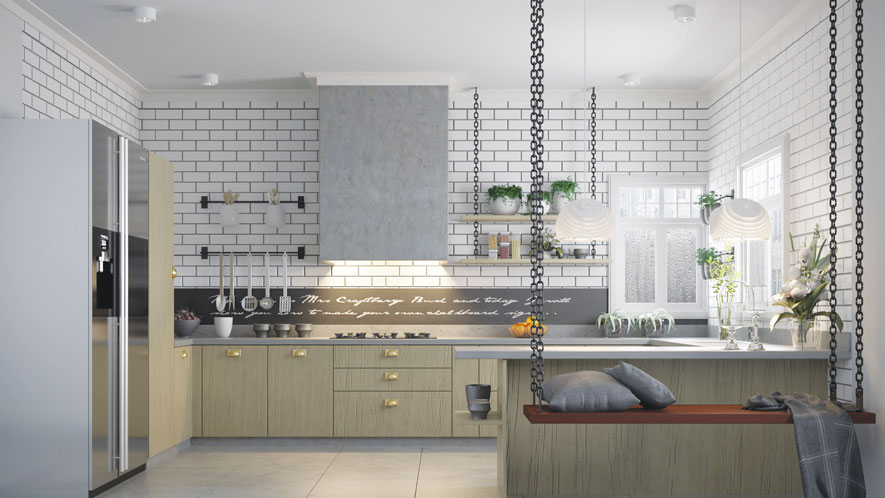
In April 2016, the company launched a simple 9-step online process to showcase the best designs to its clients, using easy, quick, and creative design and material selection processes. Users can seek expert consultation, select the elements, and complete the project within 60 days under the guidance of the architects. Till date, the team has helped add the sensibilities of design to over 51 homes in Bangalore.
"We can design spaces in just one minute from our design styles and give a custom 3-D and estimate in the same time, reducing what used to take days to just minutes. We have filed for a patent for our online process. It will change the design industry by letting home owners design their homes online for free, without the need of a designer for the initial look, enabling us to design thousands of homes in a year, and make our designers ten times more efficient," says Shezaan Bhojani.
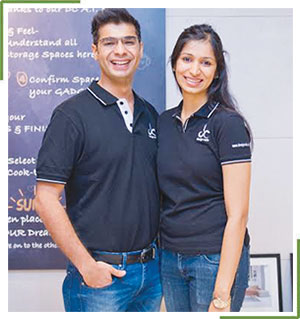
Good design has the power to change the way you live, work, and play, and this change should be accessible to everyone, irrespective of the project's size, budget or location
Shezaan Bhojani, Entrepreneur, Architect, Traveler
After graduating from BMSCE Bangalore, Shezaan worked with some of the best design firms in India, designing premium homes and 5 star hotels. He was awarded IIID-special mention for Design in the Hospitality sector in South India and his work has been published in Society Interiors, Home Review, and CW Interiors. He co-founded Design Cafe with Gita Ramanan in 2011; since then, DC has grown over 200% year-on-year. He travels the world to source the best design materials and ideas. Fondly called 'Chief Astronaut' by colleagues because he believes that Design Café can expand it's presence across the globe and maybe even build a home on the moon some day!
Gita Ramanan, Entrepreneur, Architect, Tedx speaker, National Athlete
A top student and an athlete during her college years, she chose design as her career. After graduating from BMSCE Bangalore, she worked with world renowned architects with specific exposure to premium homes and recreational design. She is also a graduate of ISB, Hyderabad, and was selected by Goldman-Sachs for its worldwide 10,000 Woman Programmer. She has spoken on many national platforms on design and interiors like TEdx, NID, Design Open, to name a few, and has been an integral part of IIID Bangalore chapter and in organizing Bangalore's first Designuru. She heads the Design Team at Design Café and is instrumental in creating innovative designs across the country.
Backed by Kanwaljit Singh (ex-MD of Helion Ventures), the Salarpuria Group through Apurva Salarpuria and others, Design Cafe has merged technology in its innovation and design processes to offer contemporary design solutions. In 2015, they had raised a round of funding for the online venture from investors like Sidharth Pansari of Primarc Group and Sunil Jain of Sprout Capital. Coming up are four Design Experience Labs in Bangalore and Mumbai, which will showcase innovative design concepts in the home décor and build space.
Giving an example of how the online process works, say for designing a kitchen, Gita Ramanan elaborates, "We have derived a unique approach to give every home-owner their dream kitchen in 6 easy steps. We first ask the client to choose their preferred style (Modern, Classical, Minimalistic, Industrial, Rustic, etc.) from our vast library of styles, finishes, and textures. We then cross- check the primary equipment (hob, chimney, sink, fridge) and their locations given by the builder. We input all these parameters in our (patent pending) DC A.I. Bot, and within a few seconds, the kitchen design is generated with all the modular components and details, along with instant 3D views and a cost estimate."
Ramanan adds, "At our DC Experience Centres, customers are encouraged to touch and feel every component and understand how it works before the kitchen design is finalized. We make them walk through the design and customize it as per their unique habits, gadgets, and lifestyle. We finalize the cabinet handles, colours and finishes after the client has seen, touched, and felt the finishing of every material that is proposed. The final design is then executed in our factories with the best quality hardware and components."
RENESA ARCHITECTURE INTERIORS DESIGN. New Delhi, India.
Profile
RENESA is a firm dealing in Architectural & Interior design consulting across India. Renesa provides services in all formats as needed. Based in New Delhi, our design studio and project plan office, comprising of a number of associate architects and several architectural assistants, is led by Mr. Sanjay Arora – a highly experienced and qualified licensed architect. Renesa also has a number of partnerships with industry leaders in the architectural, interior design, furniture manufacturers. The added benefit of these partnerships is that the client receives Renesa's oversight to ensure on-time and on-budget completion of the projects to provide better buying leverage to its clients.Principal Architect- Founder- RENESA ARCHITECTURE DESIGN INTERIORS.
Sanjay Arora
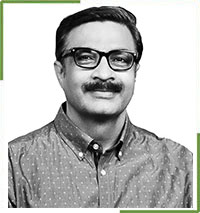
In a career spanning almost 30 years, Sanjay has handled many prestigious architectural projects for a list of marquis clients. Ranging from large commercial projects such as airports, sport complexes, head-office buildings, multi-unit commercial, print media production facilities, and multi-unit residential projects, Renesa has successfully completed many projects under his leadership.
Prior to starting Renesa in Jan 2006, Sanjay worked for several Indian architectural firms and headed the architectural arm of TURNER MORRISON LTD, a large multi-national and multi-discipline firm, where he oversaw some of India's largest and prestigious projects.
Studio Head Architect- RENESA ARCHITECTURE DESIGN INTERIORS.
Sanchit Arora

- Sushant School of Art & Architecture,Gurgaon,India(IP University)- B.Arch
- AA school of Architecture, London,U.K - Summer Scholarship Program.
- Politecnico Milano, Milan,Italy - Scholarship Program.
https://www.academia.edu/7986210/SPACES_OF_CREMATION__THE_INVISIBLE_SACRED_LANDSCAPES_IN_INDIAN_CITIES
- Winner of the 'NASA THESIS of the Year'-V Position(National Association of Students of Architecture)
- NDTV Students Awards and Jury Commendation for the Best Thesis Project
- Top-11 Charles Correa Award for Student Project
- KAJARIA TILES Student Scholarship Award
- Featured in 'SuperArchitects Blog Media'- a U.S based Architectural Magazine for Students.
- DESIGNBOOM feature THE City of Future Feature - The Shadow Spaces, New Delhi.
- ARCHDAILY feature KooZArch feature.
At RENESA ARCHITECTURE DESIGN INTERIORS STUDIO, as the name suggests (Renaissance of Architecture Design - A rebirth of design), RENESA tries to innovate and value add to the requirements of the clients.
Sanjay Arora( Principal Founder Architect at RENESA) feels that the basic planning of spaces has to be always simple and logical but when it comes to the feel and the mood(ambience) of the space , an architect should always try to be different according to the different requirements of the client which ultimately leads to INNOVATION.
"As there's always going to be a better way of doing the same design , we as architects need to be hungry for new solutions."
Sanchit Arora(Studio Head Architect at RENESA) on the other hand feels that the best way to move forward in designing a space is to critique your own design after every step. He follows the design principles set by his dad, Mr.Sanjay Arora but in his own manner where he quotes Henry David Thoreau's statement :-
"Since most of us are going to be doing ordinary things in our lives, the most important thing is to do those ordinary things extraordinarily well."
Taking Onus For The Environment
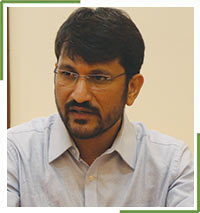
Photo Credit: Jatan Atara
"We have to make the right choice for our today and tomorrow for a better livable future." Ar. Nilesh Gandhi, Metadesign (India) Pvt. Ltd.
There is so much noise about green, that as advocators of green, we are continuously working to make sure that this revolution does more good than bad. While a lot of issues are emotionally driven, and there are a lot of debates and discussions on the pros and cons, the facts and figures are convincingly inclined towards necessitating sustainable development.
Environmentally responsible design is not rocket science and is more than just a trend.
An environmentally responsible design directly/indirectly creates a less damaging impact on the environment as a whole. The theory of the planet being finite and the ever increasing population putting immense pressure on natural resources, pushing us towards breaking point, where the balance of the earth would collapse, is an inescapable truth.
As designers, we have to be responsive to the climatic considerations towards the geographical location of a project, else, we will end-up paying through our nose to maintain the human comforts (the benchmarks of which itself are on the rise!). The luxuries of yesterday are the necessities of today, and tomorrow's existence seem to be impossible without today's luxuries. Environmental responsibility would not germinate without questioning and reasoning the need for the development in the first place. While we are defining our needs on account of social, and/or aspirational growth factors, we need to pause and ask: Does the project really need this/that?
Curtailing development to the optimum required level with a forecast for future expansion and without affecting the function, planning spaces for effective utilization of every cubic unit of volume, is the key starter towards achieving sustainability, for instance (while the predominant orientations have to be taken care of mandatorily), exploring natural cooling methods and options before simply super imposing mechanical cooling systems. The mention of thermal cooling here is important because of the weightage it has on the overall energy consumption in a building. We have to adapt to a greener lifestyle and this belief would drive down to every action and choice we make.
Judicious choice of materials and solutions is our responsibility
Sometimes, we blindly adopt materials of the western world that have no relevance or significance in our culture, surroundings, or even our functional requirements. Many times, we try to play safe and hide behind the choices of others in order to justify our own actions. This 'me too' strategy has a limited shelf life and almost kills the creative designer within us. As humans have evolved over the ages, so have materials, and while we have invented these materials, there ought to be an obvious choice towards materials that are bio-degradable and cause less harm to the environment in the short or long-term. Materials that evolve along with consuming natural resources, but which, within a reasonable period of time, are replenished back to the life-cycle, and which complete the 'cradle to cradle' approach, have to be one of the top most material selection criteria.
Choice of technology is comparably easier to make
We have seen an immense development in technology which has aptly been used to increase our efficiencies across sectors. While the building construction sector has adopted technology in some areas, the most important and critical aspects of time and cost savings have yet to adopt technological advancements. Our projects seldom finish on time and rarely within the budgets.
The drive to adopt a time or cost-saving technology is surprisingly absent. Probably, because we rarely question the value of our own time, hence, there is a resistance and inertia in adopting or exploring, for example, a pre-fab technology. The commitment towards today's savings, and turning our back towards expensive propositions leading to tomorrow's saving, is so deeply rooted in our ideology, that we are not even aware of our penny wise pound foolish choices.
The IOT and building management systems have changed the way we perceive, manage, and control our real estate. Technologies like CCTVs, dimming, lighting controls, biometrics, access controls, fire/gas leak detections, automated water level indicators, variable frequency drives, intelligent water and energy meters, motorized equipments, etc, have become more user-friendly than elitist, and are slowly but steadily approaching the bottom of the pyramid.
The choice of technology is comparably an easier choice to make, since the results of a technological adaptation are experienced immediately. Would recommend this with a word of caution though, since it is important to not go overboard and always make judicious choice of the right platform in sync with the project requirements, and having sufficient redundancies.
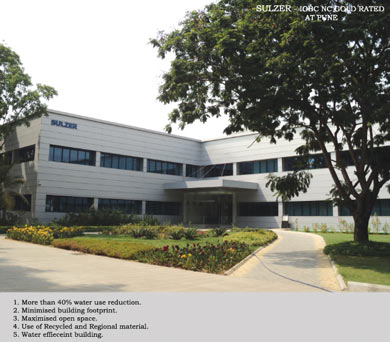
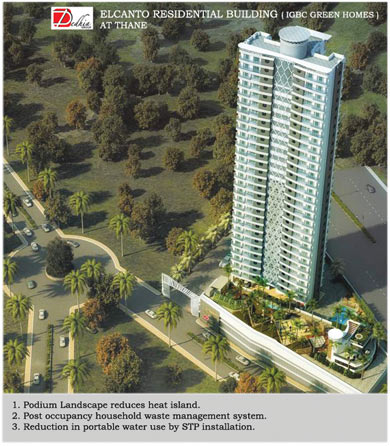
No discussion on an environmental subject would be complete without sustainable solutions like Solar and Wind energy, Rain Water harvesting, Solid waste management, Reed Bed systems, Sewage Treatment Plants, Waterless Urinals, Precast concrete members, Rubber wood, Bamboo, cork, use of Agrifibres in ceiling materials, et al. A fine blend of climatological orientation, use of eco-friendly materials along with the choice of apt and essential technology, is by far a workable recipe for the making of a structure which is a boon to the environment, humane to the occupants, and defined as 'green in nature'.
Redefining Facade Designs Through Parametric & Computational Techniques

rat[LAB] specializes in Facade design systems using Parametric and Computational techniques, incorporating environment criteria such as heat, light, wind as well as material and structural intelligence. Mr. Verma stresses on the need for computational technology and aims to bring in the new breed of designers - computational designers - to the country. This can change the way architects and designers conceive a project and how designs are realized in the industry. rat[LAB] uses cutting-edge computational and parametric techniques and works with designers to facilitate them on projects of all scales and typology.
Earlier worked as an architect at Zaha Hadid Architects, London & a Sr. Editor at Arch2O, Mr. Verma holds teaching positions at a number of international universities and is involved in education for computational & parametric design. He is the founder of rat[LAB] EDUCATION, which is an initiative to spread the idea of computation in design profession & education in India.
Recipient of MAK Schindler Award from Vienna / Los Angeles and a finalist for AIA Emerging Leaders Fellowship from Chicago, his work is widely published and exhibited in London, Los Angeles, New York, Tokyo, San Francisco, Taipei, and New Delhi, among other places. Mr. Verma was recently shortlisted in New Delhi among 5 architects for '20 under 35' Exhibition at Alliance Francaise de Delhi.
He has previously worked at RoboFold London, focusing on development of advanced fabrication and software systems for use of robotics in architectural fabrication. His current research interests are focused on relationship studies between simplicity and complexity, 'super-complexity' and parametric design. His work also investigates in computation involved in digital fabrication & computational tool development for optimizing architectural processes.
Id. Shabnam Gupta, The Orange Lane
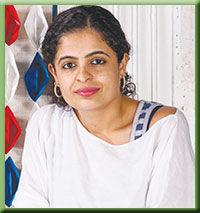
"Architecture in India, in my opinion, is just coming of age where a select few are experimenting and accepting their own visions with open arms. Hopefully this should result in a strong creative wave to preserve the heritage that we have and recreate strong design sensibilities."
Shabnam Gupta believes that each space has its own energy which demands a certain type of design. We just need to be aware and be receptive to it. The design cannot be about the designer it has to be about the client, their requirements and the space itself.
The Orange Lane is a design firm that undertakes interior and architectural projects as design consultants and also provides complete turnkey design solutions. The firm was born in the year 2003. It is the brainchild of Principal Designer, Shabnam Gupta. A Mumbai-based interior designer, Shabnam conjures up visual wonders and is recognized for her personally tailored, client specific interiors that use bursts of colours, textures and other unique elements within a contemporary design palette.
Shabnam Gupta, the designer has actually been about evolving as a person as much as about design. The practice has evolved with younger talent being infused with fresher ideas. The one virtue that she continues to hold on to naturally is her enthusiasm and motivation for experimentation.
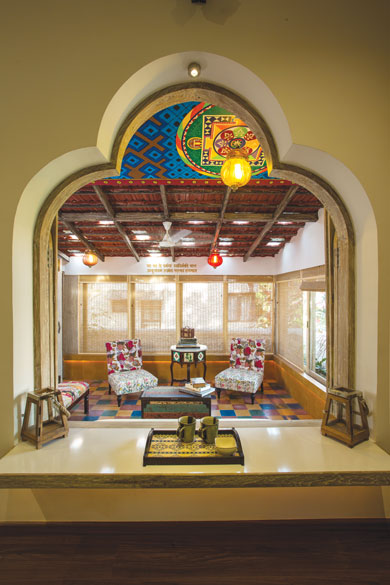
She believes Design always has space for innovation.Drawing inspiration from nature, tradition, art, etc. keeps her going and helps her in maintaining the balance in her individual style while letting in some current trends.Vibrant hues and an affinity for nature are recurring elements in all of Shabnam's designs.
She firmly believes that "one's journey in life is a continuous process. It is the journey that matters and not the final destination. Success for different people has different meanings. I am fortunate to be getting the kind of work that gives me the creative freedom and satisfaction to do what I want to do. Personally I do not take these tags seriously at all. I believe that I am a learner and the day I stop learning that will be the end of my creative hunger. More than anything else, the journey so far has taught me to be a calmer person. In our line of work where you have to interact with so many different teams including your own, it teaches you how to handle human relations. Sometimes I joke our job is half of that of a psychiatrist."
Shabnam has developed her own unique style, but she has adopted it across categories and cultures. From urban residential to weekend countryside homes, and from lifestyle stores to hospitality projects, her canvas of work encompasses a wide spectrum. She has created an environment of trust with her clients, utilized her close relationships with traders and executed detailed project management; in all making a seamless project experience.
She is also the owner of a retail venture, Peacock Life, a one-stop lifestyle store that offers a flavor of her eclectic inclination. Peacock Life specializes in designer furniture, lifestyle and interior products. The store offers a collection of earthy, recycled and environment-friendly products that reflect the aesthetic of both the old and the new.
Ar. Nikhil Kant Agarwal, eSpaces Architects
"Continuous and constant innovations probably result to excellence in design. That's why no philosophy can be written when it comes to our way of perceiving things related to design/ architecture."
After working for over a decade and having lot of critical acclaims in his basket through experience towards contemporary architecture, Architect Nikhil Kant Agarwal has several noted projects to his credit that have earned him a reputation of critical practice. Thus establishing his own firm as eSpaces Architects few years back with a simple objective of creating sensible, functional spaces enhanced by the intangible sense of emotion of power, of playfulness. His vision is based on a commitment which in return reflects in his way of working.
Ar. Nikhil has won numerous international & national awards in last few years or probably since 2007 onwards. Recently he won "Young Designer award 2016 IA&B" in efforts category for residence. Even his first school project i.e. kindergarten school, Delhi was hugely acclaimed in many national, international magazines/books, awards etc. like it was featured in Atlas of World Architecture (Braun) among few selected works from India, also the same project had won prestigious award as Design Share award 2008 (international platform) awarded for innovative learning environment, only Asian architectural firm who had won this in that particular category. World Architecture Community also congratulated Ar. Nikhil for the same school selected for WA Awards 3rd cycle March 2009. The project was also being rewarded by BBC for global best school buildings.
Talking about the firm design principles and philosophy, Ar. Nikhil says, "Our work is known for its design quality, imagination, and originality. Each project offers an opportunity to pursue new solutions to complex building problems. Our motto is to design, detail and enjoy working in responsive to our client's need in very honest, efficient and professional manner. We believe that our works follow a unique style based on our ideology and perspective towards the design requirement. The word 'eSpaces'(a Spanish word) is a very integral part of our being. We move for, with & through Spaces. We identify with it, our senses response to Spaces, we feel it."
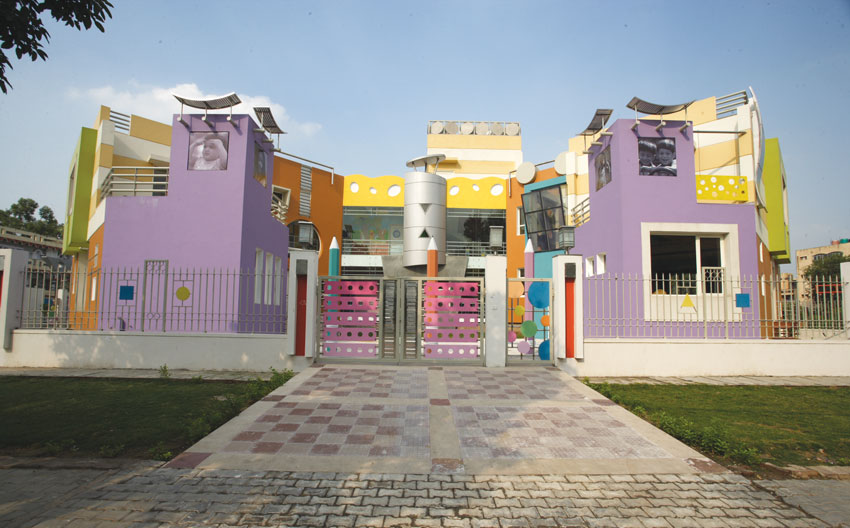
He adds, "We work to develop that space for our clients where they emotionally get attached to it; it is not an empty sterile container but a sensual dynamic environment. Our spaces are not formulaic but are derived on the basic requirement of client and site. We feel each house, building or space has got its individual identity. Like human no two buildings can be same we as an architect have to give it an identity and soul so they can breathe and communicate."
"We believe a building is a Living object which can communicate; it is just that feeling that has to be reciprocated in a very sensitive approach towards our working. Whatever work executed by us one can find that soul or we have at least attempted to and keep on doing that."
Ar. Nikhil strongly believes that Architecture tell us about history all that has gone before which no other discipline can. He is of the view that architecture cannot be totally explained...but must be experienced.
Ar. Bhupendra Kumar, Aeiforia Architects
He says, "When we achieve a truly beautiful environment, only then shall we achieve the truly beautiful and wonderful face of Architecture."
Bhupendra Kumar is an Architect and Interior designer. He is the Founding Director of Aeiforia Architects, a firm that specializes in Corporate Interiors and Architectural Consultation for industrial and residential projects. Ar. Bhupendra has completed his B. Arch, with specialization in interiors designing. He is a registered architect with Council of Architecture.
Coming from a modest background Ar. Bhupendra was always keen on winning and succeeding. This reflected from an early age in Navodaya Vidhyalay, to his receiving a gold medal at Jamia Millia for Post-Graduation in Building Services. Though he entered in this profession "By chance", he decided to become a true and committed architect on being challenged by one of his seniors, who advised him to quit and "run away before it was too late", because architecture isn't a course one can choose casually. Bhupendra's fighting spirit did not allow him to step back or give up, though he had other options too. He went on to graduate with Honors. This trend continued through his post-graduation where he received the Gold medal. He soon realized it was not chance but his destiny, and that he had a long way to go to achieve the peak.
As a step forward in this direction, Aeiforia Architects was started by Ar. Bhupendra & Pragya Tripathi with the motto- SWIFT, SHARP, RELIABLE. The firm believes that as professionals, it is their duty to understand their clients and provide them with a solution that is best and sometimes beyond what they had perceived. Ar. Bhupendra says, "Our USP counts on timely delivery of projects, with high standards of quality, within the committed budget."
Over a period of 5 years since their inception, they found that generally people in the society are unaware about how an architect is truly different from an engineer. Due to lack of awareness about this profession, or so called un-affordability of an Architect services, the firm noticed that a lot of money is being wasted. Hence Ar. Bhupendra decided to address this major issue and developed a vertical for training for Sustainable Practices and Interior Construction Technologies. To facilitate this further, he has also received training in solar and green interiors and is registered with IGBC. Ar. Bhupendra is now involved with MSME as a trainer across India.
His ultimate aim is to serve the under privileged. He is of the view that the houses and streets belong to them and that they should be beautiful and affordable.
Ar. Swaviman Das, Geo Designs
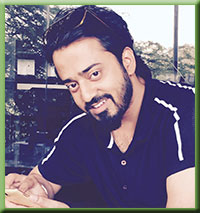
"Architecture is a unique intermix of forms, materials and lighting that comes together in unison to create interesting spaces."
Ar. Swaviman Das embarked in his creative journey from Kolkata, while doing fine arts. This ability to try to create something new and different on a canvas helped him develop his skills as an artist. Eventually his inclination towards art and design maturely evolved which propelled him to bag in notable awards. Gradually he decided on pursuing his studies in Architecture where his talent got the right direction. He used these foundation years to travel and explore diverse cityscapes and culture. His fondness for photography also drives him to interpret minute macro subjects in an unexampled and unique perspective.
After completing his B.Arch. he went on to pursue a Master's in Industrial Design from SPA, Delhi. A complete knowledge of Architecture and specialization in Industrial design gives him the extra edge when it comes to designing and evolving spaces and forms. He started his career as an Architect here in Delhi where he believed he would get the right platform. Initially set sailing in Product Designing, he worked with Philips India, research and development bay. Progressively with time, he permeated thru various avenues of Product design, lighting design, retail design, architecture and Interior design.
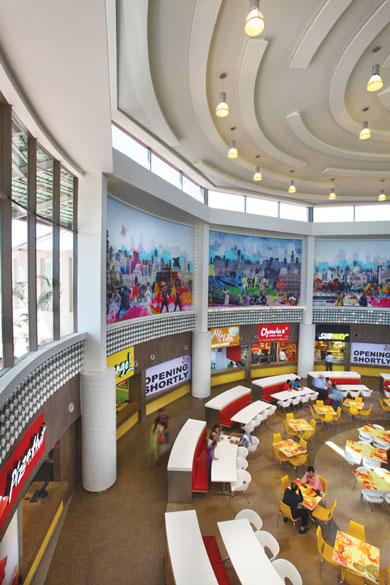
His strengths include creating extremely versatile & innovative designs that are contextual and contributing to sustainability factors. His love for travel and nature allows for him to not just get inspired but it also reflects in his creations. Being immensely enthusiastic and a creative mind from the beginning he has been driving dynamic teams and rolling out unique projects. He tries to infuse new innovative solutions for all his projects, not just in terms of planning but also in terms of pragmatically creating new forms and spaces that help create a unique experience for its users.
Being inventive in his own demeanour, when it comes to contemplation of objectives, methods and practical execution, he does it effortlessly. He creatively designs to formulate a comprehensive outcome and ensures to accomplish the design to a level of perfection. Experimentation and innovation are the prime pillars of his imaginative self. He envisions to plan functionally sound space apt and adaptable for not only classes but masses as well.
"An aesthetical approach with efficient functionality infused processes a design from concept to execution."
Having a keen eye to detail and learning from whatever comes his way, he's been able to contribute by re-creating more to the present domain of art and architecture. After traversing through the challenges of time, space and acceptability, he has successfully delivered remarkable works in corporate and commercial interiors / Architecture. Keeping his mind open to opportunities and challenges when it comes to design, he aspires to enhance the productivity also and tends to contribute his own self to design and creation. Currently his new fad and whims are to design and launch "Solar powered public Commuter", which shall be an eye-opener soon.
The success mantra according to him is to: Always try and cook new design recipes and unleash the untouched aspects.
Sangeet Sharma, SD Sharma & Associates
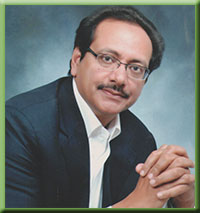
"My architecture is called 'cubist modernism'. It reflects the honesty of structure, purity of form and a functional object of constant inspiration."
Architecture of Sangeet Sharma is routed in modernism, greatly influenced with the making of Chandigarh as a city. The nature of modernity changed as he watched his father work tirelessly making shelters in most sustainable way. Sangeet calls his philosophy as "humanistic modernity."
In the mist of architecture Sangeet evolved into multiplicity of things, events and exposures. The materials, articulations and the years of growing up in the new city formed his aesthetics. In the early years Ar Sangeet had his impressionable mind engrained with the ideologies of modern architecture; the passion of architecture watching his father, the famous Mr SD Sharma, who worked closely with Le Corbusier and Pierre Jeanneret. Right from early years, he says "I and my father had intense discussions about the good and bad architecture and its impact on human existence. My father also inculcated the habit of constant sketching that enabled me to visualize and put it on paper. I also remember reading the same books that my father read- along with the files that were available in my father's Library."
"Senses and sensibilities are to be developed in the right direction to become an able architect" says Sangeet. He firmly believes that to be an architect one must have an overall development. While pursuing this conviction he began to write poetry at a very early age and published his first book of poems at the age of eighteen. The inspiration for poetry came from Shakespeare, from Sri Aurobindo and Tagore. The knowledge of Poetry reflects 'rhyme and time' in his architecture.
He took classes in painting and painted extensively. Through painting his architecture embraced color, spectrum and balanced compositions. Besides, Ar Sangeet also dabbled in Music and was taught the finer nuances of music. Music-swayed and regaled his architecture. He says "Like me, my architecture too is ambivert in nature."
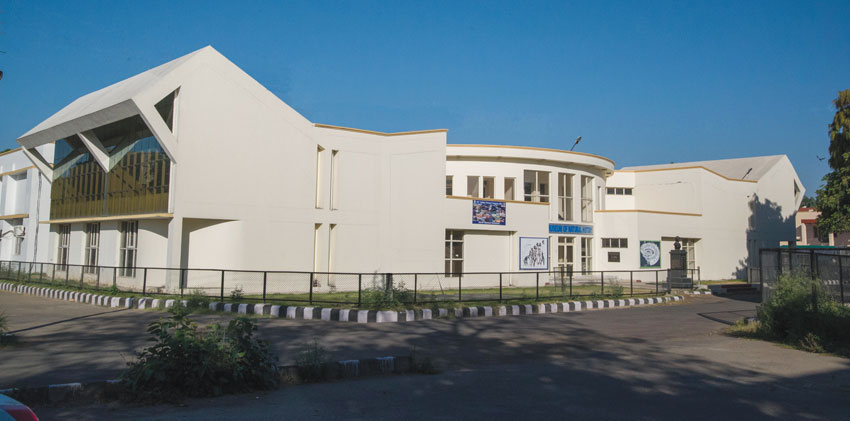
He elaborates "Geometrical forms fascinate me and I believe that every line built, represented or drawn pleases me, or at least should please me. I follow the tentacles of an organism that God created first and must have experienced ecstasy. I do not think he employed Autocad in his manifestations; his software must have been more emotionally drawn than mechanical."
The dichotomy of drawing comes full circle. Eliminations emerge at planning period; plans often solidify a suitable section; sections smoothen the geometry; the geometry gives rise to details; and details further beautify the plans.
He allows the user not only to interpret architecture that gets built but to participate in it. The outcome is usually the client's aspirations spontaneously interacting with his inspirations. "My architecture is called 'cubist modernism'. It reflects the honesty of structure, purity of form and a functional object of constant inspiration. The implementation of passive sustainability and the presence of nature both inside and outside is the holistic anthem of my architecture."
He sums up "My architecture is in constant dialogue with the metaphysics, if my buildings do not elevate the human being to the spiritual or mystical realm." As he aptly quote one of his short poems:
When the space is tangible
It breathes God;
Intangible—it craves for God.
Ar. V T Anand and Ar. Neelaksh Mahajan, VBT Consortium
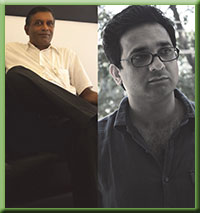
Principal Architects: V.T. Anand (left) and Neelaksh Mahajan (right)
"Every project deserves nothing less than the best. Design detail of each project is dealt with utmost creative and technical zeal."
VBT Consortium is one of the leading Architectural practices in Bengaluru. Global in its design language and functioning, the firm has evolved from V. B. Thammiah & Associates, founded by the late Mr.V. B. Thammiah in 1956. Focused towards Inclusive Design Dialogue through its professional associations, the firm retains the working principles and ethics instilled by the parent company. The VBTC design studio is dynamic and founded on communicative collaboration. The firm has a multi-disciplinary and culturally diverse work force, adept at handling projects from conceptualization through completion. The firm is led by principal Architects Ar. V T Anand and Ar. Neelaksh Mahajan.
Ar. Anand completed his Bachelor's in Architecture in1976 from U.V.C.E., Bengaluru. With site sensitive designing and detailing skills and a vast experience, Ar. Anand brings in key technical expertise to the firm's varied project portfolio. A keen sportsman and an avid golfer, Ar. Anand is well travelled and has immense international exposure to the diverse architectural styles, ethnicities, and cultures across the globe.
Ar. Neelaksh received his Bachelor's degree in Architecture in 1996 from School of Architecture & Planning, Anna University, Chennai. With innovative design ideas and keen entrepreneur skills, he was instrumental in establishing VBTC as one of the foremost architectural firms with a global presence and multidisciplinary associations in allied design fields as well. Well –travelled and tech savvy, he imparts the freshness and out of the box thinking required for any firm in the creative field.
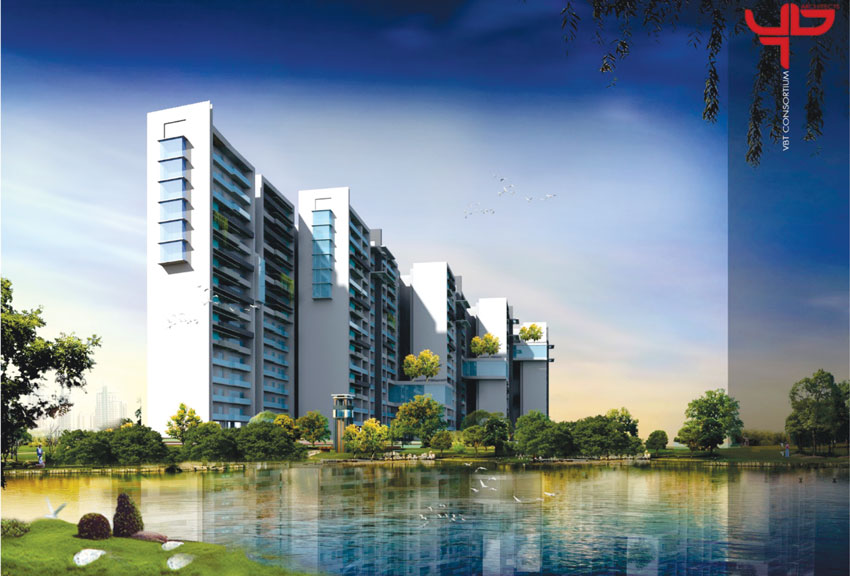
VBTC's firm philosophy is to provide a stimulating work atmosphere that nurtures creative talent across different dimensions of architectural design and management. With highly competent human resources and advanced manual and digital visualization, VBTC adopts a "Concept based Approach" incorporating Integrated Branding into the design process. The firm emphasizes on the exclusivity of the project, irrespective of the scale or building type.
Integrating Architecture with structural and building services inputs, the firm collaborates closely with leading consultants in allied fields of Architecture and Building Construction. All projects are envisaged in entirety, conceived with Landscape and Interior spatial definition.
Professional associations with international architects of repute for most of the projects has ensured that Architecture is conceptualized, designed, detailed and executed to international standards.
Ar. Harish Tripathi, Id. Jyoti D Tripathi, Architect Harish Tripathi & Associates
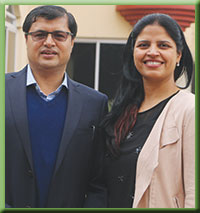
Jyoti, a gold medalist in Interior Design from the South Delhi Polytechnic, did her B.tech in agricultural engineering and MBA in marketing from Allahabad University.
Their New Delhi based firm, ARHTA is involved in a diverse array of projects comprising Institutional, Commercial, Residential, Industrial & healthcare architectural and interior projects, in India and abroad.
Ar. Harish Tripathi is inspired by the works of Architects Charles Correa and Geoffrey Bawa. He says, "The phenomenon of how a person experiences spaces is what inspires me the most. I believe spaces speak for themselves. They have an impact in the minds of people. Architecture is not a static phenomenon; it has layers which reveal themselves deep within spaces."
Working with Architect Satish Gujral, he was inspired by the ease with which he handled projects, and how he integrates Architecture and landscape design as one. "He considered landscape as a part of the building, not as a separate entity, and the built mass as a natural extension of the site." Simplicity in architecture combined with monumentality is also something that has stayed with him.
Ar. Harish Tripathi, is inspired by the green building movement, but feels that Indians by temperament have already been doing so. "We believe in recycling our materials, and our buildings have been responsive to climate and environment. By nature we love to conserve."
Indian Architecture he believes, is inherently climate responsive, by catering to various climatic conditions throughout the country, architecture has evolved and grown subject to natural conditions.
Interior designer Jyoti D Tripathi's design philosophy reflects boldness and simplicity. She says, "The best things in nature are simple, not complicated." She made Ar. Harish's complex design approach to a simpler one.
She says, Holisticism is the key to success. "All elements of a design, no matter how small, are important and make a difference to the final product. A hierarchy of importance should be created and no element can be neglected." She believes that "God lies in the detail" and pays attention to every aspect of the project. "Every aspect of a project has some importance, how small it may be."
Doing a Masters in Esketics made a lot of impact on Ar. Harish Tripathi's thinking process. The philosophy propagated by C.A. Doxiadis, says there are five elements which are important to any development; i.e. Nature, Man, Society, Shell (Built Mass) & Network (From Roads to wireless). His design philosophy and approach are now more humane and responsive to these factors, which are central to his designs.
"The only thing constant is change, and architecture relies largely on the context of these factors, as the context changes, so does the architecture."
Talking about his most special moment he said, "a client at Kurukshetra associated with the Gayatri Parwar surprised him by asking him to lay the foundation stone of the project. "It was a humbling moment for me."
The duo on being awarded by Indian Concrete Institute for EPFO project in Bhopal, by the Rotary Blood bank of Noida for their Blood bank project, and receiving an 'Honour for Excellence' by Russian Centre of Science & Culture, say " We have been very fortunate to receive such accolades, in recognition of our work."
Looking ahead they say, "We look forward to designing more spaces which are beautiful inside and out, and we continue to follow our professional ethics and integrity towards projects and the profession.
Ar. Pranav Iyer, Ground 11 Architects
"It is time to use the act of design as a means to redefine what we do as architects and to objectively assess our relevance within the creative realm. Every design needs to achieve outcomes that assert its genesis, explain its growth and direct itself towards new possibilities, and it is the architect's responsibility to recognize these very possibilities and to take the narrative forward."
Pranav Iyer, Design Principal at Ground 11 Architects and cofounder and design director of VIDA Design Inc, Los Angeles and G11 Addis, graduated from the Institute of Environmental Design, Gujarat, in 1998, and started a design practice in Pune, followed by VIDA in Los Angeles and G11 Addis in Ethiopia.
Ground 11 is a full-service architecture and urban design resource that concentrates on the built narrative -architecture, urban design, and landscape - to make vital, exciting destinations out of clients' tangible and intangible requirements. It is a scaleable, modular company, combining the strength of its own office with a highly talented and experienced network of consulting architects, designers, engineers and other specialists. In particular, Ground 11 revels in projects that pose unique challenges and require unexpected, innovative, and highly creative solutions. Pranav Iyer and his team's skills lie in effective conceptualization, design and delivery of signature projects in several different countries and cultures, providing global design solutions in keeping with local technology and processes. They have worked and continue to work in over 15 countries around the world, and still find exciting newness in it all, every day. From low-cost housing for sixty thousand families in Kenya, Yemen and Ethiopia, to residences in Upstate New York and Bristol, England, G11 has forged relationships with people and places that allow the architecture to be a medium for the meeting of minds.
Some of the most challenging projects designed by Pranav include a war memorial and public square in Hargeisa, Somaliland, where there was no budget and the people's relationship with the memorial was part anguish and part relief. Another project with an extremely complex programme was a mixed-use development in Tirana, Albania, where archeological, historical, political, and economic constraints resulted in a design that was a First World project that learns from Third World methods. Pranav has had the incredible fortune of working with some truly gifted people, in India and abroad. These years of collaboration have educated and shaped his approach to architectural design.
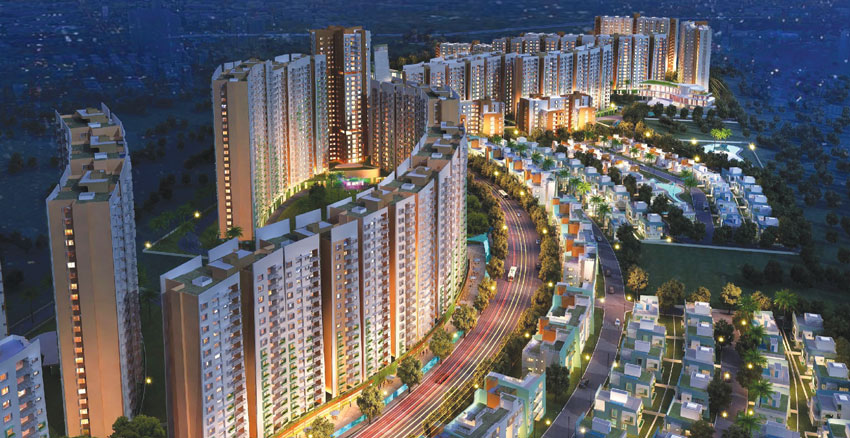
The pivotal moments in his professional journey have been the commissioning of the Weikfield IT Citi Infopark in Pune in 2004 with Ar. Vijayram, and the winning of an international design competition for Chrome City in Chennai in 2011, with Drone Iyangar as design Lead, over some of the biggest firms in the world.
For Pranav, success is entirely relative, and is a function of satisfaction above anything else. Constant attention to detail, and a passion for meaningful design is an imperative. It is also extremely important to communicate effectively within the design ecosystem, which includes the design team within Ground 11, consultants, clients, and the local team at site. Pranav has connected different clients to assist each other with complementary skill-sets to empower and drive projects forward.
A large amount of work done by Pranav and his team is research driven, where the design grows around an idea, or is a stream of thought that allows re-interpretation and re-evaluation of commonly assumed paradoxes. This keeps him questioning the established, and establishing his questions. Needless to say, every project concludes with more questions than answers - for himself - while the client gets better solutions. Pranav actively involves himself in activities including feasibility studies and financial modeling for projects, necessitating an often steep learning curve while working on projects in other countries.
In addition to architecture, Pranav has worked with friends to develop apps including one for women's safety, and is a science fiction aficionado and model train and aircraft collector.
Ar. Sony, Ar. Mathai, Ar. Lalichan, SML
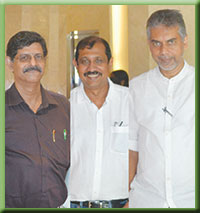
"In design, SML believes in Louis Sullivan's thinking,- "A proper building grows, naturally, logically and poetically out of its conditions."
SONY MATHAI LALICHAN, established in the year 1984, at Cochin, has completed 30 years of their journey in architectural practice. It is a partnership firm with three architects, Ar. Sony Joseph, Ar. Mathai Mathew and Ar.Lalichan Zacharias. They handle projects like hospitals, hotels, resorts, residential apartments, museums, schools, IT Parks, etc. mainly in Kerala, with some in Mumbai, Delhi and Lakshadeep. Recently the firm is commissioned for 2 projects in Sri Lanka as well. Sony Mathai Lalichan has received many Awards for their various projects.
Ar. Sony graduated with B.Arch. from the University of Kerala (1981-82), from CET and has 34 years experience in design and supervision of multi-storied office complexes, hotels, swimming pools, auditoriums and residential buildings.
Ar. Mathai Mathew is the topper of B. Arch., Degree of the University of Kerala in 1982-83 from CET, has 33 years experience as an Architect including a year with Charles Correa, Bombay as Junior Architect.
Ar. Lalichan who is also a first rank holder for the Thesis of B.Arch. Degree of the University of Kerala, 1983-84 - from CET, has 32 years experience in the field. Currently, he is the member of the Expert Committee formed by M/s. Council of Architecture, New Delhi for inspecting and certifying the Architectural Schools in India. Currently he is the National Jt. Hon. Sec., of Indian Institute of Architects.
The major breakthrough for the firm SONY MATHAI LALICHAN was winning the design for the 'PAPAL PODIUM', when H.H Pope John Paul visited Cochin in 1986. Since then Sony Mathai Lalichan Architects have designed several Institutional buildings, Seminaries, Churches, Restoration of Heritage Buildings, etc.
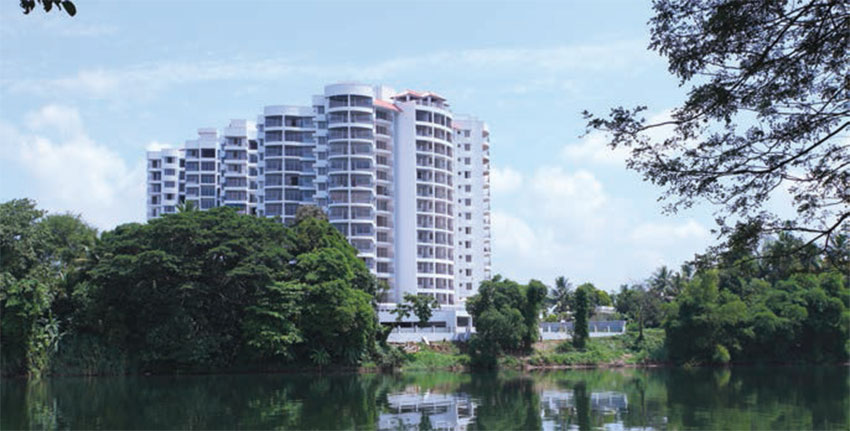
Explaining the importance of Architecture, they say, "Architecture impacts how you feel every day, which isn't surprising considering how much time we all spend in buildings. Buildings impact our health and our well being. If you have ever felt depressed while sitting in a waiting room with low ceilings and harsh fluorescent light, then you will know the power of architecture over our psyche. Buildings can have a big positive impact on the people who depend on them."
According to them, "Architecture has the power to stitch individuals into a community and energize forgotten corners of our Urban Fabric. Communities use Architecture to plant a flag and rally together. Catalysts can be youth centers, religious buildings, libraries. Regardless of its use, Architecture is a potent tool for encouraging the act of community. In the face of cataclysmic natural events, architecture is often the first line of defense and can harness nature to empower inhabitants. Today we need an Architecture that addresses nature in all its forms."
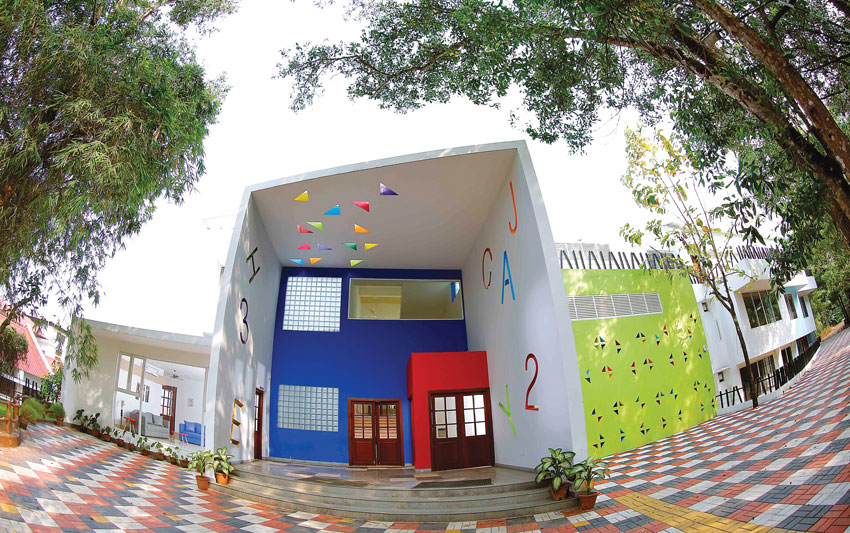
They say, "If you are in the process of designing a good building, forget about what you want the building to be; instead ask, What does the building want to be?" A design problem has to be addressed on its own terms: the needs of the client, the nature of the site, the realities of the building program and many others. Good design solutions are not merely physically interesting, but are driven by underlying ideas. Without underlying ideas informing their buildings, architects are merely space planners."
The changes in technology impacts our building materials and in turn our buildings. Emerging technologies look beyond the hammer and nail to imagine a new way of constructing. At the end of the day what matters is the happiness of those people who enjoys the space created by us. If they are happy we consider that as successful Architecture.
Ar. Rahoul Singh and Ar. Lakshmi Chand Singh, RLDA
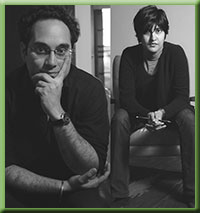
"In architecture, it's the small things that make the big difference." - Ar. Rahoul
"Architecture is not a profession, it's an all consuming passion, a way of life. - Ar. Lakshmi
The team at RLDA, led by Rahoul Singh and Lakshmi Chand Singh, likes to spend its time representing the things that they imagine, so that they can be built as envisioned. As part of this process they draw, make models, specify , quantify, sample, value engineer, collaborate, question, and ultimately build. They build teams with other design professionals and with artisans and contractors. They build not only objects but also spaces.
In the past they have worked on projects as small as bathroom renovations and on projects as large as resorts, real estate developments, buildings and offices. They design by challenging, by asking the right questions. They are guided by sensitivity to the culture and the climate of a place. This sensitivity is reflected in the friendly end-product: friendly to the people who use it, to the culture within which it is built, towards the materials and processes of its construction.
When talking to them it is very apparent that they build today for a better tomorrow - the quality of the environment they create positively impacts the quality of the lives of those who reside in it. It defines the relationship between people and objects, between the materials and the methods of their construction with the phenomena of experience. They understand both the generative and destructive power of the environment and that culture is the context for their projects and a catalyst for their imaginations.
The result is that the projects articulate through their form and image, material and detail, that which is unique and specific to their function and location. Working predominantly in an idiom that situates itself within current cultural production, projects by RLDA are aligned with that mode of design inquiry that explores the materiality of "things" and how they are perceived sense perceptively.
Rahoul and Lakshmi, come across as complementary forces forming a dynamic pair in which the whole is greater than the parts. Tangible dualities such as the sobriety and gravitas of Rahoul are perfectly balanced by the ebullience and savoir faire of Lakshmi. The commonality is that both do not just build, they also think about what they are building. Their architecture does not suppress the desires of its occupants- on the contrary it expresses the individualism of the inhabitants, their situations and contexts.
For Rahoul, in architecture, as in all things beautiful, it's the small things that make the big difference. At the Rhode Island School of Design, USA, where he got his degrees in architecture and the fine arts, he was exposed to the versatility and originality of art and design projects and to over 80,000 works of art in the schools museum. This helped pave the way for his growth in the way he would develop ideas and implement them.
He came back to New Delhi and set up his design studio in 1998. Prestigious projects in India and the Middle East established his credentials as an architect and designer and helped build his oeuvre. His ability to work with materials that were available ,and would seamlessly merge with the climate and terrain, marked him out as an architect who designed for the present with an awareness of the repercussions on the future. This in turn paved the way for his entry into the Delhi Urban Arts Council (DUAC) where he now a Senior Consultant.
He is also a visiting faculty in the Department of Architecture at the School of Planning and Architecture in New Delhi and a regular contributor to journals in architecture. He has authored the book, "Gardens of Delight" and co - curated the first ever architectural exhibition at the National Gallery of Modern Art, New Delhi.
For Lakshmi architecture is not a profession, it's an all consuming passion, a way of life . She trained as an architect at the Sushant School of Architecture in New Delhi and then spent a number of years practicing with design intensive multi disciplinary studios in the city before re locating to Singapore. Here she worked on projects that varied in scale from small residences to larger developmental work. Her learning curve registered a sharp upward swing as she was responsible for ensuring that projects and their constructional processes were of the highest international standards.
On returning to New Delhi, she started working with Rahoul and is now a partner in the studio RLDA. Lakshmi has also played an instrumental role in establishing Design x Design, a multi disciplinary platform, that promotes cross pollination of ideas among members of various design fields.
The RLDA studio is in a tree lined boulevard of an upscale south Delhi colony and mirrors the ethos of the firm. The leitmotif here is youth- adding to the feel of freshness and energy. The team is small and synergises versatility, imagination and diverse thought for a perfect symmetry of the yin and yan. As part of the process of representing RLDA's vision and imagination the team, a small, agile and diverse group of people, pores over sheets of paper to draw and engineer models of buildings which showcase the belief of the firm and give language to mundane things like walls, ceilings and shafts.
The means and methods of representation inform a process of inquiry. Critical reflection and a constant review process ensure that the designs reach a level of maturity prior to entering a fabrication / constructional process. The designs draw on the wisdom and richness of local craft and tradition while simultaneously being aligned with trans-cultural continuity and digital fabrication techniques.
The diverse and committed team ensures that each project is the result of a multidisciplinary approach. Critically examining and questioning the variables that have a direct impact on the quality of the designs and the environments they shape, has become a hallmark of the practice.
The relevance of RLDA lies in the fact that it represents the zeitgeist of the twenty first century by critically examining and questioning the variables that have a direct impact on the quality of the designs and the environments they shape. To paraphrase Rand's Roark: the firm doesn't build because it has clients. It has clients because of what it builds.
Rajiv Parekh, Ekta Puri, Apoorva Shroff & Maithili Raut, RED Architects
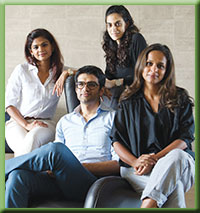
"We believe that being a designer, is all about observing and translating the inspiration around you, then be it a space that you inhabit or a plate of gourmet food, be some iconic structure or a perfectly wrapped gift. Inspiration comes from all kinds of sources, what sets you apart from someone, is the ability to distill that inspiration into a design solution, befitting the need and context of the project."
RED Architects was established in 2004 by a team of self motivated people – Rajiv Parekh, Ekta Puri, Apoorva Shroff and Maithili Raut, empowered to act with a purpose. The purpose was to set up a design practice that has a process oriented approach to design. Their designs accommodate the 'perceptions' of their clients and understand that there are no absolute solutions to any design. A lot of 'research and enquiry' goes into the process of design, whether a piece of furniture or, the master plan for an educational campus, All partners jointly examine any project that comes into the office, and different design solutions are applied to it, through each of our individual thought processes.
The principals at RED believe that Architecture is a combination of beauty and form. Whilst it is a manifestation of creative ideas derived from inspirations, it also is a physical and live space that people move around in and can feel and touch. The most important tenets of a design solution are: Versatility and adaptability of the design; Orchestration of movement through the space; Use of natural light and ventilation to its maximum potential; Clear and functional resolution of building details; Use of sustainable materials and building techniques and Collaboration in a team.
Versatility is important, because social dynamics in the Urban Indian setting are changing at a rapid pace. They are moving away from the home being a conservative large joint family controlled by the patriarch, to being double income family of two with children.This even translates into the work and social environments outside a home. Offices and restaurants for example are also resorting to the "open plan and versatile space" options.This has direct implications on the spatial organization of space. For example, the kitchen is no longer the hiding place for women to disappear into. The kitchen, living room and dining space is now the epicenter of family interaction – The hearth. In an office, we have to do away with conventional boundaries and compartmentalization. Space designed to flow freely using sliding walls and windows, unifying the environment and empowering the user.
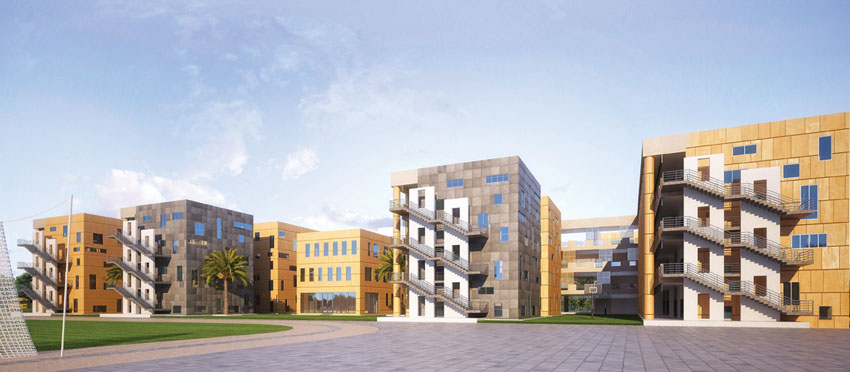
At RED, "We're emphasizing on the sustainability issue, because it is no longer just a buzz word, but it is an imperative need for the future. We use different methods in each project depending on the need, locale, size and scale of the project. For instance, Rainwater harvesting is used where the site has substantial land coverage. For interior design projects, double-glazed insulated glass windows and glazing of Leeds compliant grade are used. Solar water heaters are used for hot water in bathrooms and swimming pools. Air conditioning systems used are VRV, with inverter based processing units. Besides this, there is an attempt to use local materials for independent constructions."
Lastly they also believe strongly in collaborating with different disciplines of design such as artists, sculptors, product designers and more on a regular basis, to enrich the design process. Each individual can add invaluable insights into the projects. Red is an amalgamation of ideas and thoughts which address and solve the micro problems within the macro concept of the design.
Ar. Kalhan Mattoo and Ar. Santha Gour Mattoo, Planet 3 Studios
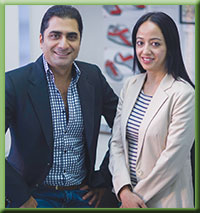
At Planet 3 Studios, the focus is always on the context, the constraints and the opportunity that a project presents. They like to create designs that maximize the positive impact of design on the environment, use appropriate technologies and materials and source labor locally.
Talking on their design methodology, Ar. Kalhan and Ar. Santha say, "Our studio is where creativity, skill and knowledge are essentials and everybody is encouraged to bring an intellectual and creative mindset to work. We work in a non-hierarchical, communized environment, discussing and sharing insights very informally. Our studio is exploring parametric and computational design tools that fundamentally change the manner in which we create design. We literally created the design of a whole campus in a North Indian town using scripts that define usage parameters, instead of drawing out the design intent. We have recently completed the construction of an auditorium in Central Mumbai that was designed by simulating the sound waves emerging from stage and modelling the space to respond to that key parameter. This kind of methodology offers the opportunity to check and vet key performance criteria and allow us to do a more informed design, based in intelligence rather than aesthetic whim."
"'We are working in multiple geographical locations across country, on projects that range from concepts for new cities, master plans and right down to design of individual buildings and even interiors. We love cross fertilization of ideas, where insights from hospitality situation are applied in corporate situation and in turn in design of healthcare facilities! The essence of our way is to address the fundaments through intense programming, offer solutions that balance wit and wisdom, keep it fresh and never lose the visual appeal. We believe that it is possible to be profound and light-hearted at the same time. We do not burden ourselves with 'isms' and focus on the context, the client and the realities of budget and time.
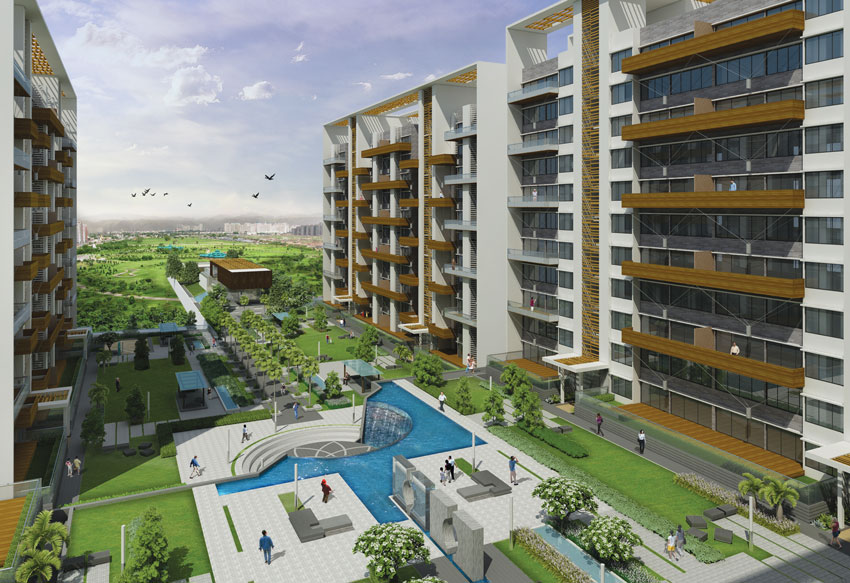
We seek to define the design determinants by inhabiting and experiencing the client's business, requirement (stated and unstated) and processes. Architects from our studio dig deep through research and by physical experience to understand and formulate the design program. Out of this exhaustive process, we collect useful data and mine it for nuggets of insight and points of inspiration. Our design never happens in vacuum. It is rooted in context.
About their success mantra, they quip, "Within our studio, there is a mantra: Talk less, build more. We ensure that our concepts are rapidly implemented. We keep pushing the envelope incrementally, but we remain insistent. Our design perspective is anchored in constructability. If it can't be built, it is an academic exercise and we are not an academic institution. We design well and ensure that it is built proper."
Ar. Kunal Barve, Interface
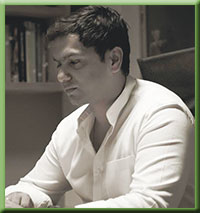
Architecture to me is "Journey with a story that has a simple narrative and includes sensual aspects of our experiences."
Interface was founded by Architect Kunal Barve in the year 2004 after qualifying architecture with Honors from Mumbai University. (B.Arch. – Bachelors of Architecture).He is an architect with distant global and artistic sensibilities that rises above trends and customary design concepts. Architecture is not an individual task; it is a result of a complex team effort. Form, proportions, style are all elements that hold up this space together in time, material and context.
While talking on the current architectural trend, he says, "The trend is at parallel with tech-era and clients want to use the latest technology, yet stick to their roots, conserve nature, be green, and eco sensitive. I see the current trend as an amalgamation of old with new, in sync with this tech-era. At Interface, we continuously strive to create architecture that is regionally sympathetic, well grounded in context and community of its place."
Ar. Barve adds,"Our visual culture is not limited only To build our form; in addition to building form we include Nature, paintings, art, installations, film and advertising. We work hard with stubborn freshness, unshakable Lightness and optimistic attitude, to learn from past and to imagine a different and better future. Interface has become known for designing projects of exceptional materials and quality, with a strong conceptual basis derived from specific needs and aspirations of each client. Architecture and Interior stages relationships between people, objects, spaces and places. Not only does it reveal existing affinities and connections in the best cases, but it also creates new ones.
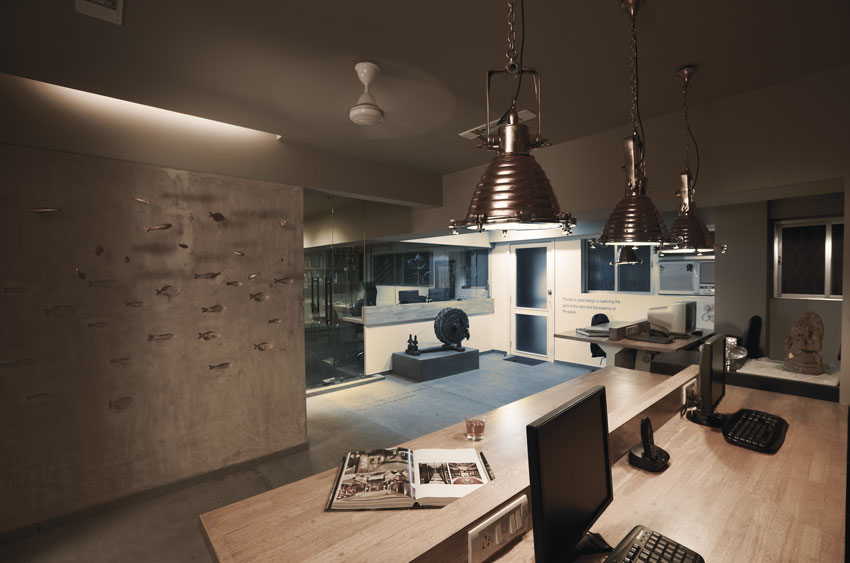
On getting inspiration and ideas for his designs, he reveals, "For me, there is an unexpected spark of inspiration that happens with every project. It could happen after meeting clients and understanding them, what they want, hearing them out. My inspiration can be from a movie, art, farmers market, sculpture, ethnic shops, anything, there is no fixed set of ideas or formula. Inspiration can be found anywhere you look."
He says, architecture to me is not only skewed, twisted or sculpted buildings or installations, but buildings that are highly functional, environmental friendly, sensitive in context, energy efficient, but still are undeniably creative and exhilarating spaces. Our design philosophy-luxurious, understated, stylish, unexpected, practical, attention to detail and clients’ needs are primary.
On his happiest moments, he talks about his Willingness to work on projects which redefine the basics, Constantly evolving design and striving to meet expectations With meticulous attention to detail, but all this seems totally worth When the project comes together, with a contended smile on the Clients face.
Raghvendra Bisen, RBA
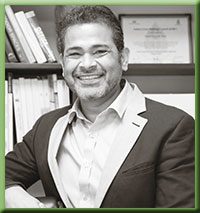
Born in 1971, Raghvendra Bisen studied architecture at the Govt. College of Architecture, Lucknow and in 1995 graduated with a Bachelor's Degree in Architecture. In 1998, he had set up his own firm RBA (Raghvendra Bisen Architects) and has designed projects that range from Independent Villas to Group Housing, Commercial & Corporate Offices, IT Buildings, Retail Spaces, Mix Use Developments, Educational Institutions, Shopping Centers, Business Hubs, Industrial Estates across India – thereby engaging diverse issues, multiple constituencies and varying scales: from interior design and architecture to green buildings and planning.
Since its inception, RBA (formerly Aayam) has evolved as a multidisciplinary practice and provides professional services in Master Planning, Architectural Design, Urban Design, Interior Design, Project Management and also comprehensive turnkey consultancy under one roof. The team at RBA, comprises highly motivated and creative professionals, who strive to produce sustainable designs which are aesthetic, innovative, practical and keep in mind the social and economic issues.
Mr. Bisen says, "Our firm is characterized by creativity, high energy and a unifying team spirit. Additionally, we are dedicated to creating and maintaining a cool workplace where we want to be and we continuously work at becoming better and better at what we do. We adopt good management practices while striving for excellence in design, planning and construction. Our firm is also known for timely delivery within prescribed budgets."
RBA approaches each design assignment with an open mind and extensive programming, focusing on the strength and opportunities that the context presents. The designs are a balance between innovation, functionality and technology and are inclusive of the existing situation making them visually appealing and sustainable. RBA regard sustainability along with the client's needs as a vital part of the design process thereby reducing construction, operation, and maintenance costs. The client and end-user is always an active part of the design process. The firm's design philosophy is rooted in the belief that design is essentially a problem solving process. Accordingly, its design teams adopt a multi-disciplinary, collaborative and participatory approach to rigorously identify and analyze design problems.
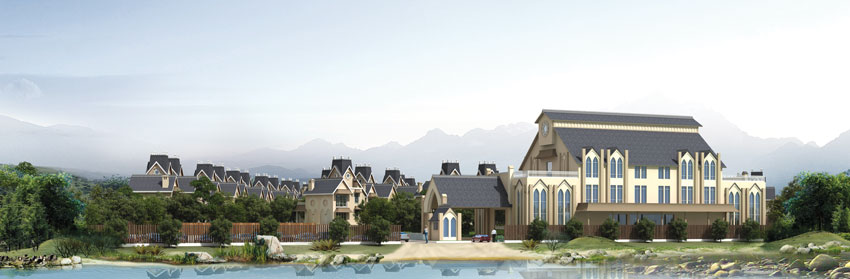
According to Mr. Bisen, "Any appraisal of green buildings should consider their benefits not only to the environment, but to the residents as well. Climate responsive architecture creates better indoor environments by allowing more natural light, fresh air circulation, optimal use of space and suited temperature."
He explains the misconception regarding the cost of Green building, "The popular belief regarding ecological building is that it is much costlier than conventional buildings and unaffordable to the mainstream. The evidence suggests otherwise, however, as seen in a study conducted by the World Business Council for Sustainable Development that showed the true cost difference between green and conventional buildings to be around 5%."
In the planning of an environmentally sustainable building, strong considerations are given to maximizing the building's energy efficiency and to reduce the energy expended throughout the construction process. "It is a little-known fact that the construction industry is one of the world's greatest contributors of greenhouse gases, and is the source of 50% of the total carbon dioxide emission in some countries."
Gaurav Chopra, HKS India
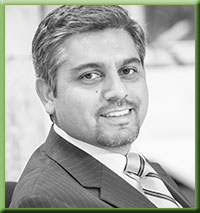
"Good design has the ability to transform a business organization. We partner with our clients to bring services in a process that the world knows as its best in context to the local cultural environment."
Growing up in north India, Gaurav spent a lot of time on construction job sites – from hospitals to schools to industrial buildings. The reason? Both his grandfather and father owned and operated construction companies. "You could say construction is in my blood. I paired my interest in construction with my passion for drawing and set my sights on a career in architecture," says Gaurav.
Today, he is pairing his ability to think globally and act locally as Managing Director of HKS India. He says, "I believe we are raising the design industry bar for our clients in several ways thanks to our global, digital highway. We are able to deliver projects in context with the unique business and cultural needs of India and the surrounding region, while thinking globally in terms of design and process. The bottom line: Clients are able to deliver their project faster, better, leaner, and at lower costs."
With 15 years of experience in advanced planning and project development, Gaurav has successfully led a diverse client base in South Asia and the U.S. During the course of his professional years he has cultivated an analytical approach towards successful delivery of projects within restrictive frameworks set by restrictive budgets and timelines. Gaurav continues his mission to streamline the business process of design and make our clients' project delivery more sustainable using an integrated project delivery approach.
He has worked on multiple projects like DM Aster Medcity, Kochi; Apollo, Nasik; Fortis, Chennai; Parkway Mumbai; Ananda Luxury Resort, Maharashtra; Embassy ONE, Bangalore; Kaiser Permanente, California; University of Washington, Seattle to name a few.
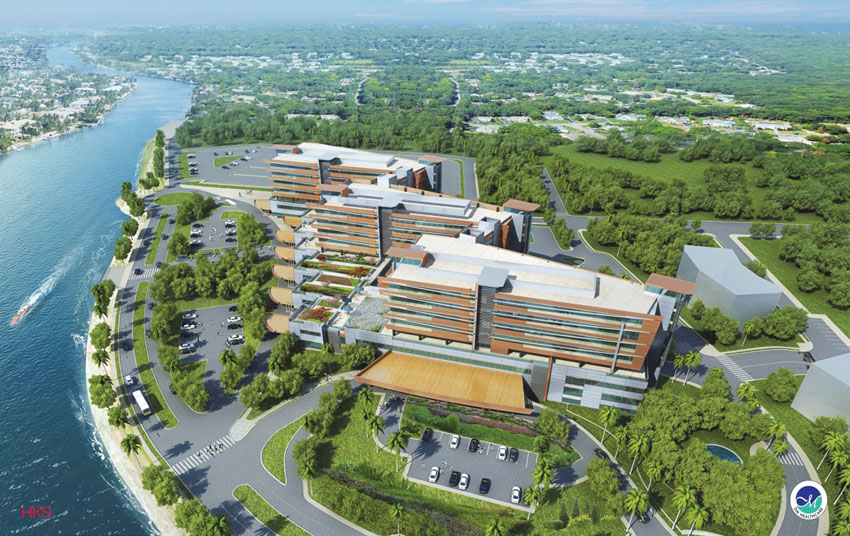
According to Gaurav, "Change Design matters in the world of business, especially under current economic influences. From the balanced scorecard to core competencies, organizations are on the lookout for ideas which will allow them to keep one step ahead of the competition. As a design professional, I'd like to keep pace with ideas that are shaping the daily agenda of global businesses in healthcare, hospitality, aviation, sports, and entertainment."
He adds, "Forward thinking and inspired by the concept of reverse innovation; it is my privilege to work amidst a confluence of design ideas that exist at several offices of HKS around the world into the dynamic business environment of India. Hopefully, we are able to embrace the perfectionism of automobile and aviation manufacturing into ‘Design and Construction' of our healthcare, hospitality, and sports buildings in India."
Ar. Zubin Zainuddin and Ar. Krupa Zubin, ZZ Architects
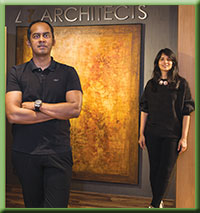
"As designers we understand that design has the inherent power to transform our behaviors and to shape our culture. We need to make sure that the structures that are built today are well designed assets for the city. This would clearly define the way forward. Also, space is an essential commodity and is probably 'always never enough'. It has to be tactfully handled and has to be given a lot of emphasis in today's day and age."
ZZ Architects was founded in 2002 and has since become known for its contemporary Architectural and Design projects. An enviable roster of architectural projects alongside some of the country's most luxurious bespoke apartment and villa interiors, ZZArchitcts is led by Ar. Zubin Zainuddin and Ar. Krupa Zubin. After graduating from Mumbai University and gaining a significant experience working with leading firms of the country, they decided to set up their own venture. The journey from an eager and enthusiastic student of Architecture to one of the leading practitioners in India is replete with landmarks.
"It was a personal project that started it all. The staircase we designed for our own house won an award from the prestigious IIID and got a lot of recognition. It led to a few small private commissions and later on we decided to formalize our setup. The first ZZA studio although based in Navi Mumbai was known and was involved in doing high end projects in some major cities in India. Today, we have a state-of-the-art studio that houses a team of over 65 talented and passionate Architects and Designers. The studio has also earned a reputation of being one of the finest architectural design studios in the city and is a vibrant hub of creativity." The ZZA team is organic in nature and is made up of various teams specializing in different fields. The unusually diverse work the firm has completed includes award winning private residences, corporate spaces, hotels, hospitals, large master planning projects and commercial, industrial & institutional facilities. As a firm at any point of time we are involved in over 50 projects across categories. The design studio is currently involved in the projects for leading names in real estate sector to industrialists, politicians, celebrities and other private elite clients.
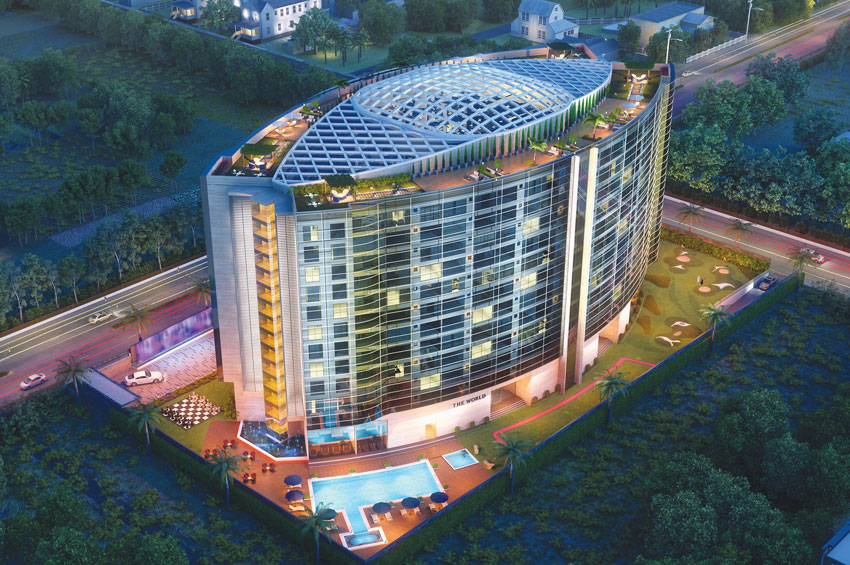
ZZ Architects is best known for the high quality of work and its collaboration with some of the world's leading manufacturers. The firm believes that design cannot be categorized; it is a result of the client's needs and a response to the environment around us. "It's often the invisible nuances that make a visible difference", it's a quote we had framed in our office since we started and it's still close to our principle approach: Every detail counts. This approach not only guides the firm but enables it to maintain its position as one of the top design studios in the country. Economic Times Award for Leaders of Indian Infrastructure & Construction Outstanding Performance, AD50, CNBC CRISIL Real Estate Award, Society Interiors Award for Outstanding Contribution to Architecture & Design, Good Homes Award for Best Architect, Awards from IIA, IAD, IHE are some of the prestigious awards that ZZ Architects has received.
"Our inherent design perspectives, the myriad influences and our cultural paradigms help us bring in a fresh, innovative yet sound approach to design. The fact that we are well traveled, open to global design scenarios helps our work and our clients immensely."
Ar. Nilesh Gandhi, Metadesign
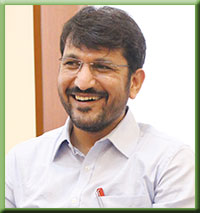
Photo credit: Jatan Atara
After working with corporate giants like Gherzi Eastern, Shapoorji Pallonji and Edifice, Nilesh pursued his passion into practice. With strong ideology of 'organization before individual', and his firm belief in brand creation Metadesign emerged.
Identifying the importance of specialization early on, to be able to differentiate and survive in this competitive environment, Metadesign started with landscape design. They have designed and or developed more than 500 acres pan India, to build up a formidable landscape portfolio of projects across the country.
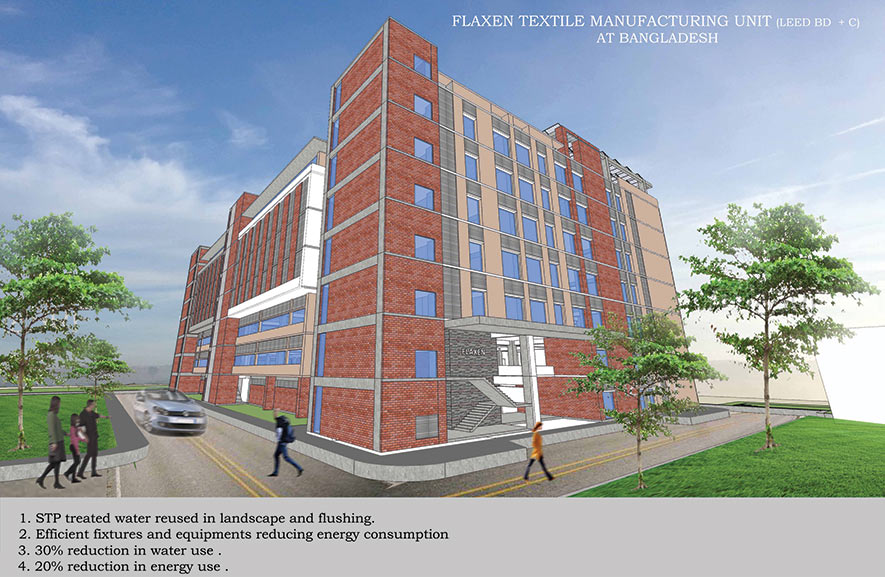
Operating in the field of landscape and greening spaces, one incident led to a very surprising and fortunate connect to Green buildings. Ar. Nilesh was amongst the first few to attain the global LEED AP+ accreditation. Extending its area of specialization, he and his firm Metadesign has played a pivotal role in certification of new and existing buildings like interiors, institutes, factories, not only pan India, but catering to the global arena as well. Metadesign put its first global foot print with a factory LEED certification in Dhaka, Bangladesh. Ar. Nilesh being an LEED AP+, IGBC AP, TERI Trainer and Evaluator, has kept abreast with the developments in the industry. With millions of square feet of spaces green certified till date, Metadesign also conducts Green building awareness workshops in its attempt to spread its expertise and help corporates embrace green buildings as an ideology. Keeping a tab on academics, Ar. Nilesh is a visiting faculty at several architecture and engineering colleges, contributing and has he says "learning" from the younger generation.
Joining back the dots in his career, Ar. Nilesh recollects a skit during Young Architects Festival in his college days, with his friend Indranil playing 'Prabhu' asking Nilesh as 'Parth' in a discussion at a tea stall, as to what he sees on the earth; to which "Parth" replies "nothing at all, but a Tree". "We owe it to our future generations" he says. His concerns for further research in environmental space got him an opportunity to pursue his Doctorate at IIT Bombay.
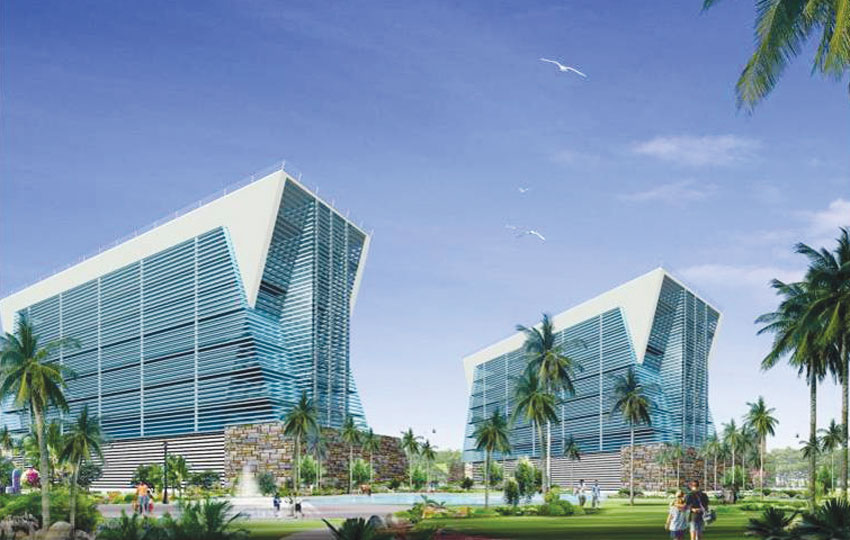
Nilesh's vision for Metadesign is to be the "Google" of design, developing deep rooted specialization competencies, for his fellow architects and clients. His uncanny 'detail-ability', and project management skill has carved out a path for Metadesign for a promising future. "It has to be different, or what use of it to be", says he. He feels an opportunity wasted if there isn't something created by self for society, worth being proud of. Nilesh strives hard to constantly raise the bar of performance, and do justice to each task at hand.
He sees a huge opportunity for architects to let their creative juices flow and achieve a deep sense of satisfaction in creating buildings that ought to last atleast a century, leaving behind their mark on the society. He is grateful to all the forces on the earth, which enabled him to be an architect, and wishes each one reading this, exciting times ahead. "Be the change you want to see in the world" is one of his favourite quotes by Gandhiji.
Ar. Pavitra Sriprakash, Shilpa Architects Planners Designers
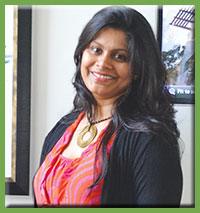
"Architecture to me is clean and simple with a focus on efficiency of space, energy and cost. Architecture must respect its location and context without which it cannot be relevant to the future. Sustainability, Technology and the future of Architecture rely on our ability to stay connected with each other in our built and natural environments. I believe that as long as a site, by virtue of its landform, movement of wind and water and cultural location forms the basis of the design – each project will be a unique architecture of its own – for the people and the ecosystem it is in."
Growing up exposed to the arts and architecture of India has prepared Ar. Pavitra Sriprakash for being in this profession. According to her, "The role of an architect is one of the great responsibilities as the spaces we create can last a lifetime. I remain inspired by creating these spaces that are easy to implement and socially & environment-friendly. I enjoy dabbling with a palette of the best and most unique traditional methods of construction, and incorporating them in new and contemporary ways that will lead to their preservation."
Shedding lights on her journey in the architectural and design world, she says, "When my mother, Sheila Sri Prakash started her practice in 1979, it was a home-office. I practically grew up under her drafting table. I used to pick up material samples and work them into my own ‘mixed media' – canvas, water colours, acrylic painting base with 3D bits glued on to it! By the time I was in 7th Grade of school, I had learnt AutoCAD and used to spend summers working on small architectural details in her studio."
"My specialisation was in the field of Urban Design from Columbia University in New York City. My first few Urban Planning projects were based in the Burroughs of Queens and Upper Manhattan. Harlem was going through tremendous changes and there was a lot of commercial interest in its development. The city was reeling under the aftermath of 9/11 and there were many families moving into the Brownstones in Harlem. The biggest challenge I faced was to understand the issues of a community – one that had traditionally been in the neighbourhood for several decades and their dealing with change. There were several stakeholders with various interests that were very difficult to tackle through the medium of Architecture and Urban Design. As a young architect I quickly learned that the balance between the requirements of the client and creativity is a huge challenge that needs to be managed."
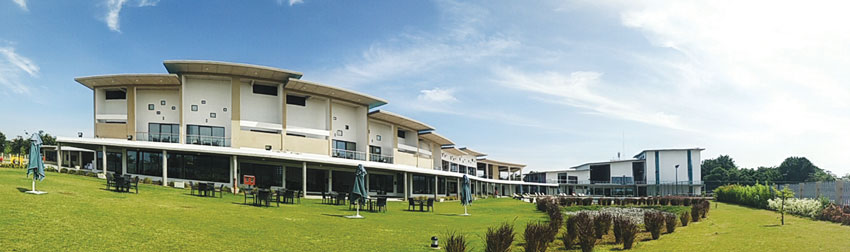
On her design inspiration & influences, she says, "My architecture is definitely influenced by geography and sustainability. Using spaces that extend out into the open with the usage of courtyards and sloping roofs are respectful of our tropical location. I have a great deal of respect for traditional Indian styles of architecture. There is so much to learn from the vast types of architecture that have been part of the rich history of the country – ranging from luxurious palaces to the complex urban tenements that form so much of the Indian cities today. I am inspired by the way Rem Koolhas handles his space and volume while the techniques of Laurie Baker are inspirational from a material and architectural detail aspect."
Through the study of temple architecture and my involvement with the Archaeological Society of India, I gained exposure to the works of ancient kings and their great structures in the temples of Tanjavur and Mamalla. The Pandya architecture of Mamallapuram (south of Chennai, India) is believed to be the seaport through which the Dravidian influences crossed the sea to the rest of South East Asia. This impact of Dravidian culture is one that still exists today through food and architecture and is visible in parts of Indonesia, Malaysia, and Cambodia– it is truly inspiring for me as an architect. It reinforces my conviction that designs that are born in India can have a world-wide impact especially in today's globalised scenario!
Ar. Amala Sheth, Metaphors
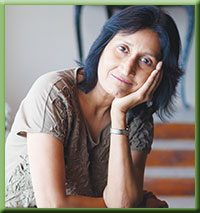
"We explore every aspect of the symbiotic relationship between form and function, the metaphysical relationship between mind and matter and strive to achieve a perfect equilibrium between the art and science of Architecture, Environmental Design and Interior Design."
Born in 1961 in Mumbai, always ambitious, Ar. Amala Sheth's interests swayed from scientific studies across to various Arts, as a youngster. Dabbling variously with music, dance and theatre, these experiences defined her thought process.
During her early days at school and junior college, learning Hindustani classical music in Mumbai was a fascinating experience, embodying not only the richness & purity of tradition but also of philosophy and culture. It was here that she met some students of architecture "with whom I spent a lot of time and watching them meticulously bending over the drafting board for hours, creating form out of space. That was the time I realized I wanted to study a subject that was a synthesis of both the sciences and arts," says Amala.
The similarity between music and architecture was striking, both involving the creation of something spectacular around a basic framework. Going forward from Junior College at Elphinstone in Mumbai, she joined Sir J.J. College of Architecture in 1979.
After graduating with a B. Arch. degree from the prestigious institution in 1985, she had a short stint with Ar. Hafeez Contractor in Mumbai, followed by Chandavarkar and Thacker in Bangalore. Amala moved from Mumbai to Pune, in 1989, to start her own practice as an independent architect and this is when Metaphors was born with partner Anand Bhagat.
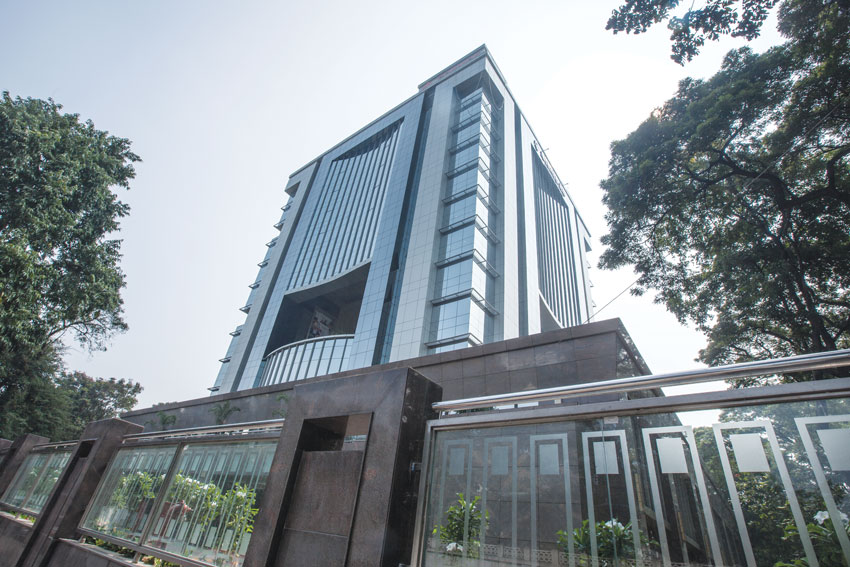
Metaphors has garnered, over the last 25 years of relentless hard work, a strong and motivated team of architects and interior designers in a firm that accepts nothing but perfection. With over 35 architects, interior designers, civil engineers and a fully equipped 3D modelling team, the firm is a melting pot of constantly mingling ideas and inputs, that range from the arts, sciences and architecture to the more intangible topics like psychology and economics.
Over the years, Amala and Anand worked hard to establish a very strong and visionary presence not only in Pune but across the country. "Our expertise ranges from projects in the IT sector, Industrial, Commercial Infrastructure, SEZs, Institutional, Healthcare Campuses, Hospitality, Commercial etc. It is this very diversity that keeps us so energized and passionate. The ever changing dynamics of each sector provide a constant challenge," says Amala, adding, "Through the design of millions of square feet of architectural and interior spaces, what has been constant throughout, is our conviction towards bringing sustainability and culture into the very basics of building design. We believe in embodying not only the richness and purity of tradition, but also of philosophy and culture."
She avers, "Metaphors has been our contribution to defining architecture. Every project has been a journey to create something beautiful, to celebrate and engage. We constantly question ourselves, push our boundaries and build on the foundation of a rich experience. Our philosophy has always been defined, and has become a reflection of us. We have found our countenance in being honest to this conviction."
Ar. Utkarsh Kothari, Kothari Associates P Ltd.
Architecture is not just a profession, but a passion to be pursued. At the heart of this passion is an aesthetic for design. Utkarsh's design sensibilities have been honed over several decades. From a young age when he accompanied his father and grandfather to the office and spending time with the staff working on the drawing boards, his perception of space, and eye for design began to develop. This interest in design dovetailed into the construction of models and tinkering with drawings. The family encouraged Utkarsh to follow these natural inclinations and study architecture at Vidyanagar.
After successfully completing his degree, he went to Boston for his post-graduation training. At Boston, he worked with various architects and polished his architectural skills. The experience expanded his horizons as he had the opportunity to apprentice with top architects in their fields. He returned to India determined to put into practice both his education and practical experience. He joined the office full-time and began his career officially in India.
Utkarsh's philosophy is simple and direct. Each space he plans and builds must work efficiently for owners and occupants. It must be built in time and within the specified budget. Every project must satisfy its economic goal even if it is a public institution with minimum profits. It must make an aesthetic contribution to the community. He respects the neighborhood he builds in by designing in harmony with what was there earlier. He believes that the unique functional needs of each client must shape the design. Each plan must be fitted to meet the complex of local conditions & desires and at the same time reflect the continuous advancement of technique and knowledge. Utkarsh has designed and executed projects for a wide spectrum of clients, and continues to fly the family flag while upholding the standards of excellence that have always been a hallmark of Kothari Associates. From hospitals and universities to entire townships, Utkarsh continues to follow his passion, for him architecture continues to be a fascinating exploration.