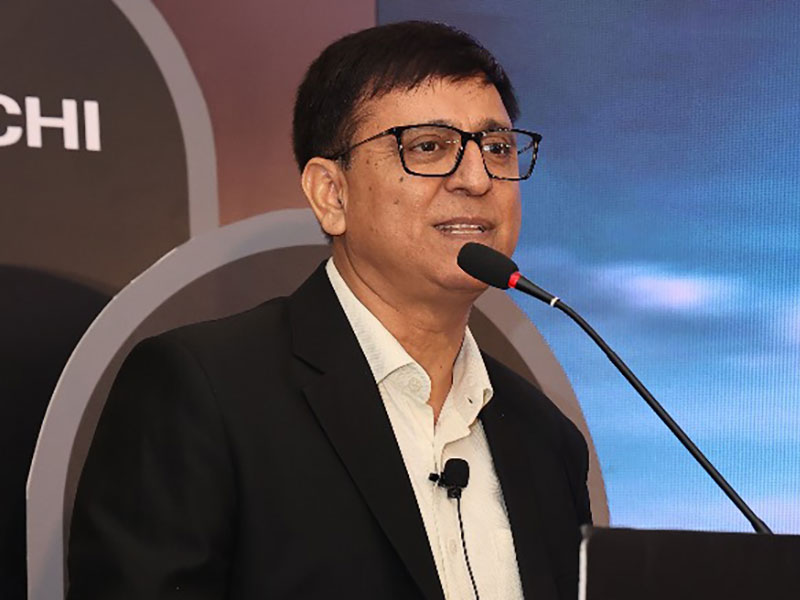
The workshop served as a key platform for industry leaders to discuss energy-efficient cooling solutions, advanced HVAC technologies, and the vital role of air conditioning in sustainable urban planning. It also showcased Hitachi’s state-of-the-art manufacturing capabilities, global development center, and cutting-edge lab infrastructure, reinforcing the brand’s commitment to the Make in India initiative and the vision of Atmanirbhar Bharat.
Rajesh Nagari, Senior Vice President, Johnson Controls-Hitachi Air Conditioning India Ltd., stated, “Hitachi Xchange in Mumbai is a step toward strengthening the region's energy-efficient cooling solutions and HVAC ecosystem. With collaborative efforts among industry leaders, HVAC consultants, and architects, we can enhance HVAC efficiency across commercial and residential projects. Johnson Controls-Hitachi Air Conditioning India Ltd. is committed to delivering unparalleled performance and reliability, creating air conditioning solutions that meet global standards.”
This workshop is part of a pan-India initiative, engaging over 600 architects and consultants to strengthen industry collaboration and contribute to India’s sustainable infrastructure growth.
Hariharan Balasubramaniam, Vice President, Johnson Controls-Hitachi Air Conditioning India Ltd., said, “At Johnson Controls-Hitachi, we believe that innovation in HVAC solutions is key to building a sustainable future. This workshop serves as a crucial platform, bridging the gap between architects and HVAC consultants in the region and empowering them to create smart, energy-efficient solutions for a sustainable future.”
Gautham Baliga, Director, Opal HVAC Engineers Pvt. Ltd., Mumbai, and R.S. Kulkarni, HVACR Consulting Engineers, Pune, said, “Thanks to initiatives like the Hitachi Xchange Program for enabling us to recognize the vital role we can play in shaping sustainable urban environments in the region. These initiatives are pivotal in collaborating with industry leaders and architects to innovate and implement sustainable cooling methods.”