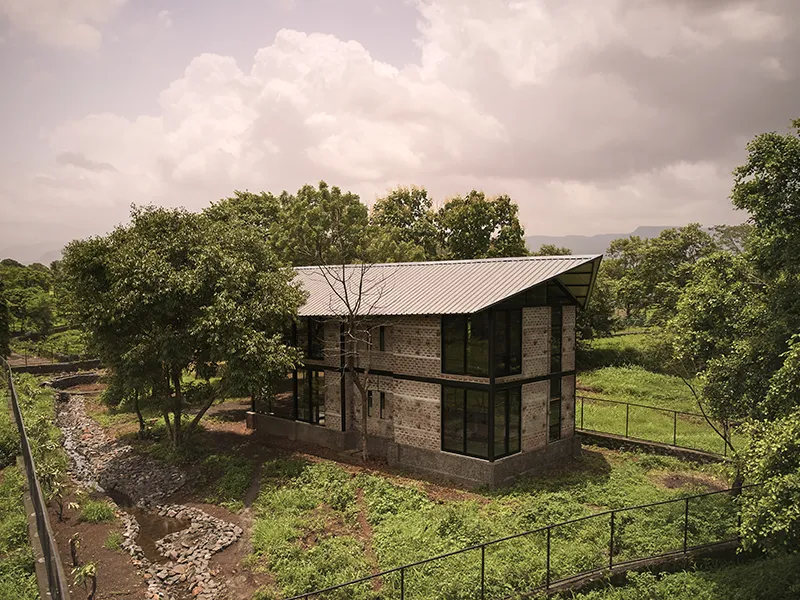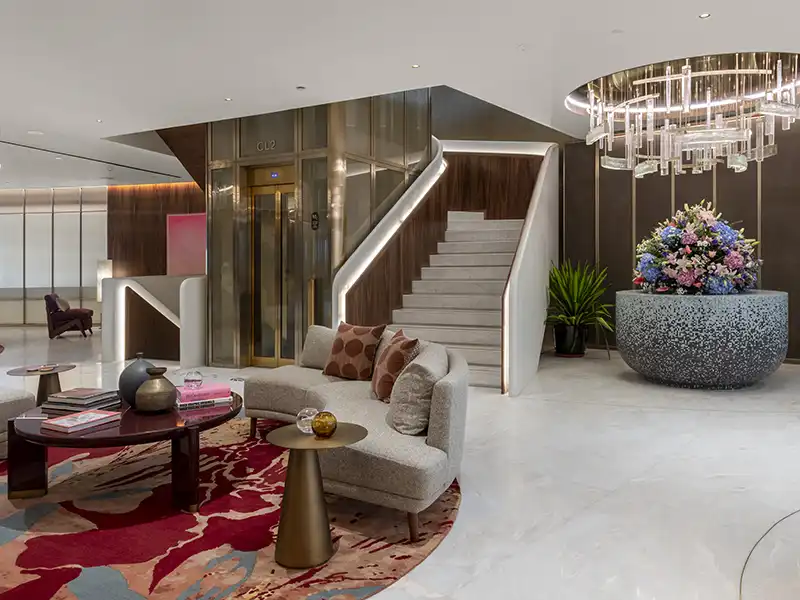

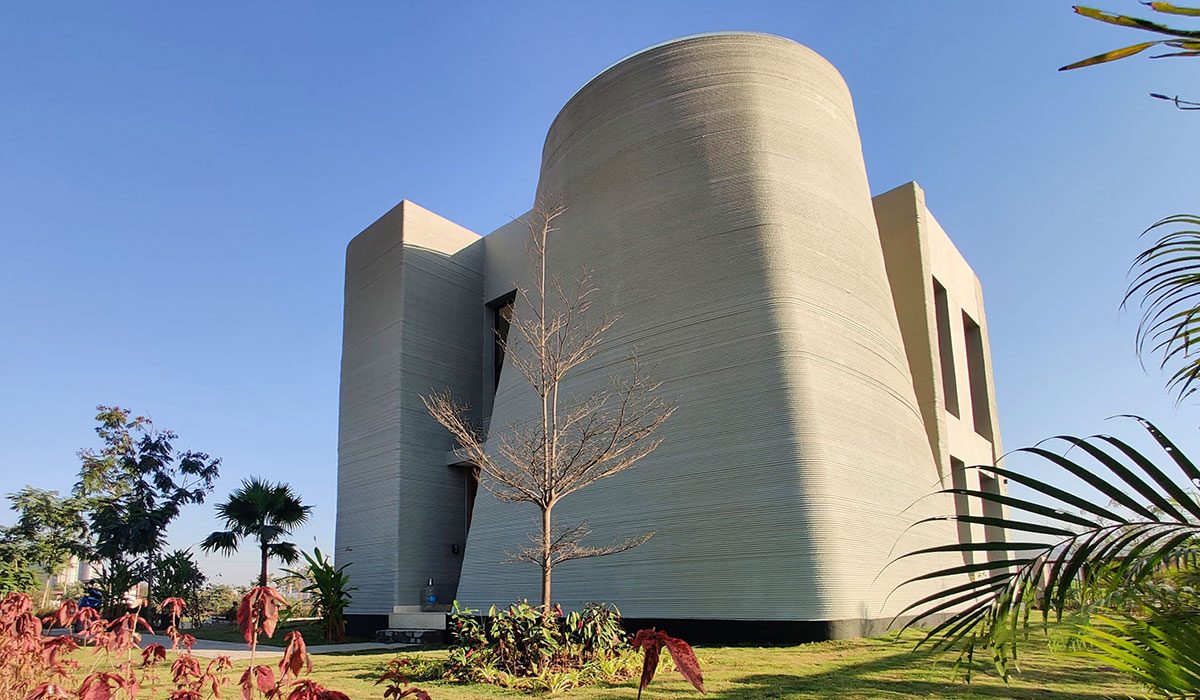
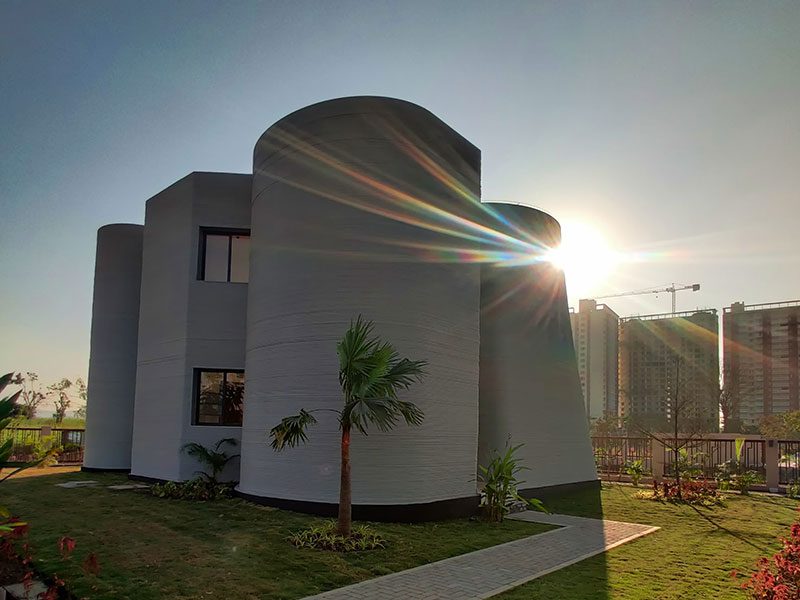
The 3D-printed villa stands out with its organic and fluid form, crafted using advanced algorithms that enhance both structural strength and visual elegance. A striking architectural design allows for maximum natural light, reducing energy consumption while creating an open and expansive ambiance. Inside, a sculptural staircase replaces the conventional straight flight, adding a dynamic and artistic touch to the interiors. Inspired by nature, the villa’s flowing lines blend harmoniously with its surroundings, promoting a sense of well-being and balance. The layered pattern on the exterior—a hallmark of 3D-printed construction—highlights the precision of the technology and lends the structure a distinctive, futuristic appeal.
“Efficient building designs help in minimizing construction waste and maximize material reuse. Thoughtful planning, modular construction, and optimized layouts help in reducing material usage. BIM (Building Information Modeling) optimizes material planning, while on-site segregation facilitates reuse and responsible disposal. We have integrated advanced technologies to enhance material efficiency and sustainable practices like low-waste formwork and 3D printing to further improve efficiency.
“By combining technology with responsible design, we are actively reducing waste and improving sustainability across our projects. Innovations like 3D printing, for instance the 3D-printed G+1 villa at Godrej Eden Estate exemplifies this technique, utilizing computer-generated designs to deposit materials layer by layer with precision. This method significantly reduces excess material usage and virtually eliminates traditional construction waste, enhancing resource efficiency and promoting sustainability," he added.
The villa’s architectural design employs advanced algorithms to create structurally sound yet resource-efficient forms, ensuring minimal environmental impact.